
Dune founder credits Jewish values for helping him survive five decades in retail
Daniel Rubin says his upbringing shaped the approach that kept the shoe empire standing among so many high-street casualties
Daniel Rubin, the founder of the Dune shoe empire, says the Jewish values he grew up with have helped guide him through five decades in one of retail’s toughest industries.
Over that time, Rubin has watched many of the Jewish-founded businesses that once dominated Britain’s shoe trade and high street disappear – a stark reminder of how unforgiving the sector can be.
“Although I am not particularly frum, Jewish values were instilled in me from a young age,” says Rubin, 78. “Treating your staff fairly and responsibly, during good times and bad, has always been a key principle in running Dune.”
Founded in 1992, Dune has become one of British retail’s most resilient success stories, with turnover above £140 million and a growing international footprint.
When Rubin entered the industry in the early 1970s, the landscape was filled with Jewish-founded businesses. “Manufacturing was dominated by Jewish immigrants,” he recalls. “Rosenblatt’s, Solomon’s, Meltzer’s, Wachman’s, Franks… They specialised in elegant women’s shoes.
“All have since vanished as production moved to the Far East where costs were so much lower.”
He adds that “most of the specialist footwear retailers have also disappeared as they couldn’t compete with clothing and department stores who started to take footwear seriously. The high street is brutal. If you’re not on top of your game, you won’t survive.”
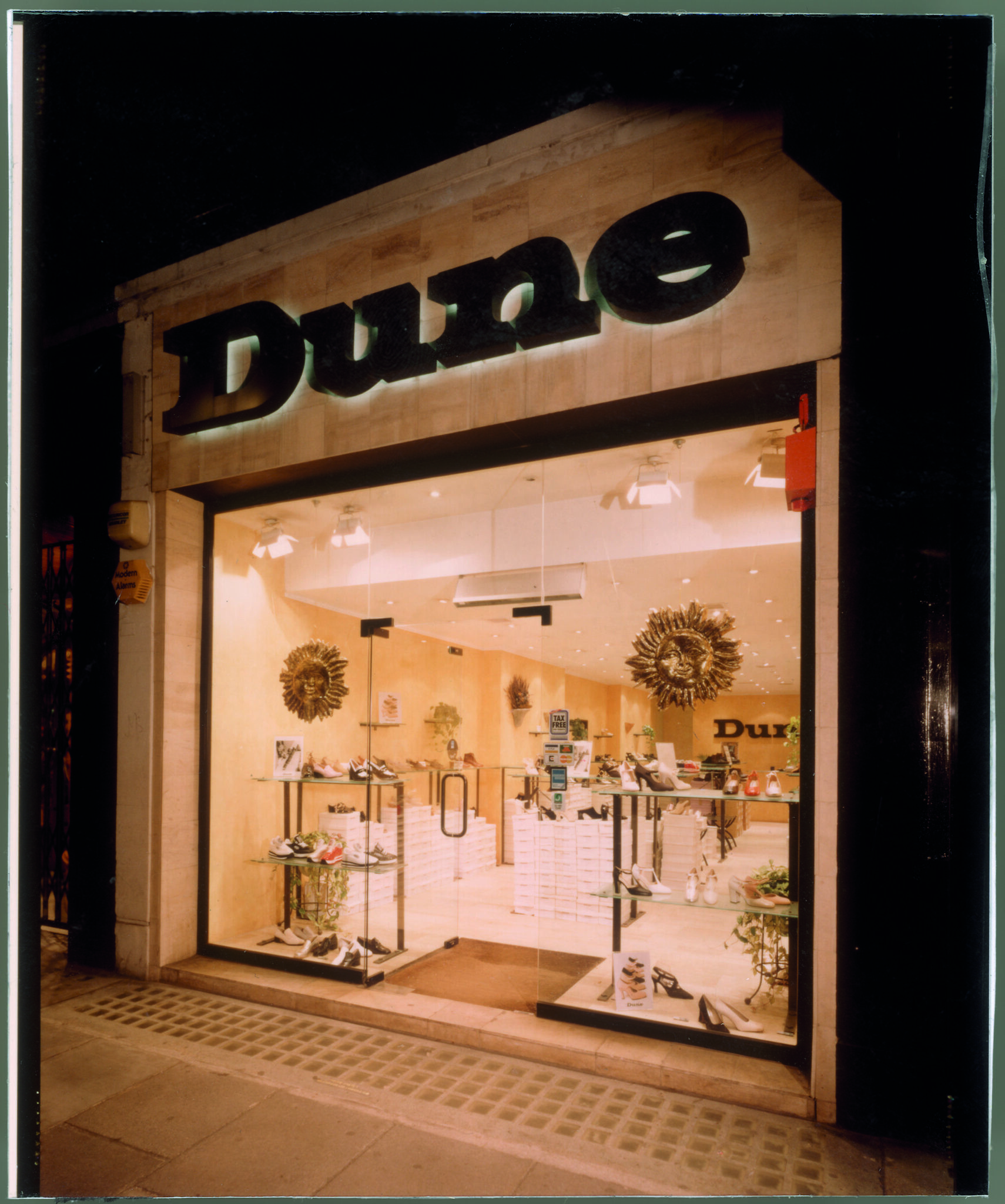
Rubin has certainly had his share of battles. The past decade alone has delivered a financial crisis, Brexit, supply-chain turmoil, spiralling costs and the pandemic.
Covid was the worst. Dune lost around £25 million in two years, and Rubin, then in his seventies, stepped back into the role of chief executive.
“That was the closest I’ve come to thinking, ‘Are we going to get through this?’
Despite the strain, he insists he never let the pressure spill into his home life. “I don’t feel stress hugely. I sleep very well. I’ve been very lucky,” he says. “I managed not to take work home. Getting that work–life balance is super important.” He is married to Anne. They have two children: Edward, a television producer, and Olivia, the fashion designer behind her own successful label.
Rubin wasn’t always destined for a life in shoes. He was steered away from the trade by his father, who urged him to become an accountant. “It was a struggle because I was useless at maths, but I did qualify,” he says.
After spells in accountancy, banking, and industry he went to help his father when his health declined. When his father died in 1976, Rubin stayed in the trade, first in manufacturing, then importing.
“I got to love the product; the smell of the shoes, the complexity, the manufacturing process.” Rubin owns more than 100 pairs of shoes and has a soft spot for a well-made loafer.
He says the “combination of being an accountant and having a love of shoes, which most likely I inherited from my father, has enabled me to succeed in a tough industry.”
Rubin chronicles his career in his recently published memoir, Sole Survivor (Canbury Press), offering a candid look at five decades of highs and lows. Among them is the moment he took out a second mortgage to fund his first large import shipment – only for 10,000 pairs of espadrilles to arrive completely faulty. “It struck home how easy it is to fail in footwear.”
Rubin rejects the idea that the high street is dying. “The proof of that is that rents are going up, which means there’s still demand,” he says. “For some it’s working okay, for others not.”
He says many casualties were predictable. Brands like Topshop, Dorothy Perkins and Warehouse, he believes, simply couldn’t compete with faster rivals like Zara and H&M. “You could see it. The stores were looking tired. The ranges were looking tired. They just weren’t interesting enough.” Others, he adds, lost their edge when private equity arrived and they “lost the essence” of what made them special.
He credits Dune’s survival to its focus on product. “It’s a brutal place. You have to have the product and the value proposition completely right. We’re not offering cheap shoes. We’re doing affordable luxury. Quality and comfort are essential. That’s always been our mantra and still is.”
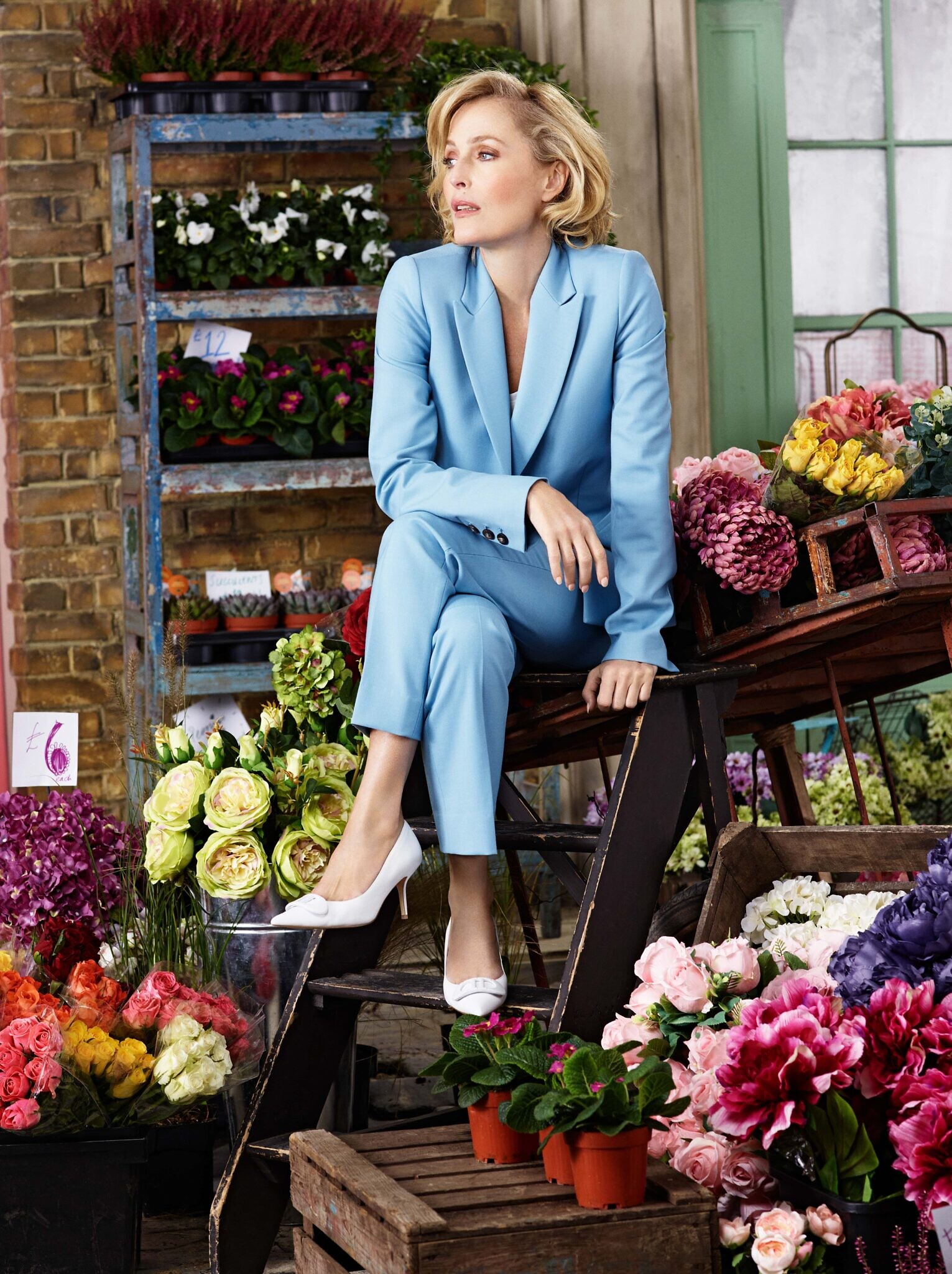
Dune is now shifting from a UK retailer to a global footwear and accessories brand. Around 35 per cent of sales come from overseas, and Rubin wants that to reach 55 per cent within three years. Growth in the US is a major focus, helped by recent celebrity exposure from Jennifer Aniston and Katie Holmes. The company has also expanded into bags and accessories.
A member of St John’s Wood Synagogue, Rubin admired earlier generations of Jewish retail titans, “the likes of Lord Sieff, Jack Cohen, Isaac Wolfson, Charles Clore” – figures who formed part of the backdrop to his own career, even if they didn’t directly shape it.
But he doubts the tradition still resonates as strongly today. “I think that my generation was still influenced by the challenges facing immigrants and the need to work hard to be successful. I think that has changed… They don’t have that natural urge to trade.”
He still believes retail can be a path for young Jewish entrepreneurs. “I wouldn’t deter them,” he says, though he stresses that “your proposed business has a point of difference… and you test it thoroughly, through online and wholesale, before opening stores.”
While Rubin has stepped back from day-to-day operations, he remains “the guardian” of the brand. His family still own 85 per cent of the business.
Before the pandemic, he received two very attractive offers to sell – offers he now admits he should have accepted. “They were life-changing, but that ship has sailed.”
Yet Rubin isn’t one for looking back. “I’m excited about the future. I believe the business will grow over the next two to three years and that its value will increase with it.”
Sole Survivor by Daniel Rubin, is published by Canbury Press