
Fall of Iran’s regime far from certain, says man who led decision to develop Iron Dome
Professor Jacob Nagel recently chaired a committee tasked with shaping Israel’s defence budget for the next decade
The collapse of the Iranian regime is still far from certain after Israel and US launched air strikes on the country, according to the man who led the decision to develop the Iron Dome.
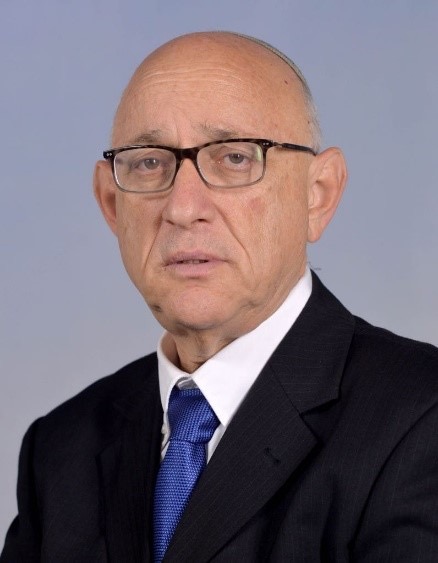
Professor Jacob Nagel, former head of Israel’s National Security Council and current adviser to Prime Minister Benjamin Netanyahu, told Jewish News: “The United States and Israel should now complete, as much as they can, the four missions of the campaign against Iran; to disarm nuclear capability, disarm ability to fire missiles and the support of terror organisations abroad, and to end the current regime.”
He adds: “Until then, we should give the Iranian people the chance – this rare opportunity – to change their leaders. It must come from inside.”
How hopeful is he that this pressure could lead to collapse? “I hope. But no one knows. For it to fall, one or two of the regime supporters must turn on it and change sides. Is it possible? Yes. Am I sure? No.”
His comments come just days after the coordinated US–Israel strike on senior Iranian targets which killed supreme leader Ali Khamenei, leading to Tehran’s retaliation.
The ongoing attacks has also brought into focus long-standing debates over how Israel allocates its military resources. Professor Nagel says Israel should shift a greater share of its defence investment toward offensive technologies over the next decade, with the recommended balance moving closer to 30 per cent defence and 70 per cent split.
“In recent years the balance was around 40 per cent defence and 60 per cent offence,” Nagel told Jewish News. “And 15 years ago it was about 10 per cent and 90% but in our recommendations for the next decade, we believe the right number is 30–70.”
Nagel recently chaired a government committee tasked with shaping Israel’s defence budget and technological priorities for the coming decade, giving him direct influence over the country’s long-term force-building strategy.
He also heads the Centre for Security Science and Technology at the Technion – Israel Institute of Technology, where he works to connect academic research with Israel’s defence establishment. But Professor Nagel is perhaps best known internationally for chairing the 2007 committee that recommended the development of Iron Dome. The revolutionary system has intercepted more than 5,000 rockets and become one of the most operationally successful missile defence systems in the world.
Asked whether he had any operational involvement in the recent mission, Nagel declined to comment.
All of Israel’s major air defence systems, including Iron Dome, David’s Sling, Arrow and Trophy, were developed by Technion graduates. According to reports, Israel completed a series of tests demonstrating significant improvements to the David’s Sling air defense system.
“Major weapons systems can take a decade or more to move from concept to deployment,” noted Nagel. “This makes disciplined capital allocation critical.
“You will never have enough budget,” he said. “The most important decision is not what to develop, but what not to.”
Nagel said public discourse often creates a misleading impression that Israel’s innovation priority is defence.
“People speak a lot about defence technologies, but just as much, and in many areas even more, is being developed on the offensive side,” he said. “The most sophisticated systems are often the offensive ones. We talk more openly about defensive systems because they are less sensitive. That doesn’t mean they are the main focus.”
As global attention turns to Washington and uncertainty over US policy toward Iran, Nagel warned that Israel cannot rely on diplomacy alone.
“Everyone is asking when and what the United States will do and what role we will have but it all depends on what Trump does.
Nagel is a senior fellow at the Washington-based Foundation for Defence of Democracies, where he writes extensively on Iran and regional security. He previously led Israel’s delegation working with world leaders during negotiations surrounding the Iran nuclear agreement and remains sceptical of diplomatic engagement.
“The moment you go into the negotiating room with the Iranians, you have already lost,” he said. “They are among the best negotiators in the world. You simply can’t negotiate with them.”
The uncertainty surrounding Iran’s nuclear trajectory, he suggested, reinforces the need for Israel to maintain both technological superiority and strategic flexibility.
That emphasis on technological flexibility is rooted in experience. Nearly two decades ago, Nagel chaired the committee that approved the development of Iron Dome, a decision that at the time faced significant scepticism.
“Many said it would never work,” he recalled. “There were strong professional voices against it.”
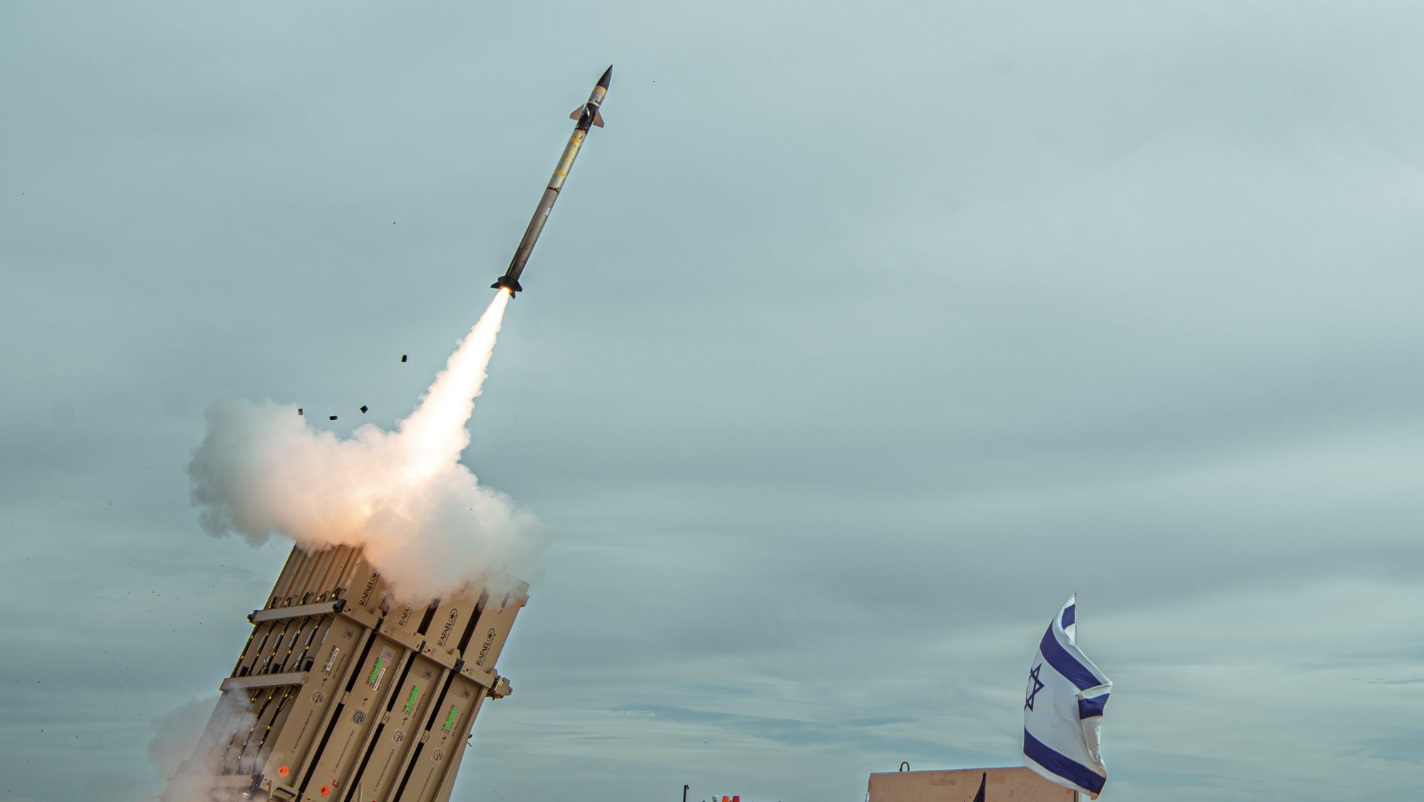
Since its inception in 2011, Iron Dome has intercepted more than 5,000 rockets and remains one of the most operationally successful missile defence systems in the world.
Following the October 7 attacks, many credited Iron Dome as the system that enabled Israel to function under sustained rocket fire. But Nagel argues its strategic value goes beyond interception alone.
“It is not just about interception,” he said. “Iron Dome gives leadership freedom.
He rejects the claim that missile defence discourages decisive action by allowing Israel to absorb rocket fire rather than respond immediately.
“That is completely wrong,” he said. “Iron Dome was never developed to prevent Israel from attacking. It gives leadership the freedom to decide when and how to act, not when the enemy dictates.”
He pointed to the period following October 7, when Israel absorbed sustained fire for nearly two weeks while preparing ground operations.
“We defended our civilians and prepared. We chose when to enter, not when they wanted us to.”
Another misconception is around cost. “Critics often compare the price of an interceptor – tens of thousands of dollars, with the far lower cost of the rockets it destroys.
“That comparison is meaningless. The real question is what damage the rocket would cause to infrastructure, to the economy, to life, and what damage the interceptor prevents.”
Beyond missile defence, Nagel’s focus is on Israel’s long-term technological dominance in national security.
Alongside the defence budget review, he chaired a separate government committee examining how Israel can maintain leadership in artificial intelligence.
“AI, quantum technologies, advanced energy systems, drones and autonomous platforms – these are among the technologies that will define the next battlefield,” he said.
“Strategic documents in Israel, the US and Europe consistently identify the same cluster of 10 to 20 emerging technologies.”
Nagel argues that Israel’s recalibration mirrors a wider global shift, as countries increase defence spending and accelerate investment in emerging technologies.
“Almost every country in the world is increasing defence budgets,” he said. “The world now understands that security comes first.”