
Fewer graduate roles push young people towards new routes into work
Work Avenue experts tell Candice Krieger they are seeing more graduates building skills, networks and experience in new ways to launch their careers
The path to a first job is no longer a straight line, but it isn’t disappearing either.
As artificial intelligence, economic uncertainty and shifting hiring practices reshape entry-level roles, employment experts say success is no longer defined by a degree alone.
Graduates who focus on adaptability – from building networks and gaining practical experience to developing both technical and human skills – are finding new ways to break into the workforce.
Speaking to Jewish News, advisers at Work Avenue, the Jewish community’s leading employment and business support organisation, say the way young people enter the workforce is evolving.
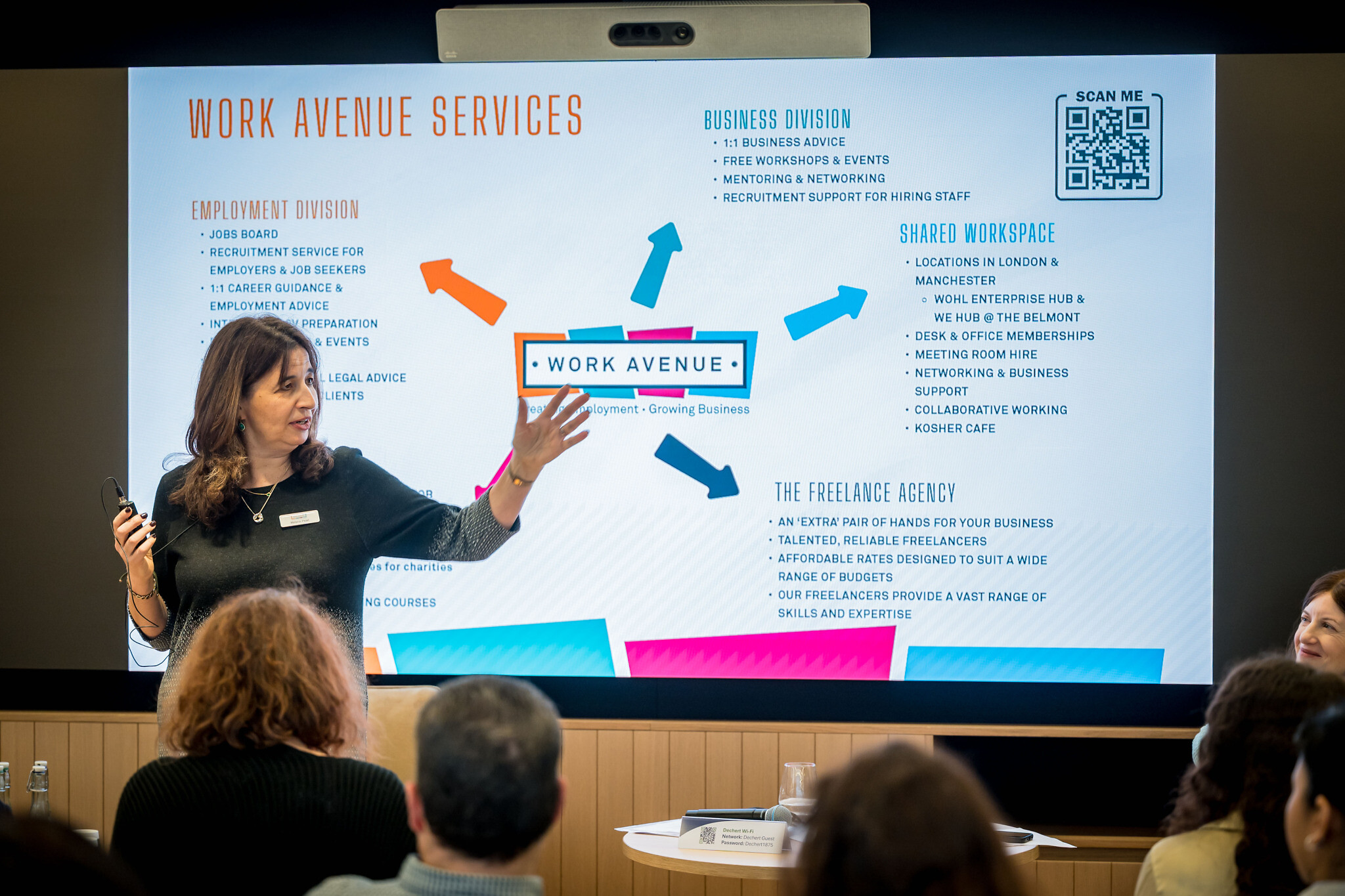
Melanie Pearl, Work Avenue’s head of employment, says: “Alternative routes into work are becoming increasingly common, including apprenticeships, freelance or portfolio-based careers, and skills-focused training programmes.”
Richard Linden, employment adviser at Work Avenue, adds that gaining experience outside of formal graduate roles is becoming increasingly valuable, highlighting the importance of volunteering and work experience.
Their comments come as graduates face one of the most challenging hiring environments in history, with employers becoming more cautious and competition for roles intensifying.
“We often hear from young people who graduated last summer and are still finding it difficult to land their first professional role,” notes Pearl. “Many have applied for large numbers of jobs, sometimes hundreds, with little response, which understandably affects their confidence and motivation.”
Part of the challenge is structural. “A lot of entry-level vacancies now ask for one to three years’ experience, adding another hurdle at the start of a career,” she adds.

At the same time, competition has intensified. Linden says: “Entry-level hiring by UK employers fell by around 35% in 2025 with graduate jobs – those positions and schemes specifically aimed at people leaving university – falling to their lowest ever level in the UK, with just 10,000 on offer (Analysis by Adzuna).”
The broader economic and geopolitical backdrop is also weighing in. Recent forecasts from the EY Item Club suggests unemployment could hit 5.8% by the middle of 2027, up from the current five-year high of 5.2%, with almost 250,000 more people losing their jobs because of the crisis in the Middle East.
If accurate, this would increase the number of jobseekers from the current 1.87 million to more than 2.1 million.
Many finance leaders are scaling back investment and hiring plans amid geopolitical uncertainty and rising costs.
The shift is also being driven by advances in artificial intelligence. Anthropic CEO Dario Amodei has warned that AI could eliminate up to half of entry-level white-collar roles within the next five years, particularly affecting junior positions, graduates and interns, highlighting the growing pressure on traditional entry points into the workforce.
But while the market may be tighter, it is also evolving in ways that are changing what employers value.
Recent data from LinkedIn suggests this shift is already reshaping the types of roles available to early-career professionals. Its 2026 Grad’s Guide highlights a range of fast-growing job titles for those starting out, including positions such as community engagement assistants, strength and conditioning coaches, and roles across finance and legal services, many of which combine technical expertise with strong interpersonal skills.
The data also points to a broader change in what employers are looking for. As AI takes on more routine tasks, human skills such as communication, collaboration and the ability to work in uncertain environments are becoming increasingly important. Rather than following a single, well-defined career path, many graduates are now building portfolios of experience, keeping their options open and developing skills that can transfer across roles and industries.
At the same time, alternative entry routes are gaining traction. LinkedIn notes a rise in apprenticeships, with entry-level hiring of candidates with apprenticeship backgrounds increasing by around 6% year-on-year, alongside growing demand for internships and hands-on experience. Smaller firms are also playing a bigger role, with a rising proportion of graduates beginning their careers in organisations with fewer than 200 employees.
“Many tasks that would once have been given to junior staff and graduates are now automated or heavily assisted by AI and digital tools,” says Pearl. “That means there are fewer traditional ways for people to get on the career ladder.” Linden adds that some large employers are already reducing graduate intakes or pausing hiring altogether in anticipation of productivity gains from AI.
The technology is also reshaping how candidates apply. “With most people using AI, CVs, cover letters and applications are becoming more and more ‘perfect. It’s therefore harder for candidates to get interviews.” As a result, he says, extracurricular activities and real-world experience are becoming increasingly important in helping candidates differentiate themselves. “Automated screening systems mean some applications may never be reviewed by a human recruiter at all,” he adds.
The same forces are also reshaping what it takes to stand out in the early-career job market.
“Networking is becoming more important than ever,” says Linden, who spends much of his time helping candidates build a professional identity online, develop an elevator pitch and the confidence to engage with employers directly.
Developing practical experience, whether through internships, volunteering or personal projects, is also key to standing out in an increasingly competitive field. But advisers stress that graduates should not be overly fixated on securing a traditional graduate role as a first step.
“We often recommend looking at roles just to get a foot in the door as a stepping stone to a graduate-calibre role later,” says Pearl. “We also encourage clients to consider jobs that are likely to still be around for many years to come such as tech and AI, engineering, healthcare and social care, education, digital marketing and UX design.
“The good news is that there are strong opportunities available,” she adds. “But graduates need to take a proactive approach, whether that’s networking, gaining experience or developing practical skills.”
In a changing market, it is those who are prepared to adjust their approach who are most likely to find their way in.