
From bricks to clicks: the technology rebuilding the property world
Be it robot-driven warehouses, AI-powered investment decisions or computer vision that streamlines construction, a wave of Israeli-founded tech companies are reshaping real estate
The real estate industry is undergoing a long-overdue digital awakening—and at the heart of this shift is a group of Israeli-founded PropTech companies quietly setting the pace for global change. PropTech is the application of technology and digital solutions to enhance and streamline processes within the real estate industry.
Israeli entrepreneurs are powering solutions adopted by major developers, property managers and institutional investors worldwide. Among them, Buildots, an AI-powered “mission control room” to tackle inefficiency in construction, predictive analytics firm Caps for Sale and Home Made, which uses digital tools to offer landlords and tenants a streamlined, tech-enabled rental experience.
Ely Razin, chief strategic investments officer at leading global venture capital fund OurCrowd, says that for Israeli entrepreneurs, PropTech is “a marriage of two loves.

“Israelis love to invest in real estate, both in Israel and abroad and this drives a deep understanding of what PropTech needs. Then Israel’s other passion – tech businesses – kicks in to bring great innovation to these markets, around the world.”
Razin says that Israeli PropTech is particularly strong in the areas of AI and fintech. “On the AI side, it enables smarter decisions that help make or save money, AI-powered decisioning around real estate investing and AI-powered construction tech that reduces costly errors. On the fintech side, Israel shines in payment processing and fund management handling loads of investors with complex capital stack and massive amounts of money flow from tenants to landlords.”
BUILDOTS

About:
Buildots was founded in 2018 by software engineers Roy Danon, Yakir Sudry and Aviv Leibovici, who at the time knew “very little” about construction. Their ambition was to create a “mission control room” for construction projects, tackling inefficiency within an industry that the founders say is “at a tipping point.”
Buildots helps organisations eliminate avoidable construction delays by up to 50% on major projects.
The company’s core offering is a performance-driven construction management platform powered by AI and computer vision. The technology automatically tracks and analyses construction progress by processing images captured from 360-degree hardhat-mounted cameras (and other sources) and comparing them to a project’s 3D model and schedule. The outputs are actionable insights that give project teams, managers and project owners an accurate understanding of where the project stands and where it is heading, so they can focus their attention where needed.
Today, Buildots is operational in six countries with a team of over 250 employees and has worked on hundreds of projects.
The platform is currently being used on large-scale residential and commercial developments, as well as hospitals, data centres, battery plants and even semiconductor labs. One of Buildot’s longest-standing global clients-turned-investors is Intel, which is using Buildots to deliver its global semiconductor fab construction programme.
UK clients include Wates, Sir Robert McAlpine, Kier, Multiplex and IHP.
Location:
Buildots’ European HQ is in London, UK. The company also has offices in Tel Aviv and Chicago, as well as a presence in France and Germany
Investment to date:
$166 million, funded by Lightspeed, Viola, Qumra Capital, Intel Capital, TLV Partners, Future Energy Ventures, OG Venture Partners, MAOR Investments, and others.
What is the biggest challenge facing the property industry?
London-based Aviv Leibovici, co-founder and chief product officer (CPO) of Buildots;
“The construction industry faces numerous challenges, including supply chain disruptions, labour shortages, and the increased complexity of large-scale projects, such as data centres, which are becoming increasingly central to the global economy. All of these factors have driven a surge in demand for more efficient construction practices, which is precisely what Buildots delivers.”
What challenges have you faced scaling in a traditionally slow-moving industry like real estate?

Aviv Leibovici, co-founder and chief product officer (CPO) of Buildots;
“When we founded Buildots, many viewed our vision as futuristic. Today, it’s becoming the new standard for how contractors and owners approach construction management.
“People outside the industry often perceive construction as stagnant. However, the pace of change is accelerating – from the widespread adoption of BIM, to the use of drones and LiDAR scanning on construction sites, to the application of advanced processes inspired by agile methodologies from software engineering.
“However, optimising the execution phase – the actual building – remains rather manual and data-poor. And that’s where Buildots is driving real change. We’re bringing objective data into the heart of day-to-day construction process management. And while there has been some resistance to change, a surprising number of people instinctively see the value.”
How do you see your role in the broader digital transformation of the property sector?
Aviv Leibovici, co-founder and CPO Buildots;
“We’re at the centre of it! Historically, construction has been managed quite reactively. You discover a problem, then you fix it. We’re building predictive capabilities that fundamentally change this paradigm, anticipating the cascading effects of delays before they happen, allowing teams to prioritise interventions based on projected impact rather than just current status. Being able to do that on one project is significant, and across multiple projects is transformative. We see our role as enabling stakeholders from all levels to work and make informed decisions based on the same, objective dataset.
“This is why we’re investing heavily in our enterprise platform approach. The days of fragmented point solutions are coming to an end. The organisations that will succeed are those that can integrate data across the entire project lifecycle, benchmark performance across their portfolio, and continuously improve based on objective metrics rather than subjective assessments.
What trends do you see shaping the future of property tech in the next 5 years?
Aviv Leibovici, co-founder and CPO of Buildots;
“One trend is the deeper integration of technology throughout the construction lifecycle, extending to include planning, execution and operations. This includes enhanced digitalisation of products and processes. It will come as no surprise that I hope AI-enabled, data-driven decision-making becomes a pervasive trend, allowing for better collaboration and optimisation of construction processes.
“Another trend that is impacting how we think about Buildots’ own growth and development is the current construction boom in data centres and infrastructure projects, which is creating unprecedented demand for the kind of efficient, precise management we enable. From our North American base in Chicago, we’re building out specialised teams with deep domain expertise in these high-growth sectors, alongside more traditional ones.”
What’s next?
Aviv Leibovici, co-founder and CPO of Buildots;
“Like all fast-growing start-ups, we continually release new features and sign new partnerships. One recent launch we’re particularly proud of is our Portfolio Dashboard. This new feature provides construction teams with a standardised, data-driven portfolio-wide overview of their projects, complete with AI-driven insights and early warnings of potential risks.
“We believe the next frontier in construction efficiency goes further than optimising individual projects, moving towards performance-driven portfolio management and beyond.
“We’re working towards a future where projects begin with realistic schedules, common mistakes are avoided, executives gain early visibility into potential problems, and ultimately, contractors’ margins and client relationships are significantly healthier.”
Caps For Sale (CFS)
About:
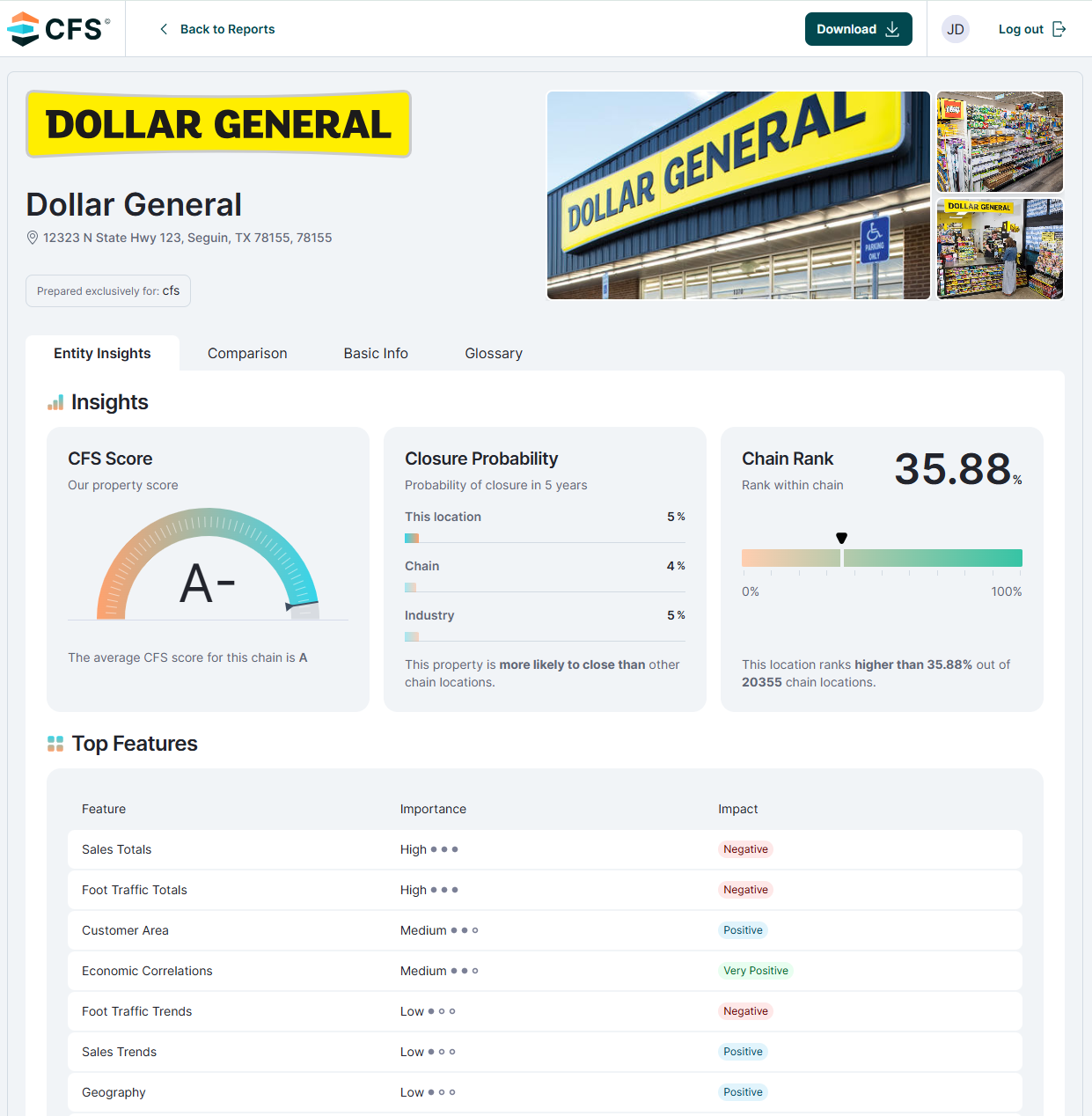
Caps for Sale (CFS) was founded in 2023 by Israeli brothers Ari and Aaron Segal. A play on the term “Cap Rates” – CFS uses AI and predictive analytics to improve returns and reduce risk in real estate by predicting future tenant vacancies and provide a reliable risk-score for retail properties.
At its core, CFS aims to help people make smarter decisions faster. Real estate investors and lenders are constantly asked to evaluate and price risk – tenant risk, location risk, lease renewal risk – but the tools they use, say the founders, are mostly the same as they have been for the last few decades. CFS’ AI-powered interface aims to speed up this process and its machine learning models help them to predict how a property will perform, particularly when it comes to whether tenants are likely to stay or go. CFS is initially focusing on retail, single-tenant and neighbourhood shopping centres.
Location:
Based in Israel with team members across the globe. CAPS for sale is primarily focussed on the US market but the founders are in early conversations with UK-based investors and partners and earlier this year met major groups including British Land and Landsec. The company is working together with Time Retail Partners, a London-based real estate advisory firm.
Investment to date:
$500,000 early capital – primarily from angel investors in the US, Israel UK. CFS is currently raising $3m to scale its data team, sales and marketing and products.
What is the biggest challenge facing the property industry?

Ari Segal, co-founder and chief executive Caps for Sale:
“There’s a growing gap between the speed at which capital markets are moving and the pace at which the industry makes decisions. Margins are shrinking and investors need to act quickly to identify and capitalise on opportunities, but they’re still using spreadsheets and spend weeks underwriting deals. That disconnect leads to mispricing and missed opportunities.”
What challenges have you faced scaling in a traditionally slow-moving industry like real estate?
Ari Segal, co-founder and chief executive Caps for Sale:
“Real estate is built on relationships and trust, which means new technologies have to prove themselves in real-world deals before they’re widely adopted. That’s been both the challenge and the opportunity. We’ve had to show that our models work—not just in theory, but in underwriting decisions that generate real returns. We’ve also had to be patient and flexible. Some of our best customers today were sceptical at first.”
How do you see your role in the broader digital transformation of the property sector?
Ari Segal, co-founder and chief executive Caps for Sale:
“We’re trying to move the industry from access to data to actionable data insights. There are plenty of platforms that collect and display information. What’s missing are tools that help investors see around corners and act with conviction. That’s the space we’re aiming to lead.”
What trends do you see shaping the future of property tech in the next 5 years?
Ari Segal, co-founder and chief executive Caps for Sale:
“1. Machine learning-driven underwriting will become the norm—not the exception.
2. The real estate firms with large pools of proprietary data will start using them to further expand their advantage.
3. Capital allocators will demand smarter, tech-enabled diligence from their managers.
4. We may even see the tokenisation/commoditisation of the asset class which will allow for frictionless (and faster) trading of these assets.”
What’s next?
Ari Segal, co-founder and chief executive Caps for Sale:
“We’re rolling out a self-service SaaS version of our platform and onboarding several mid-market funds in the U.S. We’re also working on a pilot with a major CMBS underwriting group as well as three large full-service brokerages.
“On the tech side, we’re just putting the finishing touches on a highly sophisticated (and computationally intensive) ‘void analysis’ tool that helps in the re-tenanting and site selection process. We are also building new tools that help identify underperforming assets in a portfolio and recommend targeted asset management strategies.
“We want CFS to be the go-to platform for any real estate investor looking to make smarter bets. That includes US and UK/European markets, across retail and other sectors. If we’ve done our job right, predictive analytics won’t be seen as a nice-to-have but a must for any smart investor.”
Home Made:
About:
Home Made was founded in 2018 by Israeli entrepreneur Asaf Navot after years of experiencing the frustrations both renters and landlords face in the traditional lettings market. Coming from a background in strategy and operations at Bain&Company, Navot was struck by how outdated, inefficient, and opaque he says the rental experience was – especially in London.
Home Made was built to bring transparency, technology, and trust to residential lettings, tackling all the inefficiencies within the rental market, redefining the future of property leasing and empowering rental operations at scale.
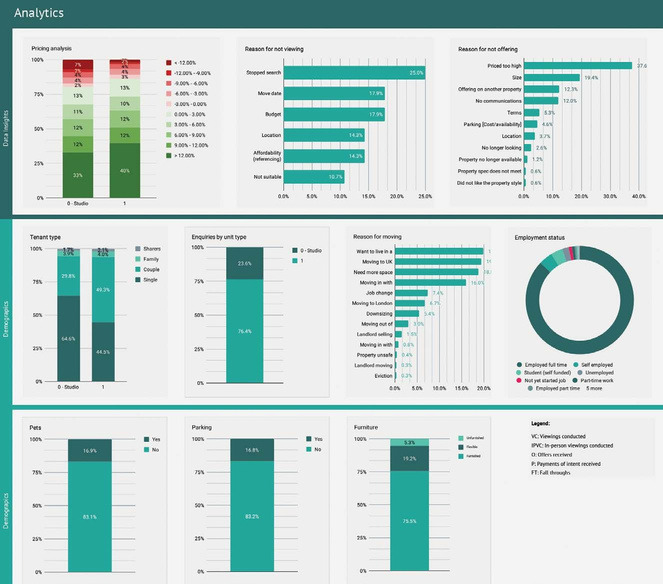
Today, Home Made is the UK’s leading multifamily leasing provider. It uses a scalable, AI-powered platform, increasing asset values by five–30%. It offers a fully integrated lettings platform that combines smart technology, centralised operations, and deep market data and handles everything from marketing and viewings to compliance and move-in, all, say the company’s founder, with better performance and at a lower cost than traditional agents.
Location:
London. Home Made is currently focused on serving the UK residential rental sector. Partners include some of the country’s largest build-to-rent operators and largest institutional landlords, from large banks and publicly-listed property groups to leading asset managers.
Investment to date:
£6M from a leading VC and family offices.
What is the biggest challenge facing the property industry?

Asaf Navot, founder Home Made:
“The biggest challenge is inertia – both in systems and in mindsets. Legacy platforms and incumbent providers are resistant to change, even as consumer expectations rise and operational inefficiencies become more costly. There’s an urgent need for digital transformation and data-led operations across the board.”
What challenges have you faced scaling in a traditionally slow-moving industry like real estate?
Asaf Navot, founder Home Made:
“Change management is a constant. Real estate is risk-averse by nature, and many players have become comfortable with inefficiency. Our biggest hurdle has been not just building a superior product, but also convincing stakeholders to embrace a new way of working. Fortunately, the results speak for themselves, and adoption accelerates once partners see what’s possible.”
How do you see your role in the broader digital transformation of the property sector?
Asaf Navot, founder Home Made:
“We see ourselves as the infrastructure layer for modern residential lettings – making it possible to deliver a seamless, data-driven experience at scale. We’re not just improving one part of the process – we’re redesigning how the entire ecosystem works, from lead to lease.”
What trends do you see shaping the future of property tech in the next 5 years?
Asaf Navot, founder Home Made:
“AI and automation will fundamentally change how property management and lettings operate. Expect to see more predictive analytics for pricing and yield, hyper-personalised renter experiences, and automation of everything from compliance to communication. ESG will also become central to both property strategy and tech solutions. Ultimately, winners will be those who can blend tech with trust.”
What’s next?
Asaf Navot, founder Home Made:
“We’re scaling rapidly across the UK, expanding our footprint with institutional landlords and launching new tools to enhance the renter experience. We’re also deepening our use of AI to drive even better outcomes for our partners. Our mission remains clear: fix renting for good. Making it better, safer, and fairer to all.”