
From Minecraft to media craft: Meet Israel’s teenage AI entrepreneur
Sixteen-year-old Eltan Greenberg is building an AI video production business alongside his school studies - with his teacher’s permission to work on it in class
At nine years old, Eltan Greenberg was designing thumbnails and logos for his Minecraft YouTube channel. At 16, he is running an AI video production business – and his school has even given him permission to work on it in class.
Not only is the Israeli teenager growing up with artificial intelligence, he is building a business around it. His company, Click, uses AI to create promotional videos for brands and businesses, with much of its work commissioned through agencies on behalf of their clients. He has produced videos for several major Israeli and international brands.
Greenberg, who is in 11th grade and specialises in media and diplomacy, works on the business every day after school. When he has a project to finish, he can be at his laptop until 3am.
He has bought a MacBook so he can work on the company during school, where his teacher has allowed him to spend some lesson time on the business.
“My teacher knows me very well. He knows exactly what I do, so he understood that it would be important for me,” Greenberg told Jewish News.
Greenberg’s interest in entrepreneurship began with graphic design before moving into video editing and directing. A film enthusiast, he was drawn as much to the production process as to what was happening on screen. Click started as a video editing business. After earning around $5,000 from clients, Greenberg bought a PC, followed by a camera, and began filming.
His first shoot was a campaign for a local business. “I went without knowing how to use a camera,” he recalled. “I turned to Google for help but it actually turned out pretty well.” The experience convinced him he wanted to expand beyond editing into filming and directing. “I wanted to do everything.”
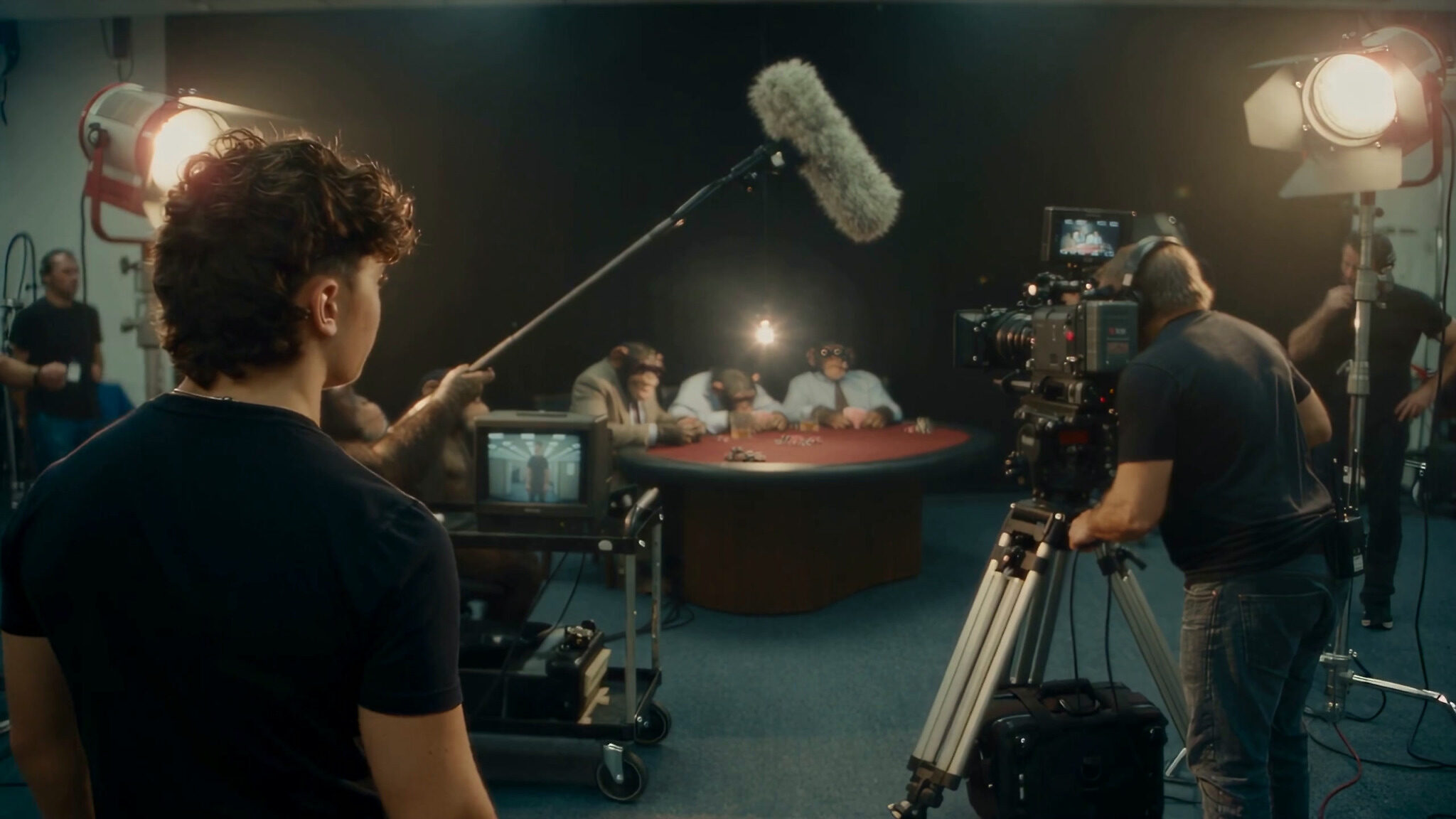
As AI tools developed, Greenberg began experimenting with building apps and websites, temporarily scaling back his video work to learn the technology.
“Most of what I did failed significantly. But with that I learned AI.
He went on to build Hippy, a platform designed to teach children about AI through interactive lessons in Hebrew and English, before turning his attention back to Click.
Greenberg now works with a small group of AI creators whom he has trained himself, choosing people for their creativity and reliability rather than their existing knowledge of the technology.
“I went to people I trust and taught them AI myself.
He is looking to expand beyond agency work and build relationships directly with brands. All his earnings go back into the business, including paying for a ticket to the recent TECH1 conference in Tel Aviv.
“I thought that it would be a good investment. To learn, to meet people and to network.”
The conference brought introductions to start-ups and larger businesses, including delivery company Wolt. Greenberg hopes those conversations could lead to work.
Also among those he met was Neil Shah, head of the tech and tech-enabled sector at the London Stock Exchange, who subsequently highlighted Greenberg’s work in a LinkedIn post, describing the meeting as “one of the highlights of his day.”
For Greenberg, the willingness of established businesspeople to help was particularly encouraging. “The moment I said what I’m doing, I saw them thinking how they could help me and how we could do something together.”
He hopes to visit the UK and plans to create a demonstration video for the London Stock Exchange, although no commission has been agreed.
He said his family is proud of what he is doing, although his friends are less familiar with the details. “To be honest, my friends don’t really know much about what I’m doing,” he said. “I don’t talk about it too much.”
While some of his friends are worried about AI, Greenberg prefers to focus on the opportunities. “I choose not to be scared because I can’t know what will happen, but I can control what I’m doing right now and how I’m actually using it for my advantage,” he said.
“AI will displace jobs, but that makes it increasingly important for people to learn how to use it and adapt. There will be more opportunities for creative people to produce content and for those with technical skills to develop apps and start businesses.”
His next challenge is ensuring Click can operate without him when he enters the army after school. He hopes to continue working on Click during his service if time allows, but is keeping his longer-term plans flexible.
“I will see where the world goes because I know everything is going to change. I will always need to adapt.”