
NHS trials Israeli-founded blood test to spot deadly infections in children
Clinicians hope MeMed’s 15-minute rapid test will improve sepsis treatment and prevent the unnecessary prescription of antibiotics to children
An Israeli-US health-tech company that has developed a rapid blood test capable of diagnosing life-threatening conditions in children in just 15 minutes is being trialled by the NHS.
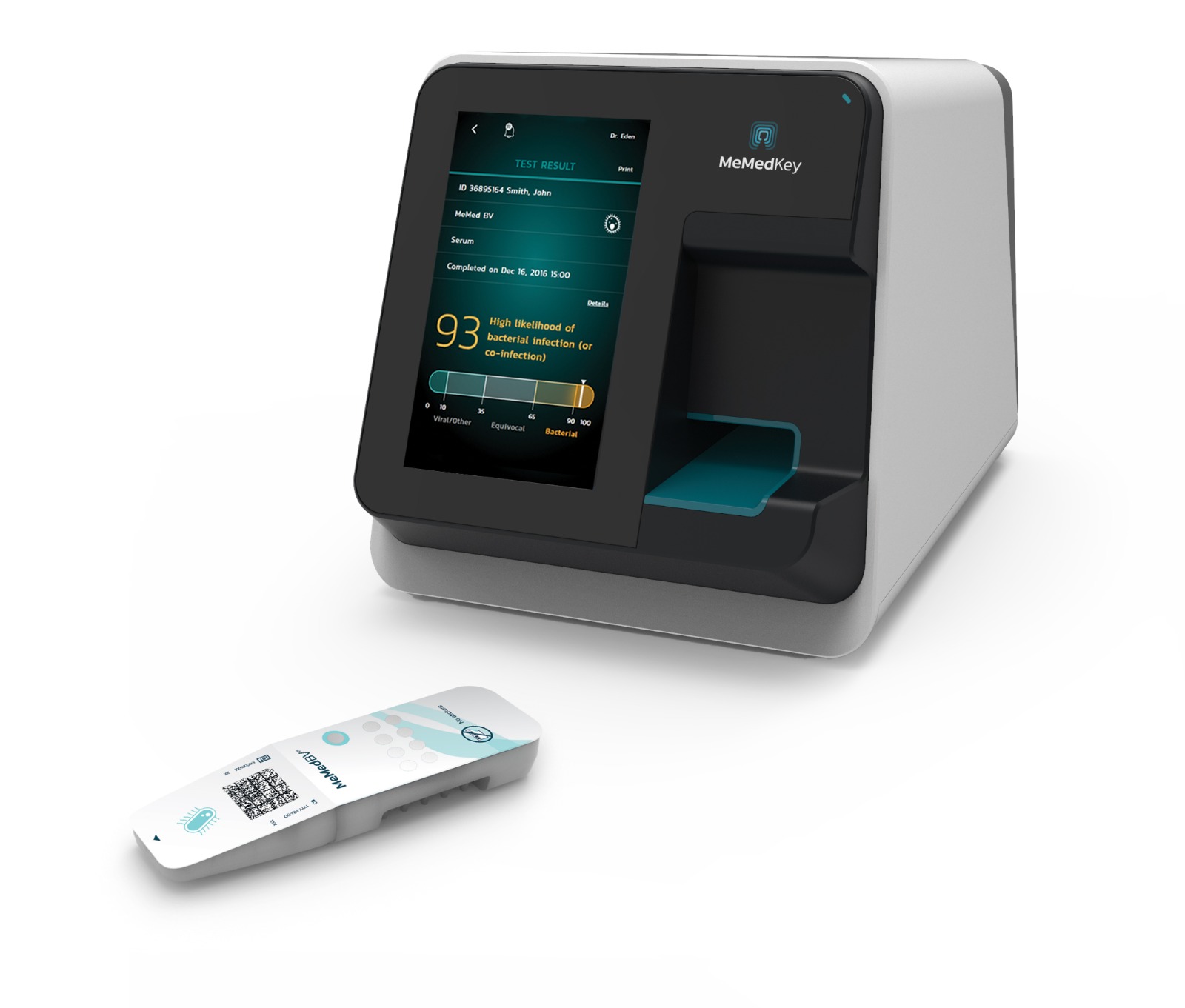
Based in Haifa and Andover in the US, MeMed’s BV test is being used in Liverpool, London and Newcastle to help doctors decide whether a patient is suffering from a bacterial or viral infection, speeding up the diagnosis of serious conditions such as sepsis or meningitis in children.
Instead of waiting hours for regular blood test results, MeMed’s test can quickly determine whether to administer antibiotics to children with an bacterial infection— potentially saving lives, while reducing unnecessary treatment when the cause is viral.

Dr Eran Eden, co-founder and CEO of MeMed, said: “It took more than a decade of relentless work by clinicians, engineers, and scientists from around the world to develop and bring this pioneering technology to patients.
“True impact, however, depends on how innovation is implemented in real-world clinical practice. Implementation trials like this are essential to defining best practices and ensuring that the technology delivers its full potential to patients. We are deeply grateful to NHS England and the network of clinicians leading this effort for bringing innovative technologies to the front line and advancing the boundaries of paediatric care.”
NHS England has funded a trial of the company’s technology in three hospital emergency departments; St Mary’s in London, Alder Hey children’s hospital in Liverpool and Great North children’s hospital in Newcastle.
Professor Enitan Carroll, clinical lead for the trial, said: “Many of the children who come to hospital have a fever and this test can quickly distinguish between a minor viral illness like a cold, or a more serious infection.”
Dr Charlotte Durand, Consultant in Paediatric Emergency Medicine at Alder Hey Children’s NHS Foundation Trust in Liverpool, said: “We have seen first-hand how this innovation can make a vital difference to children in the Emergency Department. We’re delighted to be involved in this ground-breaking study and hope to help ensure this test is brought into standard clinical practice – it could have a massive impact on the emergency care of paediatric patients.”
Dr Ron Daniels, founder and chief medical officer of the UK Sepsis Trust, told the PA news agency the test could save lives.
He said: “A recent national publication suggested that, among the deaths of approximately 500 children each year where infection was present, care was suboptimal in 40% of cases.
“Making the right decision around early antimicrobial prescribing in children who need antibiotics the most has potential to save dozens of young lives every year.”
Daniels said severe infections and sepsis are “one of the greatest acute illness burdens facing our NHS”, while resistance to antibiotics, which is largely caused by overprescribing, also affects thousands of patients.
He added: “Using antibiotics more wisely – meaning both withholding them in people who won’t benefit and giving them urgently to people who need them most – has never been more important. Although the study is in children, previous studies have shown its performance to be even better in adults, meaning there is potential opportunity across all ages.”
Eran Eden Eran has been the CEO of MeMed since its inception in 2009, leading it from an idea to a landmark FDA clearance and rapidly growing company. He has 20 years of combined business and academic experience pioneering the development of cutting-edge multidisciplinary technologies that synergise data-science and machine learning, molecular biology and clinical applications. He holds a BSc in Computer Engineering, BA in Biology, and MSc in Computer Science from the Technion, Israel Institute of Technology, and a Ph.D. in Systems Biology from the Weizmann Institute of Science, where he was also a lecturer of Data Science.
The NHS trial is due to run until March, and health leaders will then decide whether the system should be rolled out more widely. MeMed has also developed a finger-prick version of the test, potentially opening the door to rapid diagnostics in GP surgeries and community clinics.
Hospitals in Europe, Asia and the United States are also adopting the platform following regulatory approvals.