
OPINION: Climate change has become a defining business test of tikkun olam
As carbon markets mature, companies and investors can turn the idea of 'repairing the world' into practical, scalable economic action, writes Ornit Shinar
The past decade has been defined by fragmentation and polarisation – political, social, and economic. Consensus has become elusive, and public debate has increasingly defaulted to assigning blame rather than advancing solutions. Against that backdrop, it is notable when a pathway emerges that attracts support across geographies, ideologies, and industries.
In Jewish tradition, Tikkun Olam refers to the obligation to repair the world. Climate change offers a rigorous test of tikkun olam: whether humanity can accept its obligation to repair what it has damaged, and to safeguard the planet that sustains and nourishes us.
Climate change, for all its visibility, has often appeared unlikely to provide such common ground. Yet for all the noise surrounding it, those working closest to the problem – policymakers, investors, and operators – are increasingly aligned, translating consensus into what may well be the next gold rush. In Jewish tradition, Tikkun Olam refers to the obligation to repair the world.
Climate change offers a rigorous test of tikkun olam: whether humanity can accept its obligation to repair what it has damaged, and to safeguard the planet that sustains and nourishes us.
There is now broad agreement on a central premise: reducing the amount of carbon in the atmosphere will slow the pace of global warming. This consensus cuts across political boundaries. In the United States, tax incentives such as Section 45Q have channeled capital into carbon capture and storage. In Europe and the UK, carbon pricing mechanisms, emissions trading schemes, and biofuel mandates continue to drive the development of positive contributions. In the Global South, carbon projects are increasingly viewed not only as environmental tools but as vehicles for sustainable economic development.
What has long been missing is trust and volume: a credible, scalable mechanism to convert that agreement into action and enough high-quality projects to invest in.
Carbon markets while historically viewed with skepticism, are beginning to fill that gap. Financial institutions and companies, in hard-to-abate industries such as travel, oil and gas, or construction, understand that while the public pressure to commit to net-zero targets has potentially decreased in the short run, it is likely to return with increased regulatory pressure.
This could lead to demand for carbon offsets and removals peaking, making the prices surge. Perhaps that is why we are seeing demand for credits rising steadily, with 2025 being the strongest year to-date. At the same time, the supply of projects capable of delivering verifiable, permanent, and additional carbon sequestration remains constrained. This imbalance is reshaping the market’s structure and mobilizing investors.
Much of the criticism aimed at carbon credits is rooted in their early history. Legacy markets were dominated by commoditised, low-quality credits, with limited differentiation between projects of vastly different integrity. Verification was uneven, accountability weak, and incentives misaligned. Comparisons to a “Wild West” were often warranted.
That phase is now receding.
What is emerging is a convergence between older compliance-style credits and a far more demanding voluntary carbon market. This evolution is being driven not by regulators alone, but by large corporate buyers that are effectively setting new standards. Companies such as Microsoft and Stripe have taken prominent roles in defining what constitutes a high-quality carbon credit, insisting on rigorous methodologies, long-term durability, transparent monitoring, and clear accountability.
This shift is significant. By imposing a higher bar, these buyers are forcing a re-pricing across the market. Credits that cannot meet stricter criteria are losing relevance, while projects capable of delivering measurable carbon removal at scale are attracting long-term capital. Carbon credits are moving away from a homogeneous commodity and toward a differentiated asset class.
The voluntary carbon market, once dismissed as reputational window-dressing, has become a proving ground for best practice. The standards emerging there are increasingly influencing regulated markets, narrowing the historical gap between voluntary and compliance regimes and addressing a long-standing credibility problem.
Crucially, large financial institutions are now reinforcing this transition. Banks, hedge funds, and other private capital providers are financing carbon funds and project developers to enable carbon sequestration at industrial scale. Their involvement brings not only capital, but also governance, risk discipline, and long investment horizons. Carbon projects are no longer assessed solely on environmental merit; they are being underwritten much like a financial asset.
This institutionalisation has had a secondary effect: it has attracted both long and short-term speculative capital. The so-called tourist investors who once chased headlines have largely exited the space. In their place are financial investors accumulating positions in high-quality assets – projects that resemble future carbon “gold mines” in their ability to generate long-dated, reliable credits under increasingly stringent scrutiny.
The implications are material. As corporate demand continues to rise and standards tighten, scarcity is likely to define the upper end of the market. High-integrity carbon removal – whether nature-based, engineered, or hybrid – cannot be scaled overnight. Fundamentals, rather than sentiment, are beginning to drive pricing.
Carbon markets are not a panacea. They cannot substitute for emissions reduction, nor should they be treated as a license to pollute. But when properly structured and held to high standards, they offer a pragmatic mechanism for mobilising capital at speed and aligns incentives across governments, corporations, and investors.
Rarely does tikun olam align so clearly with economic self-interest. Carbon markets, once viewed as a sideshow, are becoming a central arena in which policy, capital, and corporate strategy intersect.
In a divided world, that convergence may prove as valuable as the carbon it removes from the atmosphere.
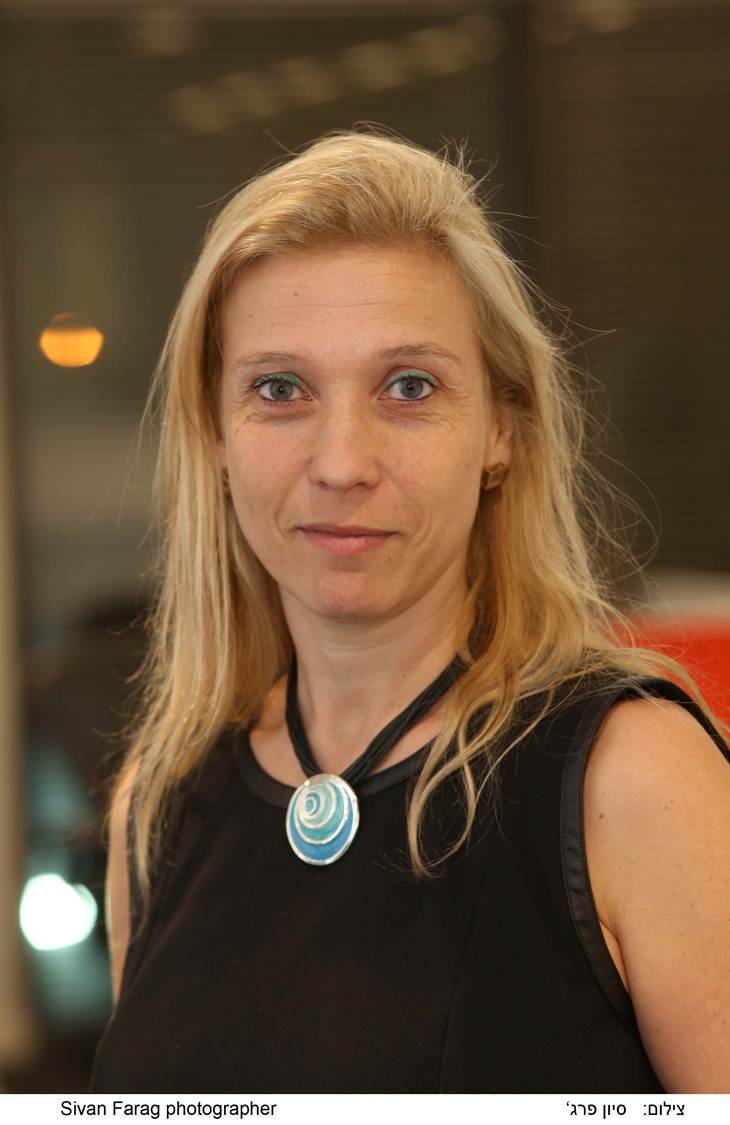
Ornit Shinar is managing partner, Sanchi Capital and member of the Investment Committee of Collective Equity
Disclosure: The author is an investor and trader in carbon credits.