
Spurs’ former property adviser says house price booms ‘will never return’
Phillip Leigh, who advised Tottenham players for 15 years and worked with clients from Bobby Moore to Lord Sugar, says Britain has become a rental-orientated society
From World Cup-winning captain Bobby Moore to TV presenter Bradley Walsh to Lord Sugar and his family, property veteran Phillip Leigh has spent more than six decades advising high-profile clients on where to buy, and more recently rent.
As the founder of Phillip Leigh & Partners and now an independent property adviser, Leigh has built a reputation for his deep knowledge and long-standing relationships across Essex, East London and beyond.
That reputation led to a long-standing role advising Tottenham Hotspur on residential property for its players.
“About 20 years ago, Daniel Levy [the then club chairman] approached me,” Leigh tells Jewish News. “I became an adviser to the club for around 15 years.”
During that time, Leigh worked closely with players and staff, helping them find homes, often in Essex, close to the club’s then training ground.
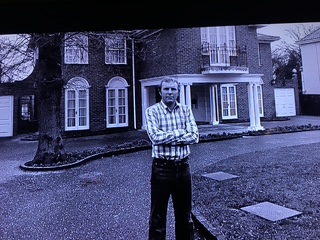
Leigh’s association with football stretches back even further. His first high-profile client was Bobby Moore, who approached him in 1966 shortly after England’s World Cup victory.
“He came to me to help him buy a piece of land,” Leigh recalls. “I told him I supported Wolves. He joked that he wasn’t going to do business with me!”
The deal marked the start of a career that would see Leigh work with several high-profile – it also saw Leigh switch allegiance to West Ham, the club Moore captained.
Among those Leigh has since sold properties to are TV personalities Mark Wright, Joey Essex and members of boyband East 17. Leigh also formed close business relationships with Daniel Levy and Lord Alan Sugar, who he counts as good friends.
His career has also brought encounters with Tony Blair, golfer Greg Norman, Boris Johnson and Leigh’s “personal favourite”, Joan Collins.
But one person left the deepest impression.
“The main and most perfect association I have had in my lifetime was The Emeritus Chief Rabbi, Lord Jonathan Sacks,” says Leigh.
“He was, to me and so many others, my greatest mentor and treated me, as ridiculous as it may seem, as his mentor during the period I advised him.”
Leigh describes the late Lord Sacks as “the greatest person” he met on a close, one-to-one basis.
“I try, and would love, to emulate him in many ways in my present volunteering work,” he says.
“I now mentor young people and those not so young, usually between the ages of 16 and 56,” he says. “I get much satisfaction from basking in their reflected glory.”
A former black cab driver, Leigh’s journey into property wasn’t conventional.
“It was 1963 and I had a very posh accountant in Portland Place, very unusual for a taxi driver. He saw something in me that I hadn’t seen in myself and suggested I consider a career in property.”
At the time, Leigh was exploring the idea of launching horse-drawn transport tours around London. “I went back to my wife and said: ‘What should I do, drive a horse and carriage or become an estate agent? She said: estate agent.”
In 1966, in his late twenties, he opened a small office in Gants Hill, paying £9 and 10 shillings a week in rent.
“I knew less about property than the people I was dealing with,” he admits. “I used to get the Ilford Recorder on a Thursday, look up all the private property ads and call them and that’s how it began.”
Leigh’s early career coincided with a defining period for Essex’s Jewish community, as areas such as Gants Hill became hubs for upwardly mobile families.
“In those days, people earned money through graft; market traders, jewellers, hairdressers and they enjoyed buying lovely homes and showing their success. This is not the case today with so many little aspirational purchases.”
At the same time, he recalls, prejudice was never far from the surface.
“There were houses I would go to value, and people would say, ‘You can have the instruction but no Jews, no blacks,’” he says.
Despite this, much of his business came from Jewish clientele. As the decades passed and that community moved further out into areas such as Chigwell, Loughton and Buckhurst Hill, Leigh moved with it, building the relationships and local expertise that would define his career.
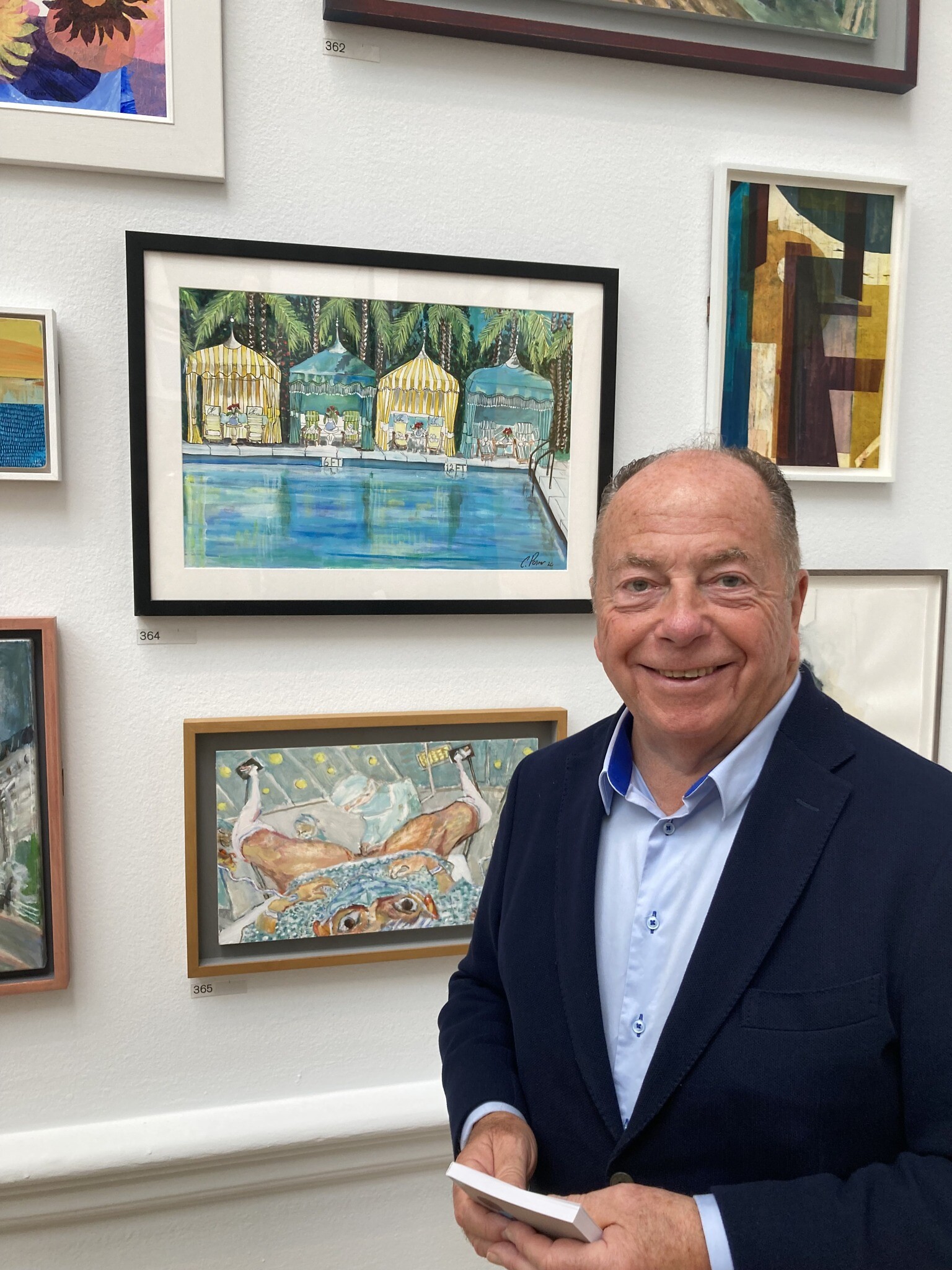
Few have witnessed as many property cycles as Leigh and he is clear that today’s market marks a stark shift from the past, noting that the “boom days of 2003, where residential property prices were rising 20% a year are never coming back.
“It used to be about gazumping, now it’s gazundering – people chipping prices off just before contract.
“I see a prolonged period of stagnation ahead. It could be five, 10, maybe 15 years before we see a real boom again, if we ever do.
In some parts of the market, particularly new-build developments, the slowdown is already evident.
“In central London, we’ve probably seen a down valuation of around 17% on new-build property,” he says. “A lot of those flats are standing empty, there are very few buyers.”
Home hunters, he adds, are increasingly turning to the rental market as a result.
“The balance has shifted.
“Today, only about 45% of people own property, compared to 70% in the Thatcher years.
“We’ve become a rental-orientated society.
His comments come as sweeping new rental reforms recently came into force (May 1st), marking one of the biggest changes to the sector in decades.
Under the Renters’ Rights Act, so-called “no-fault” evictions have been abolished, fixed-term tenancies replaced with rolling contracts, and rent increases limited to once a year – measures designed to give tenants greater security and flexibility.
“This was rushed through without much though and communication with property professionals,” he said, adding that, “If you asked me what I’d tell my nearest and dearest, I’d say rent.”
“There’s always time to buy. Renting gives you flexibility, especially with work. If you’re tied to a house, that’s not always the case.”
He also points out that many of the hidden costs of ownership; maintenance, repairs and management, are often underestimated.
Now working as an independent adviser, Leigh continues to guide clients, often partnering with local agents to offer strategic advice.
His message to sellers is straightforward: realism matters.
“This is a market you can’t challenge. You have to listen to a good, experienced agent when they tell you the true value of your property.”
Too often, he believes, properties are overvalued at the outset.
“Agents are frightened of losing instructions, so they overvalue and that’s wrong.”
Beyond property, Leigh, a father of one and grandfather of two, is deeply embedded in the Jewish community that helped shape much of his early career.
He is life president of Jewish Care’s Redbridge Jewish Community Centre, which is set to reopen following a major redevelopment. Leigh, alongside the late Frank Cass and late Ellis Birk was instrumental in the merger of the old Sinclair House with Jewish Care.
Leigh is also life president of the Loughton and Chigwell District Synagogue. He also serves as a trustee of the Holocaust Educational Trust, chairman of Essex Jewish Youth, The Essex Jewish News and a trustee of Abridge Golf & Country Club.
“There are still people who have done well who are putting their hands in their pockets and supporting the community,” he says. “I was delighted to see Sir Gerald Ronson, Lord Sugar and the late Cyril Dennis’ family fund such as major part of the new Redbridge Community Centre campus.
“And that’s vital, because those are the things that really matter.”