
Start-up titans return to the classroom
From billion-dollar exits to mentoring the next generation, leading tech founders are giving back to the ecosystem that helped shape them
After building world-changing companies and exiting for eye-watering sums, many founders could be forgiven for taking their foot off the gas. But for a growing number of successful tech entrepreneurs, the next chapter isn’t about slowing down or the next big thing – it’s about coming full circle to guide those coming up behind them.
From Uri Levine, the co-founder of Waze, acquired by Google, to Dr Kira Radinsky, who sold SalesPredict to eBay, to Ran Korber of BreezoMeter, also bought by Google, these founders are sharing their experience through lectures, supervision and hands-on mentorship – passing on lessons that no textbook or pitch deck can capture.
Driven not by profit but by purpose, they are giving back to the ecosystem that once gave them their own start. And, as they tell Candice Krieger, shaping future founders is proving to be one of the most meaningful ventures of all.
Uri Levene, co-founder, Waze
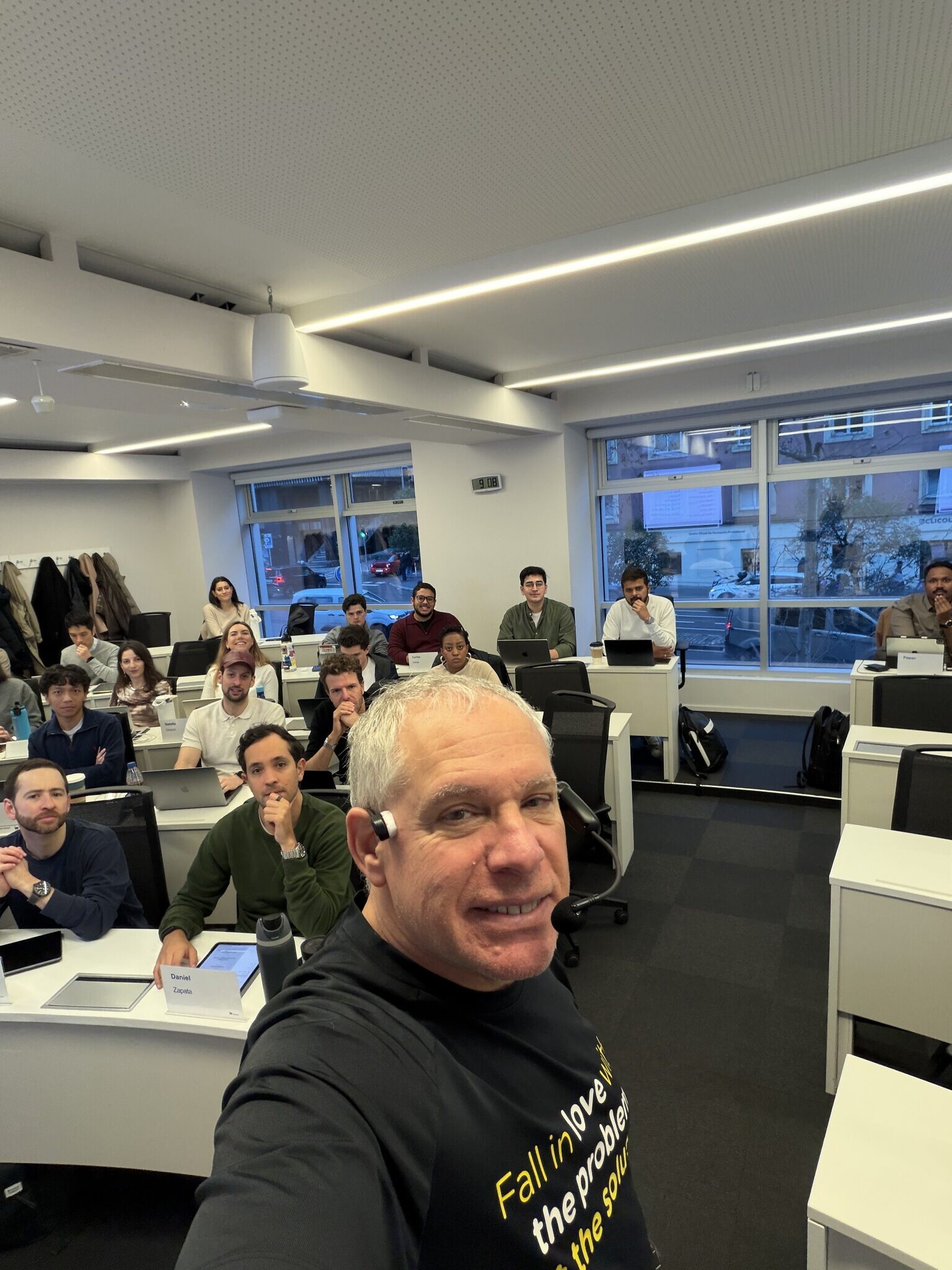
As co-founder of Waze, the crowd-sourced navigation app founded in 2006 and sold to Google in 2013 for a reported $1.1 billion, Uri Levine helped create one of Israel’s most iconic tech success stories. But the exit wasn’t the end. Alongside building and backing companies, teaching has become central to his life. He spends about 20 percent of his time working with MBA students and founders worldwide, teaching at IE Business School in Madrid, Tel Aviv University, the ChaiTech Accelerator in Toronto and, later this year, Santa Clara University in California, with more to follow. Uri runs an MBA elective, Building Unicorns.
“I see myself as a mix between an entrepreneur and a teacher,” he says, “so I feel equally rewarded whether I am building stuff myself, or guiding someone else to build it.”
Uri began teaching nearly a decade ago after leading an MBA workshop in Brazil. The framework he created became the foundation of his bestselling book, Fall in Love with the Problem, Not the Solution. “After it was published, I decided that I wanted to teach more. When I see a student or an entrepreneur taking some insights and already figuring out how it is going to help them, this is the most rewarding event of teaching – the ability to influence and increase their likelihood of someone being successful.”
Uri remains a prolific entrepreneur and investor: co-founding Moovit, sold to Intel in 2020 for around $900 million, backing dozens of early-stage ventures, and launching Double Down, a fund supporting companies he has founded or is closely involved in. “I obviously believe in give back and pay it forward, but you need to have the passion for it. If you have the passion then I would love you to come and teach and think about making
a bigger impact.”
Dr Kira Radinsky, co-founder, SalesPredict
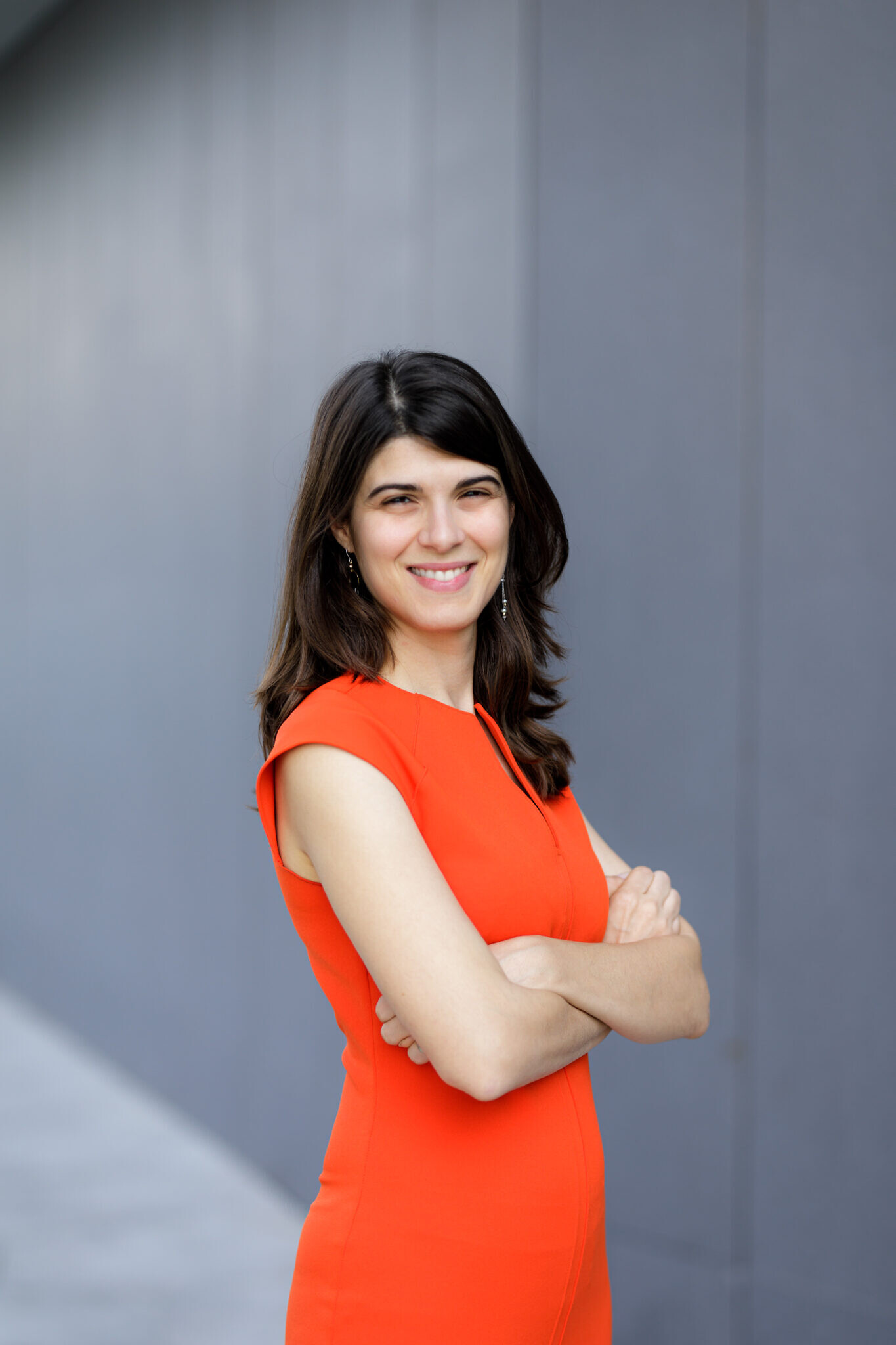
As a serial Israeli tech founder, Dr Kira Radinsky has returned to academia as a mentor and research supervisor, to help shape the next generation of innovators.
Now based in the US, the Ukrainian-born entrepreneur travels regularly to Israel and has been affiliated with the Technion – Israel Institute of Technology since 2016. There, she serves as a research associate professor, supervising MSc and PhD students and mentoring researchers. “I’ve always believed that the highest-leverage way to build the next generation is to help talented people develop strong judgement,” she says. “How to choose meaningful problems, how to be rigorous, and turn ideas into real impact.”
Kira is the chief technology officer of Diagnostic Robotics, which uses artificial intelligence (AI) to improve healthcare, make
it cheaper and more widely available. She previously co-founded SalesPredict, an AI-driven predictive analytics start-up that was acquired by eBay in 2016, and went on to serve as eBay’s director of data science and Israel chief scientist.
She first gained international recognition at Microsoft Research, developing predictive algorithms that flagged early warning signs of major global events, from political unrest to disease outbreaks. Her achievements earned her places on MIT Technology Review’s Innovators Under 35, Forbes 30 Under 30 in enterprise technology, and Globes’ Woman of the Year.
Alongside her work at Diagnostic Robotics, she sets aside time each week to advise and research guidance at the Technion. “Mentorship, supervision, guest sessions, or structured advising can be incredibly valuable to students,” she says. “Founders can offer a practical lens on decision-making under uncertainty, translating ideas into products, and building with real constraints – perspectives students don’t always get from textbooks.”
Kira credits mentors including Eric Horvitz, chief scientific officer at Microsoft, and Shaul Markovitch, professor of computer science at the Technion who, she says, combined “rigour with a belief that ambitious ideas can be made real”, adding: “That mindset stayed with me and it’s something I try to pass on to my students.”
Her Technion work spans four areas: building cleaner, less biased AI datasets; applying AI to chemistry and drug discovery; grounding AI models in scientific and medical reality; and improving collaboration between people and AI, particularly in healthcare decision-making.
Balancing academia with industry, she says, “requires structure, but it’s manageable”. She explains: “In many ways it complements my day job – mentoring keeps me close to first principles and often surfaces new ideas and talent.”
She believes more founders who have exited or built major companies should contribute, even informally. “If there’s one takeaway, it’s that supporting the next generation isn’t only about teaching content. It’s about helping students pursue ambitious problems and stay rigorous as they execute.”
Ran Korber, co-founder, BreezoMeter
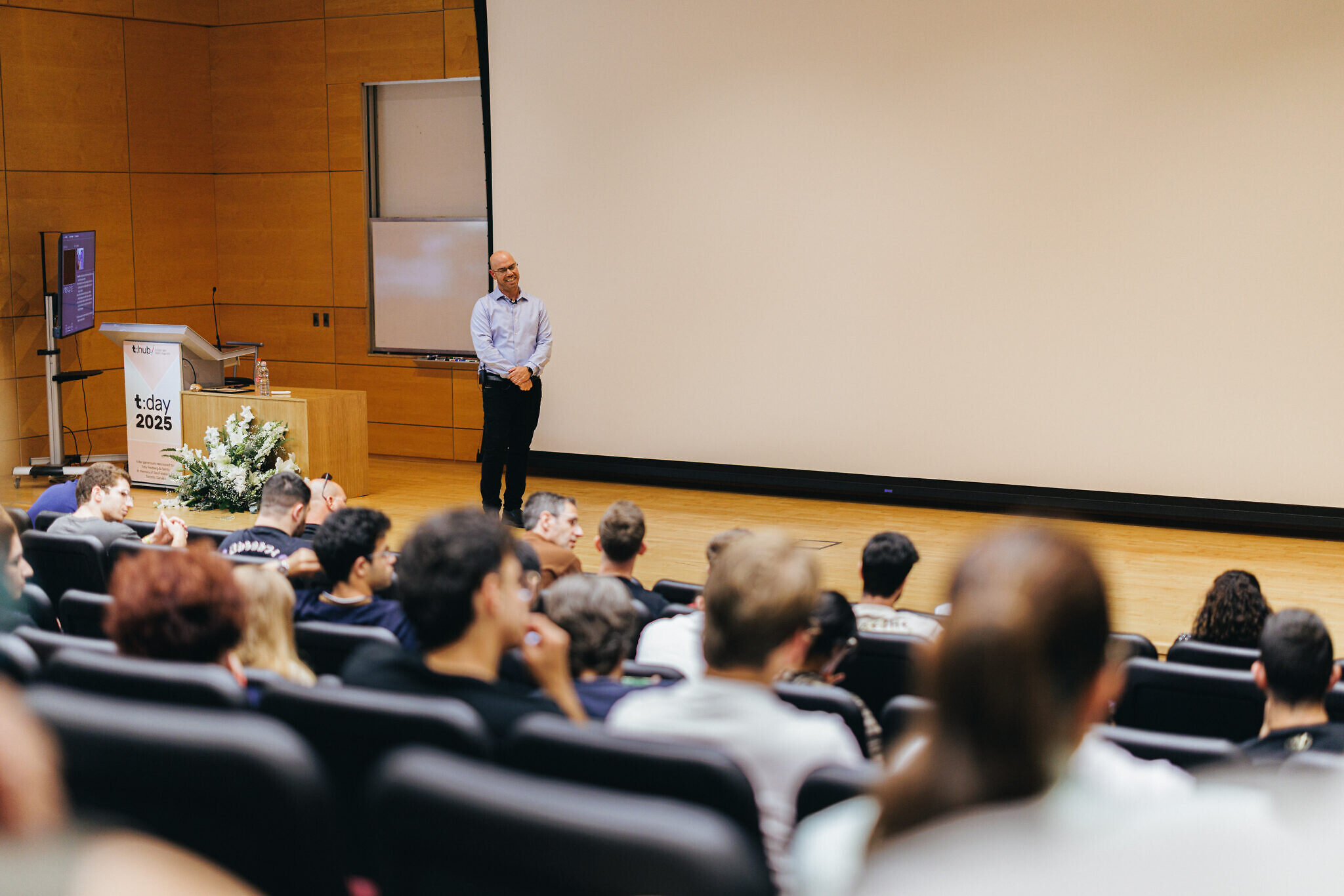
After selling his air quality intelligence platform BreezoMeter to Google in 2022, Ran Korber returned to the Technion in Haifa, where he had studied. “After more than a decade in the start-up world, and following significant entrepreneurial success, I felt a strong desire to give back,” he says.
“I benefited from exceptional mentors, reinforcing my belief that entrepreneurship is a real profession that should be taught properly.”
Ran now teaches at t:hub, the Technion’s centre for innovation and entrepreneurship and has just revealed that he is also part of the new pre-accelerator programme at t:hub, which begins at the of March.
“The Technion shaped the way I think,” he reflects. “Just as I was fortunate to learn from experienced and successful entrepreneurs along my journey, this is my chance to support the next generation of founders – those who will hopefully help improve the world and strengthen their communities.”
Ran teaches two undergraduate courses within the entrepreneurship leadership programme. One, which he created – Entrepreneurship and Hi-Tech in Israel – offers “a structured and realistic view of how high-tech start-ups are built.” The other, Entrepreneurship in Organisations, examines how innovation works inside established companies, from internal processes to culture and structure.
Ran regularly invites senior founders and executives to speak, giving students direct exposure to those leading Israel’s tech sector. He also emphasises areas he believes academia often overlooks. “I spend a lot of time on mental resilience, decision-making under uncertainty and building healthy organisational culture,” he says. “These are skills that matter not only in start-ups, but in life more broadly.”
He believes more founders who have exited should follow suit – and many do. “Whenever I invite founders or senior leaders to speak, they are almost always happy to do so. People even reach out proactively and volunteer to guest lecture, entirely unpaid. “There is a strong and almost instinctive tradition of helping the next generation. That is one of the real strengths of the Start-Up Nation.”