
The Israeli-founded AI company decoding the human immune system
Dr Noam Solomon's Immunai has raised nearly $270m and works with the world's top 20 pharmaceutical companies, including AstraZeneca, Pfizer and Teva
AstraZeneca, Pfizer, Teva and Boehringer Ingelheim are among the global pharmaceutical companies partnering with Israeli-founded Immunai to improve how new medicines are discovered and developed.
Co-founded in 2018 by Israeli mathematician Dr Noam Solomon, Immunai is a biotechnology company headquartered in New York with its research and engineering centre in Israel. It employs 170 people worldwide and now works with eight of the world’s top 20 pharmaceutical companies.
But that was never Solomon’s original ambition.
“When we started seven and a half years ago, the plan wasn’t to work with all the pharma companies,” Solomon tells Jewish News. “It was to decode the immune system.
“The idea was precision medicine – finding the right therapy for the right patient. We realised that if we could better understand the immune system, we could unlock something much bigger.”
Today, rather than developing its own medicines, Immunai has positioned itself as an AI and data partner to the pharmaceutical industry.
By combining artificial intelligence with one of the world’s largest immune-cell databases, the company maps and analyses the human immune system. Today, that helps pharmaceutical companies develop better medicines; in the future, Solomon believes it could also transform preventative healthcare and healthy ageing.
The company has raised nearly $270 million and, recently announced new partnerships with Bristol Myers Squibb and Boehringer Ingelheim. Earlier this year, AstraZeneca again extended its long-standing relationship with Immunai, deepening a collaboration that now spans multiple oncology and immunology programmes, with Immunai eligible to receive up to $37.5 million during 2026 and 2027.
For Solomon, who splits his time between Israel and the US, the repeated expansion of partnerships reflects a broader shift taking place across the pharmaceutical industry, as companies increasingly turn to AI to improve one of the most expensive and complex processes in business: developing new medicines.
“AstraZeneca doesn’t keep expanding a collaboration unless real value is delivered,” he says. “Clinical teams are using our platform to figure out which patients to enrol, why a drug worked or didn’t work, and how to get the dosing right before it becomes a costly late-stage mistake.
“That is the bar. Not an abstract AI promise. Real work in real programmes.”
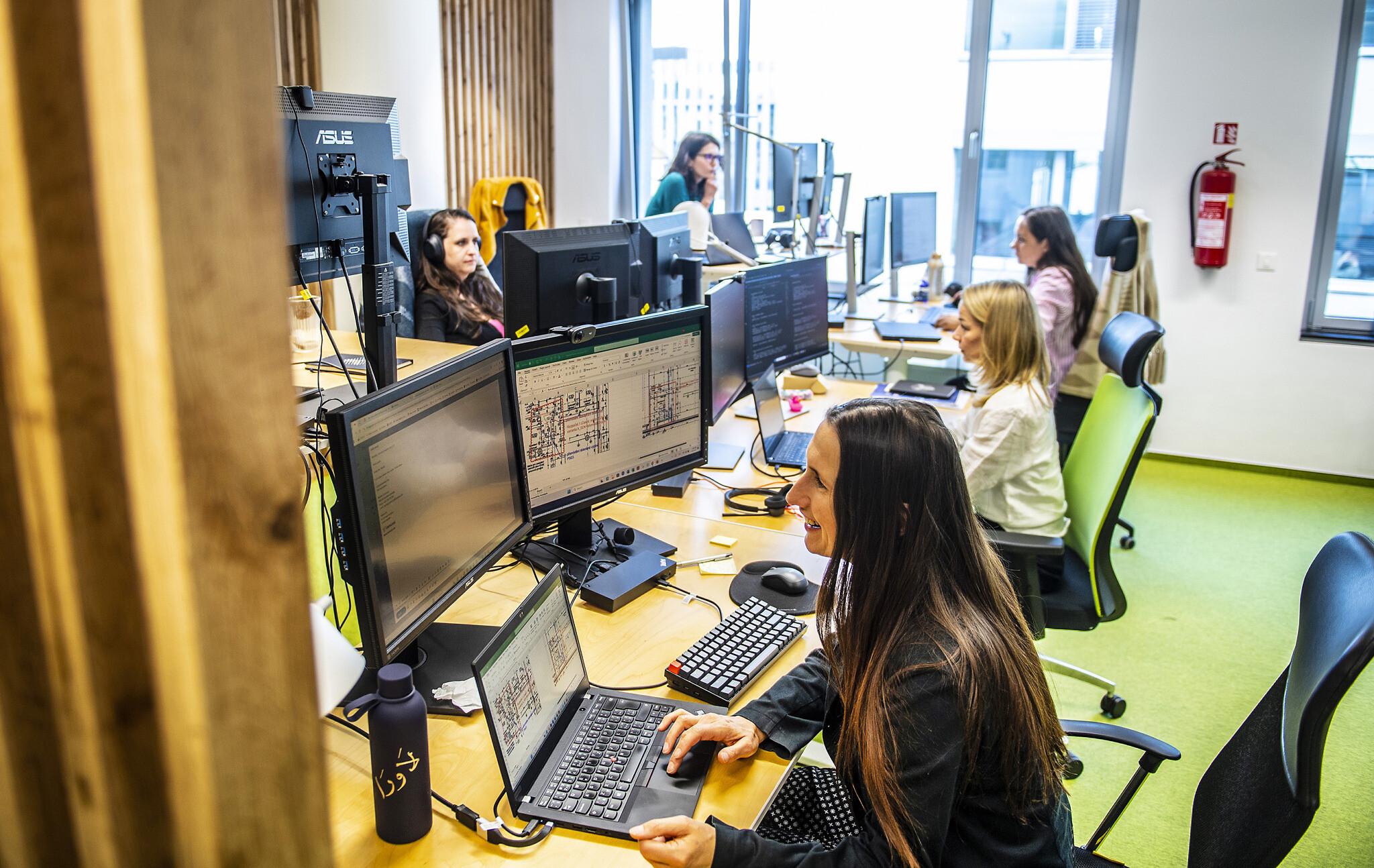
Despite Immunai’s recent momentum, Solomon believes biotechnology remains one of the most difficult sectors in which to build a company.
“Unlike software or cybersecurity businesses, where products can often be developed and commercialised relatively quickly, biotechnology companies face years of research, clinical trials and regulatory approvals before generating meaningful revenue.
“It’s much harder than general technology. The return on investment has been declining for years. Development timelines are much longer, the capital requirements are much greater and failure rates are exceptionally high.”
This, he acknowledges, has made biotech a harder sell for investors.
“If you’re a venture capitalist deciding between a cybersecurity company that could scale in three or four years and a biotech company that may take 10 or 15 years to reach the market, they’re very different investment decisions.”
Solomon distinguishes biotechnology from medical technology, such as medical devices and diagnostics, which typically face shorter development cycles and lower financial investments.
Solomon believes many companies have misunderstood where the real value in artificial intelligence lies.
“AI as a standalone software solution is becoming commoditised,” he says. “The models are getting better and better, but the competition is becoming fiercer.”
Instead, he argues, the competitive advantage comes from combining AI with proprietary data. That philosophy led Immunai to invest heavily in building one of the world’s largest immune-cell databases, alongside its own wet laboratory, enabling researchers to generate and validate biological data rather than relying solely on publicly available datasets.
“It’s not enough just to have good AI. You need something unique that the AI is trained on.”
Solomon believes biotechnology has yet to reach the same level of success as sectors such as cybersecurity.
“Building a biotech company requires significantly more capital, much longer investment horizons and greater tolerance for failure than software businesses, making it harder to attract investors accustomed to quicker returns.
“But there is no reason Israel can’t become a global biotech leader,” he says. “The science is here. The entrepreneurs are here. But we need more long-term capital and investors who understand the sector.”
Looking beyond drug development, Solomon believes the technology could eventually transform healthcare itself.
“There are really two avenues. The first is for our platform to become the operating system for drug development, used by every pharmaceutical and biotech company.
“The second is to provide value not only for people who are sick, but also for healthy people who simply want to stay healthy and monitor their health over time. I definitely see that, in 10 years, this being used in a much more direct-to-consumer way.”
Looking further ahead, Solomon believes a better understanding of the immune system could also contribute to healthier ageing.
“First we’ll unlock some of the secrets of what makes us age. Then I believe we’ll find ways to reverse ageing. But that’s much further into the future.
That confidence has only grown since the war.
With Immunai’s largest research and engineering centre based in Israel, the conflict has become part of daily working life.
“Three years ago, I knew Israelis were strong. I didn’t know they were this strong.
“There have been multiple video calls where, halfway through a meeting, people have had to stop and run to the shelter,” he says. “Then a few minutes later they’re back online, carrying on as if nothing happened.”
For Solomon, it has been a powerful reminder of the resilience of his Israeli team.
“Of course, we’d all rather be living in peace. But seeing what our team has been able to achieve during this period gives me enormous confidence in what Israel’s technology sector – and its biotech industry – can accomplish in the years ahead.”