
The UK tech company saving frontline workers a day a week
Alex Stephany’s Beam uses AI to cut admin, ease pressure and help staff support more people
Entrepreneur Alex Stephany is using artificial intelligence to tackle one of society’s biggest problems: the strain on frontline workers.
From social workers to probation officers to work coaches, hundreds of thousands of people in the UK spend every working day supporting millions of fellow citizens.
Through his technology company Beam, Stephany has developed AI-powered tools that draft documentation, provide insights, does real-time translation and can even flag risks for review for frontline workers. The goal is allow frontline workers to focus on delivering human-centred support rather than paperwork.
Prime Minister Keir Starmer has highlighted the potential for AI to reduce time spent on paperwork in social care as part of the government’s broader push to integrate AI into public services, an issue that has become increasingly urgent as demand rises and frontline workers report high levels of burnout.
Stephany says the aim is not to replace frontline workers but to give them back time to focus on the people they support.
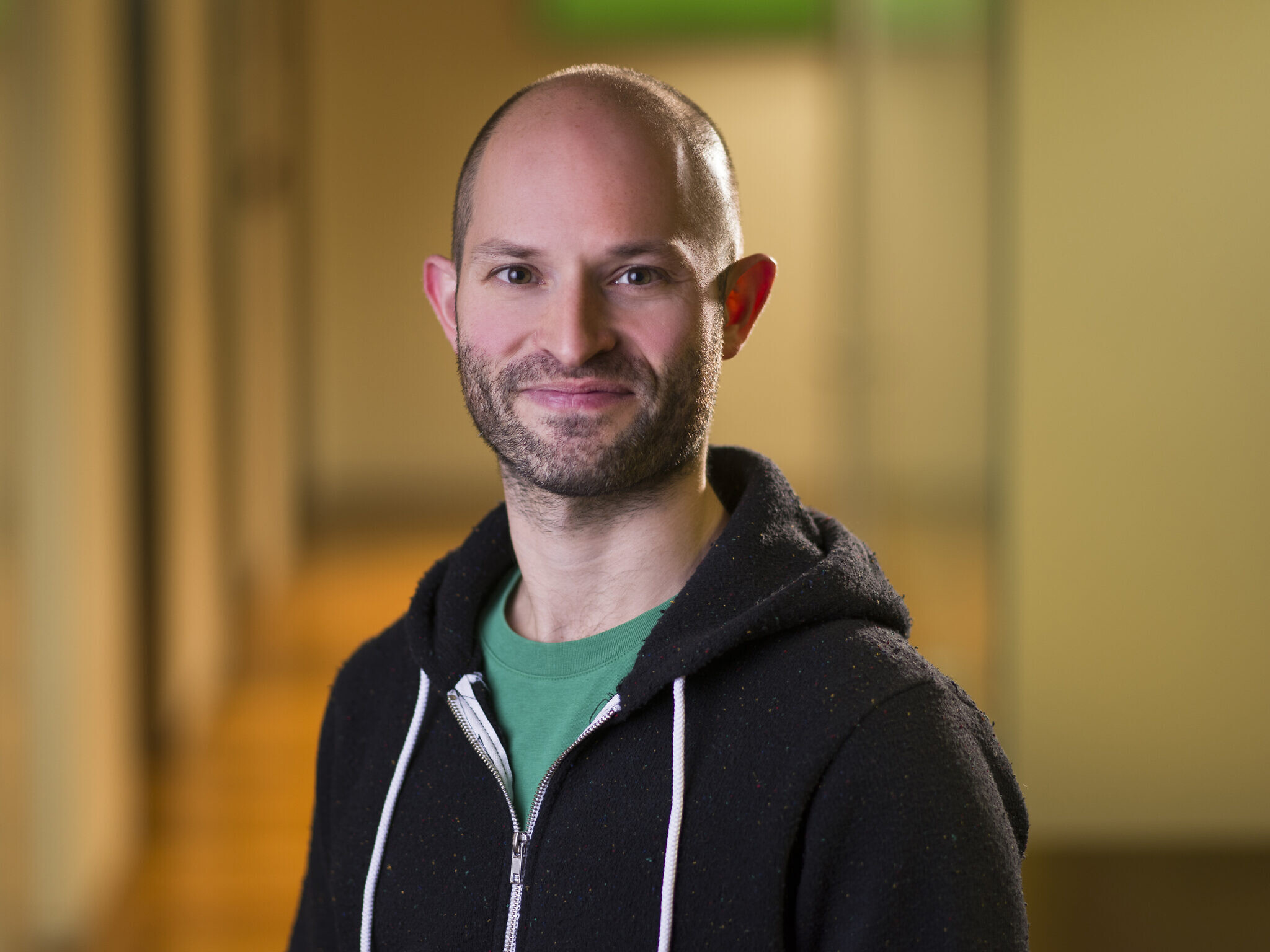
“Within a couple of weeks, you could see that people were able to support more people and they were enjoying their job more,” Stephany told Jewish News.
Beam’s technology is now used by more than 80,000 frontline staff across five countries, saving workers on average one day in admin time each week. The company’s tech is used by two in three council social care teams.
Partners include local authorities, the NHS, charities, employment support services and social services providers, including the Leeds Jewish Welfare Board and Jewish House in Sydney.
Stephany says the company’s approach is shaped by its origins, which began by using online crowdfunding to fund training and employment opportunities for homeless people.
“Beam has always been about putting technology to work on social issues,” Stephany said. “As technology has evolved, so have we.”
But as the team were delivering services themselves, they encountered the same challenges faced by frontline workers across the sector.
“Our team told us very clearly: you’ve got to help us with the documentation and the paperwork.
“They were spending so much time documenting everything. Every time they sent a message, a text, an email, they would have to write it up.”
Beam’s technology is unique because it has been developed by people who have worked in frontline services themselves.
“Most of the people building it and training others around the world have actually sat in those meetings, deal with serious real-world risks.
One of Beam’s core products is Notes, which records meetings, with consent and automatically generates transcripts and structured case notes, which practitioners can review before uploading to their case management systems. Notes handles a meeting every second during the working day.
Beam has since developed other AI tools designed to support communication and service delivery, including systems that allow people accessing services to get information around the clock and tools that can translate conversations in real time.
“The technology is already showing measurable impact on workloads,” noted Stephany.
“In Somerset, people in the children’s social care team are reporting weekly time savings of 11 hours a week.”
Stephany also cited a meeting with the Prime Minister where a social worker described how the system had transformed her work. “She is severely dyslexic and really struggled with the paperwork part of her job. “It was painful and demoralising and she hated it.”
She told the Prime Minister how she is able to see twice as many people, while enjoying her job far more.
Stephany acknowledged that use of AI in social services, where decisions can affect vulnerable people, raises questions about trust and safety but he is clear that Beam’s technology is designed to support professionals rather than replace them.
“AI is a tool,” he said. “Like any tool, it can be wielded well for good, or it can be wielded badly.
“Our tech does not make decisions on behalf of frontline workers. All of the documents that AI creates are checked by human beings. But it’s the difference between using technology to get 9/10 versions of work to review within seconds – or creating everything from scratch which can be slow and expensive – and demoralising, when that work starts bleeding as it often does in over-burdened services into people’s evenings and weekends.”
Beam has also worked with academic researchers to assess the technology for potential bias and risks and done over 100 evaluations of its work in the field.
A former corporate lawyer, Stephany is a multi-award-winning social entrepreneur. He founded Beam in 2017 after exploring how technology could help tackle homelessness. The company has grown to a team of around 200 with offices in London, New York and Melbourne and is backed by mission-driven investors including the founders of Booking.com and Dropbox. Beam has won more than 40 awards, including City AM’s 2025 Innovative Company of the Year.
Stephany has been vocal about the wider environment for entrepreneurs in Britain. In April, he was interviewed by Robert Peston for his podcast, The Rest is Money, where he explored how Beam’s technology has been swiftly by public sector bodies around the world and by innovators in UK councils “from the Isle of Wight to the Orkneys” but far more slowly by UK Central Government.
He believes Whitehall still has a major opportunity to harness the UK’s technology sector to help tackle public sector challenges. “The UK has the third biggest technology ecosystem in the world,” he said. “That is a huge opportunity for the government to tap into that talent and those companies.”
Stephany argues that in the UK, AI SMEs like Beam can sometimes find more willing partners overseas – ones that are more deeply connected with US tech.
“We’ve seen huge enthusiasm from governments and organisations outside the UK,” he said. “We need to make the most of perhaps the jewel in the crown of the UK economy, which is our technology sector. No other sector is as essential for our future prosperity and security than technology.”
Stephany said he would welcome more partnerships with organisations in the Jewish community following the adoption of Beam’s technology by the Leeds Jewish Welfare Board. “There are lots of charities doing incredibly important frontline work, and technology like this can really help the people delivering those services,” he said.
“If you’re, say, a domestic violence charity, you might receive calls at any time of day or night. Our technology can help identify the conversations that need urgent attention so teams know what to prioritise when they come in the next morning.”
“We started Beam first and foremost because we want to level up services and tools for the unsung heroes on the frontline of services, from social workers, to homelessness outreach workers to mental health practitioners and more, doing the vital work that keeps society functioning.”
In the meantime, Stephany’s focus is simple: helping frontline workers focus on people rather than paperwork.