
Top tech companies are helping reservists catch up professionally
Apple, Nvidia and Meta are among the firms involved in volunteer-led MiluimTech, which connects those who missed key career opportunities during military service
An initiative launched during the war to help Israeli reservists return to work has rapidly grown into a nationwide networking platform, connecting thousands with senior figures from some of the world’s leading tech companies.
MiluimTech – now Israel’s largest non-profit dedicated to supporting miluimnikim (Israelis called up for reserve military service) – has worked with more than 6,000 reservists since April 2024.
Over that period, it has connected more than 2,500 miluimnikim with over 1,000 senior executives from companies including Amazon, Google, Apple, Intel, Microsoft and Meta. Those connections have led to jobs, ongoing mentorships, investments and in some cases, the creation of new start-ups.
MiluimTech is the brainchild of Tel Aviv–based R&D engineer Lena Lilti, together with VC professional Shai Goel, CEO, Rebecca Bleier, head of marketing, and Talie Lenga, head of strategy. All four run it on a voluntary basis alongside their full-time jobs.
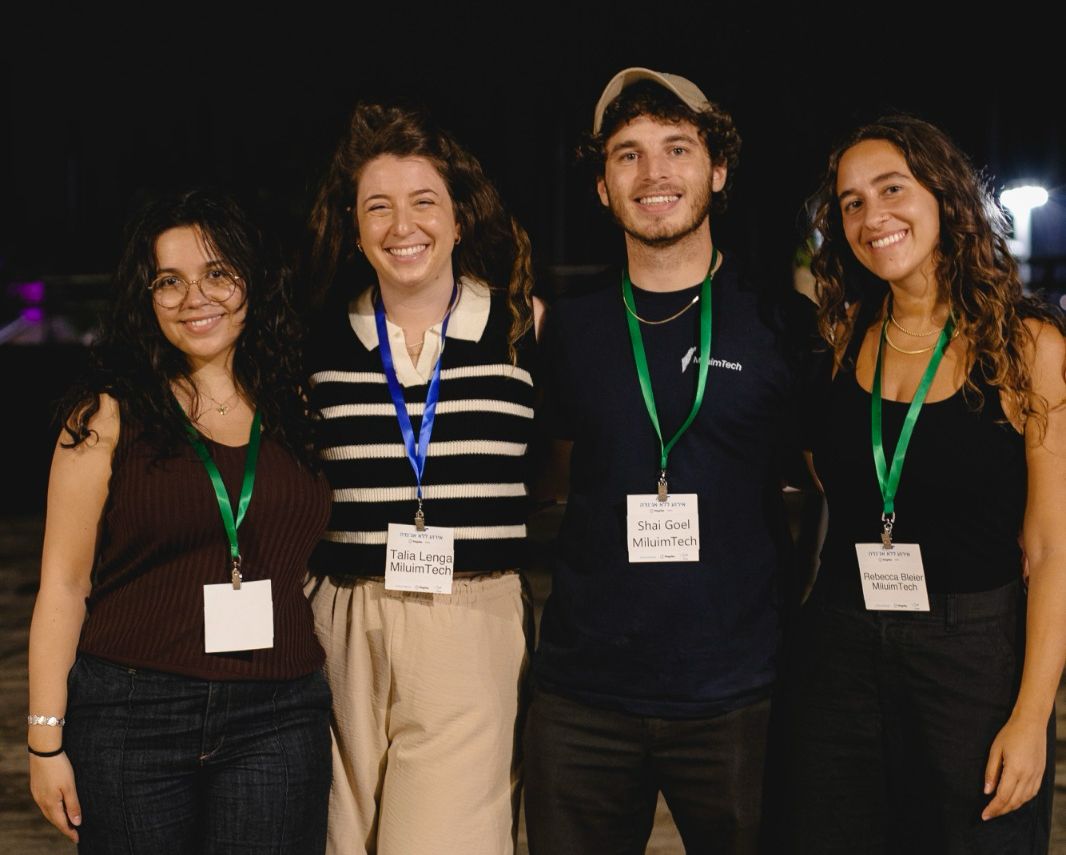
“People were coming back from miluim and asking the same thing: ‘do you know anyone?’” says Lilti, an electrophysiology engineer at Israeli neurotechnology startup brain.space.
“What began as an informal effort to help friends returning from reserve duty quickly revealed a much wider gap.”
Many of those returning were students or at the beginning of their careers, having missed a crucial period for job-hunting or professional development.
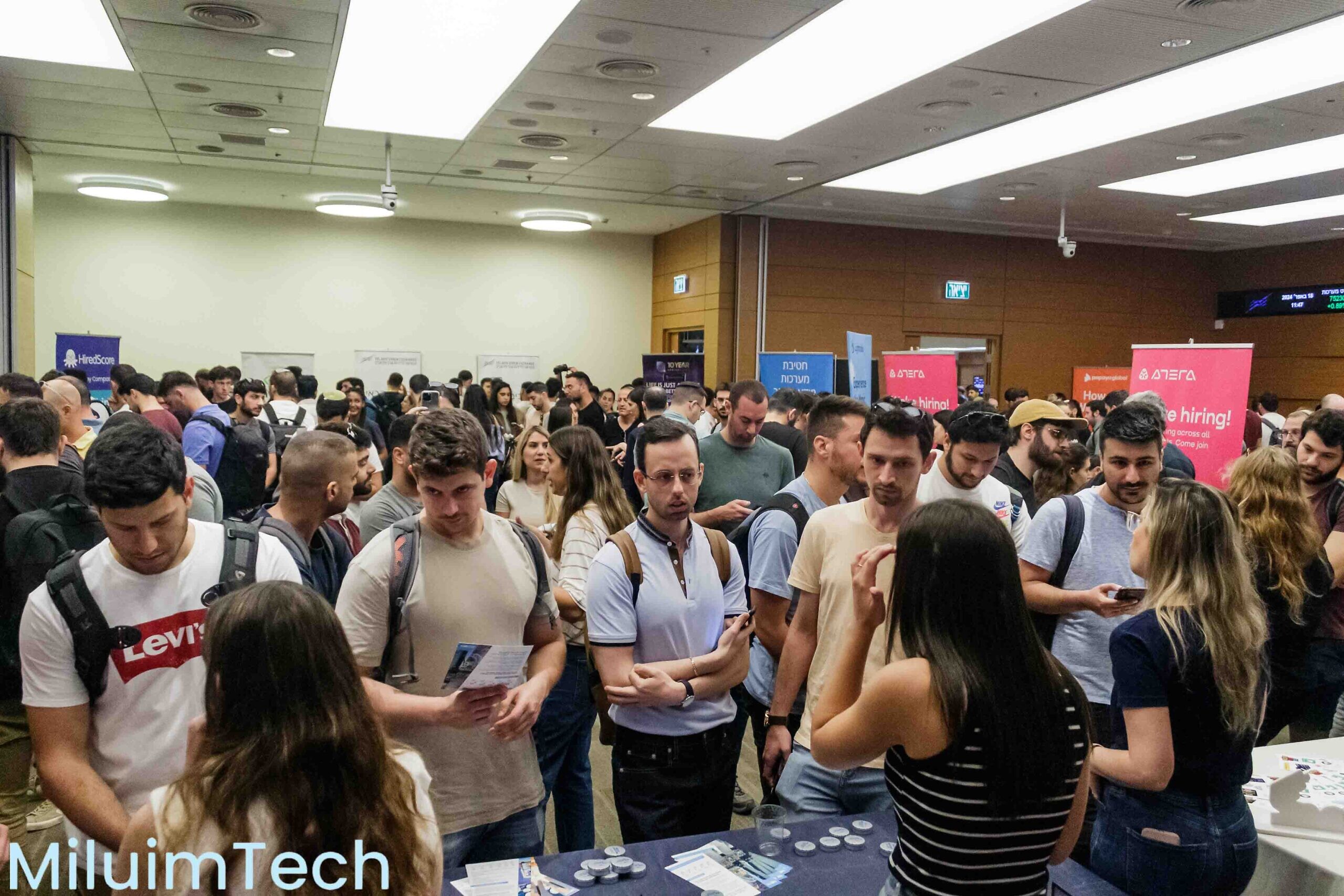
MiluimTech’s first attempt to respond was a large-scale “job fair” in April 2024, hosted by the Tel Aviv Stock Exchange. Thirty high-profile companies took part, including Nvidia, Wix and General Motors, and around 800 reservists attended.
“We couldn’t believe how many people came and while the response was great, it exposed a mismatch. Most of the roles were senior, and a lot of the miluim were just starting out,” Lilti explains. “That’s when we realised the real value wasn’t necessarily recruitment, it was access.”
That insight led to Café Ba’Hazor (‘Coffee on the Way Back’), an initiative built around informal, one-to-one coffee meetings between reservists and senior figures across the tech sector. The meetings are sponsored by leading Israeli café chain Aroma, removing even the small friction of who pays and keeping the focus on the exchange itself.
“These meetings aren’t interviews or structured mentorships,” Lilti says. “They’re simple, human conversations that help miluimnikim feel supported and regain direction.”
In its first three months, Café Ba’Hazor reached 2,500 reservists. MiluimTech has since launched a second round of the initiative under a new name, Café Ha’Hazor (‘Coffee on the Return’). This second round has grown even faster, with around 2,000 reservists matched with more than 700 tech executives in just one month.
While the list of participating companies is impressive, Lilti is keen to shift the emphasis. “Yes, the companies on board are amazing, but it’s really about the people. These executives are champions inside their organisations. They genuinely want to help. Some of them are willing to meet for hundreds of coffees.”
Dozens of reservists have already found work via the programme and many connections have developed into ongoing mentoring relationships and beyond. “In one case, a doctor returning from reserve duty was matched with a health-tech executive and the pair have one on to found a start-up together,” notes Lilti. Other meetings have led directly to investments and long-term professional partnerships.
Despite a growing sense that the emergency phase has passed, Litli says the need for support has not disappeared. “It can feel like the war is over, but it’s not,” she says. “People are still being called up, and many have had their careers paused for a long time. The needs are changing, but they’re still very real.”
To also address the challenge from the employer side, MiluimTech is now partnering on a new miluim-friendly employer badge – a voluntary standard being developed in association with Israeli entrepreneur and investor Yasmin Lukatz, one of the judges on Israel’s version of Dragons’ Den, HaKrishim (The Sharks). The badge will recognise companies that meaningfully support reservists and their families in the workplace, helping make that commitment both visible and measurable.
“In order to help reservists, we also need to help companies. This is our way of creating a new standard, so being a miluimnik never becomes something you hide or worry about in your career.”
Lilti points out that many of the challenges reservists face when returning to work are structural rather than personal. “Those looking for new roles often struggle to find the time to interview while still being called up, while others returning to existing jobs can find that employers are unsure how to support their transition back after months away. A lot of hiring is word of mouth,” she continues. “The biggest challenge is getting a foot in the door.”
For employers, Lilti argues, hiring reservists should not be seen “as charity” but as “smart business stategy.
“People coming out of miluim know how to work under pressure,” she says. “They don’t get stuck in a problem – they find a way out. They know how to keep showing up and how to work as a team. Reservists bring resilience, adaptability and leadership skills that many organisations actively need.
“It’s a smart business decision to have miluim work for your company, and senior leaders at top companies are recognising the value they bring into the workplace.”
Now formally registered as a non-profit with a board in place, MiluimTech plans to continue expanding its executive network, running further initiatives, events and developing the employer badge scheme. For Lilti, the organisation’s rapid growth reflects both the scale of the demand and the depth of commitment she has seen from across the tech community.
“It was meant to be a one-time thing,” she says. “But people kept coming back and that’s how we knew we had to keep going.”