Prefer Jewish News on Google
Blinken arrives in Israel to discuss hostages, Gaza and threat of regional war
'We'll have an opportunity to sit with the families of some of the hostages and discuss our relentless efforts to bring everyone home,' he says during meeting with President Herzog
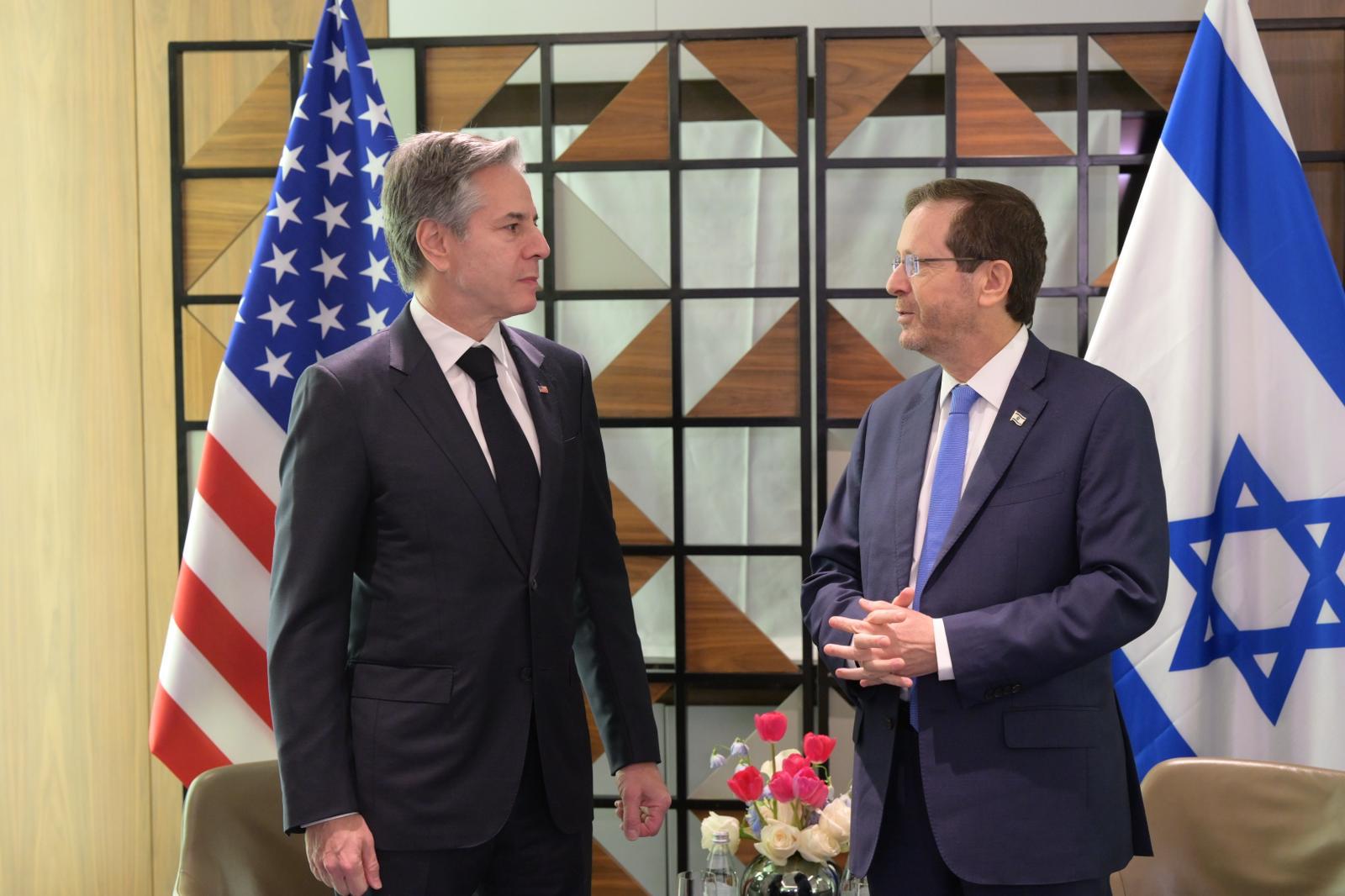
US secretary of state Antony Blinken arrived in Israel on Tuesday to discuss plans for Gaza, the release of hostages and the looming threat of a regional war.
He visited Turkey, Greece, Jordan, UAE, Qatar and Saudi Arabia before he arrived in Israel late Monday.
“We’ll have an opportunity to sit with the families of some of the hostages and discuss our relentless efforts to bring everyone home, back with their families. And there’s lots to talk about in particular, about the way forward,” Blinken said during his meeting with President Isaac Herzog.
Families of Israeli hostages demonstrated outside Blinken’s hotel in Tel Aviv called on Washington to increase efforts to release the 136 hostages held by Hamas in Gaza.
The US visitor also met with his Israeli counterpart, Yisrael Katz, saying: “I know of your own efforts, over many years, to build much greater connectivity and integration in the Middle East, and I think there are actually real opportunities there. But we have to get through this very challenging moment and ensure that October 7 can never happen again and work to build a much different and much better future.”


Before departing on his fourth diplomatic tour to the Middle East since October 7, Blinken said he would be discussing plans for Gaza’a future, while warning that the conflict that could “easily metastasise, causing even more insecurity and even more suffering.”
As for Gaza, Blinken said he would once again press Prime Minister Netanyahu “on the absolute imperative to do more to protect civilians and to do more to make sure that humanitarian assistance is getting into the hands of those who need it,” while stressing the need for Palestinians to return to their homes as soon as possible.
Blinken also referred to the conflict between Hezbollah and Israel, saying: “We want to do everything possible to make sure that we don’t see escalation there.”
But since Israel assassinated Hamas Deputy Political leader, Saleh Aroruri, in Beirut last week, Hezbollah has intensified its daily attacks against Israel.
On Monday, Israel assassinated a senior Hezbollah commander in southern Lebanon, causing the terror group to launch rockets and drones in response.
And on Tuesday, Israel reportedly killed another three Hezbollah members in southern Lebanon. Israel has warned repeatedly that it will use military force to push Hezbollah away from the border, beyond the Litani river some 25 km from the border, if the international community fails to do it through diplomatic means.
As per UN Security Council resolution 1701, Hezbollah is forbidden to be physically present along the border with Israel. The terror group has violated the resolution on a daily basis since October 8, launching near daily attacks against Israel.
The attacks have forced some 80,000 Israelis to evacuate their homes along the border, while thousands of Lebanese civilians have evacuated on the Lebanese side of the border, fearing Israeli airstrikes in response to Hezbollah’s attacks.

Keep community journalism free.
Jewish News is free for everyone. No paywall. No barriers. Just trusted journalism for anyone who wants to stay connected to Jewish life in Britain.
If you value that, please support us.
From as little as £5 a month, you can help keep our journalism free and accessible to all.
Every day, we report on the issues that matter to our community. We celebrate achievements, support charities, challenge antisemitism and ensure Jewish voices are heard more widely.
From as little as £5 a month, you can help us continue to:
- Report on the stories shaping Jewish life in the UK and beyond
- Bring our community together through shared stories, events and campaigns
- Celebrate the people, culture and moments that define our community
- Support organisations doing vital work across Jewish Britain
You can make a one-off donation or become a regular supporter. Every contribution helps keep our journalism free, independent and accessible to all.
If everyone who values Jewish News gave a small amount, it would make a real difference to our future.