
 Prefer Jewish News on Google
British Holocaust survivors lead campaign for Auschwitz anniversary
Eighty survivors mark 80 years since liberation by telling people one thing they want us to remember
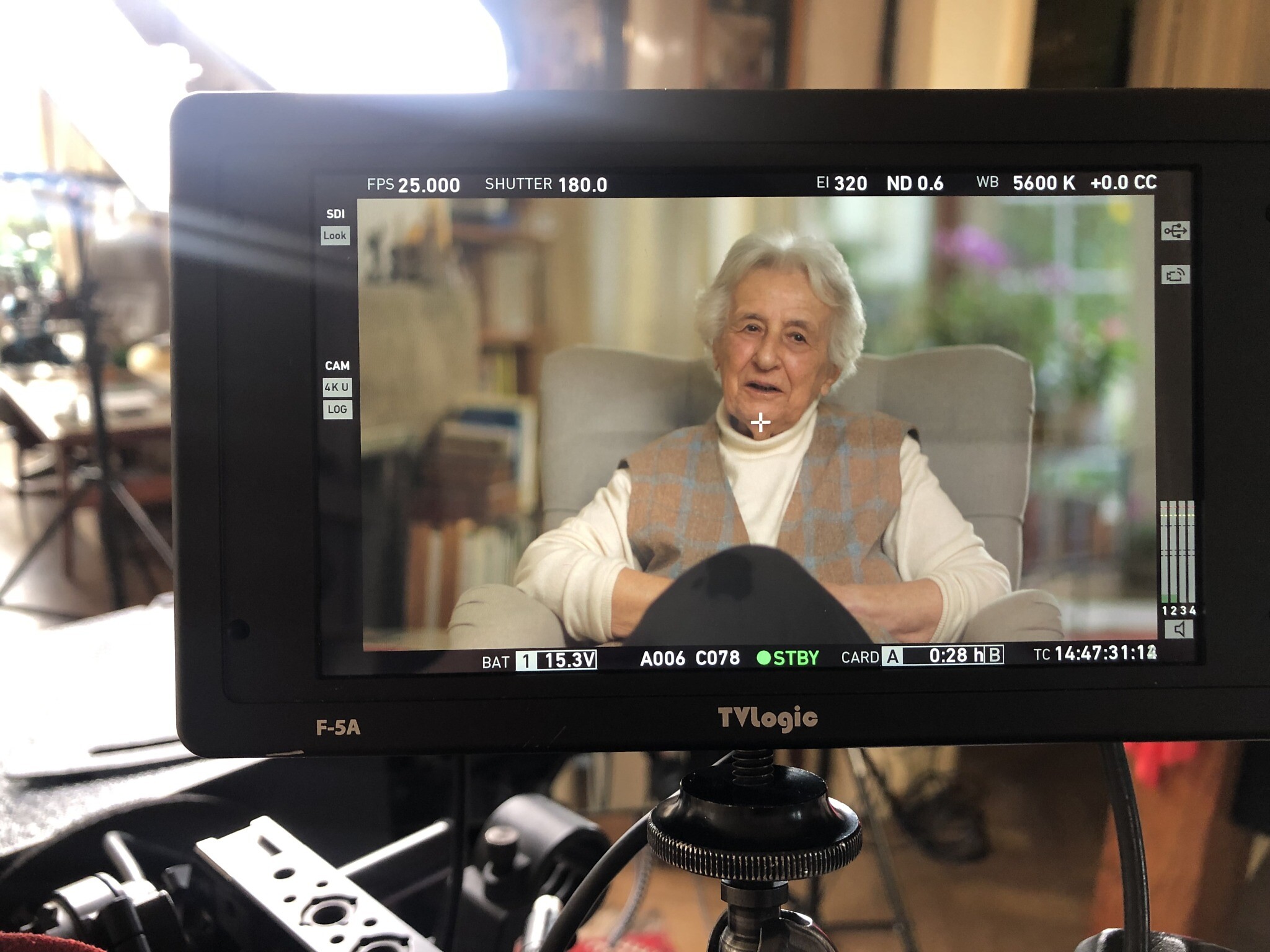
Four British Jewish Holocaust survivors have participated in I Survived Auschwitz: Remember This, a digital campaign launched by the New York-based Claims Conference. The initiative commemorates the 80th anniversary of Auschwitz’s liberation with a series of video testimonies from survivors of the extermination camp.
Over six months, the Claims Conference recorded 80 testimonies from survivors worldwide. These stories, each a deeply personal reflection, are being shared on social media over a two-week period, ensuring their voices reach new generations.
Recognising this may be one of the final opportunities for survivors to share their experiences firsthand, the campaign focused on a single, profound question: “Given your experience as an Auschwitz survivor, what is one specific thing – a person, a moment, or an experience – you want people to remember for generations to come?”
The answers, often heart-wrenching, reflect the unbearable losses endured. The project drew inspiration from the testimony of Aron Krell, who survived five concentration camps and ghettos, including Auschwitz. Aron shared the story of his brother Zvi, a talented footballer who succumbed to starvation after a year in the Lodz ghetto. Aron recalled Zvi’s final words: “Please, never forget me.” The campaign serves as a tribute to Aron, Zvi, and countless others who suffered under Nazi persecution.
“I lost not only Zvi but my brother Moshe and my mother Esther in the Holocaust,” Aron said. “I know many can’t fathom what I endured. But everyone can understand the love I had for my brother and the pain of losing him. The lessons of the Holocaust must always be remembered.”
Among the British participants is Rachel Ruzena Levy, born in 1930 in the Carpathian Mountains, then part of Czechoslovakia. Her testimony, alongside others, ensures the enduring message of never again continues to resonate in a world still grappling with the shadows of hatred and bigotry.
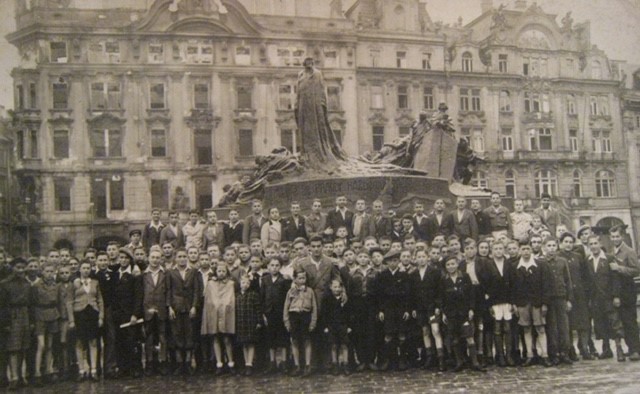
During the Holocaust, Rachel’s family evaded the first Nazi round-up of Jews in their village with the help of the local Romanians. In 1945, she, her mother, older brother and three younger siblings were arrested and placed in a ghetto. Shortly after, the family was sent to Auschwitz. Besides her older brother, the rest of her family perished in the gas chambers upon arrival. Before liberation by the British army in 1945 in Bergen-Belsen, she was sent on a death march from Auschwitz. Rachel was 14 at the time of liberation.
After the Holocaust, Rachel reunited with her older brother Chaskiel, and they were brought to Ireland, then England, as part of the orphaned refugee children group known as “The Boys.” She had two children and became a dressmaker. She has not and will not return to Auschwitz.
Anita Lasker Walfisch, arguably the best known of UK survivors, is now 99 and survived Auschwitz because she could play the cello. She says the one thing she wants people to remember is that “the Holocaust was totally different from other genocides. We were recycled. They made other things out of us”.
Rosette Greenbaum, née Krimolowski, was born to Polish nationals in Paris in September,1930.
Her parents were deported from Paris in 1942, and she and her younger sister Fleurette were sent to a children’s home, Le Centre de Saint-Mandé, set up by the UGIF (General Union of Israelites of France). Shortly before the liberation of Paris, the 20 children and their caretakers were moved from the orphanage to the Drancy internment camp.
Rosette was 13 when she and her sister were deported to Auschwitz on July 31, 1944. Her sister was sent to the gas chamber upon arrival. Rosette worked in an ammunition factory in the camp. In October 1944, she was sent on a death march to another camp in Czechoslovakia. She was liberated on May 9, 1945.
After liberation, Rosette returned to France. She was the only survivor of Auschwitz from the Saint-Mandé house. Rosette now lives in London
Another UK-based survivor, Ivor Perl, was born Yitzchak Perlmutter in 1932 in Mako, Hungary. He was raised in an Orthodox family with eight siblings.
During the Holocaust, Ivor and his family were forced into a ghetto. His father and eldest brother were sent to hard labour, never to be heard from again. Ivor was only 12 when he was deported to Auschwitz. When he arrived, he lied and said he was 16 and was selected for labour. With the arrival of the Red Army, Ivor and his eldest brother were sent to the Kaufering camp in Germany. In 1945, he was transported to Dachau and liberated.
Judith Hervé-Elkán, 98, who now lives in France, says that the image of mothers who chose to go with their children to the gas chambers rather than watch their children die alone is one that she will never forget. She says: “The mother dying with her child in her arms, leading her child to death, is, for me the most terrible of the images I still see today. So many mothers, not knowing what awaited them, didn’t let go of their children, their babies, their little ones. What is more terrible in the world than to lead your child to death?”
Jona Laks, a twin, (one of the only twins still alive), who survived Mengele’s experiments, said: “I remember that day, at that same moment when we were left alone on the death march, I vowed that I would dedicate all my energy, all my time, everything, to telling, documenting, conveying…
In her video, Herta Vyšná, an Auschwitz survivor from Slovakia, talks about her aunt and her two young children, four-year-old Lenka and six-year-old Erika, who were selected by Mengele for the gas chamber; about her father who died in Sachsenhausen; and about her mother who was selected by Mengele for unimaginable experiments and died. She recalled: “That is how I lost my parents and was orphaned at the age of 13. I wish for the memory of my family, who was murdered, to be preserved forever and ever.”
Ella Blumenthal, 103 years old, who now lives in South Africa, wants the world to remember she never gave up hope in Auschwitz despite losing 23 members of her immediate family. She and her niece, Roma, survived. “She begged me to end our suffering by throwing ourselves onto the electrified fence, because she said the only way out of Auschwitz was through the chimney. I convinced her to wait one more day – and then again another day – because I wasn’t ready to die. I wanted to live.”
Gideon Taylor, president of the Claims Conference, said: “The horrors that occurred at Auschwitz were an evil that no human should ever endure, but also an evil that no human should ever forget. While it is difficult to imagine oneself in a concentration camp, we can all relate to wanting people to remember loved ones we’ve lost, experiences that shaped us and moments that were important to us. It is critical that we educate future generations about Auschwitz. I Survived Auschwitz: Remember This does so by connecting the generations with our shared humanity.”
I Survived Auschwitz: Remember This can be found on the Claims Conference social media channels and online at www.claimscon.org/rememberthis/

Keep community journalism free.
Jewish News is free for everyone. No paywall. No barriers. Just trusted journalism for anyone who wants to stay connected to Jewish life in Britain.
If you value that, please support us.
From as little as £5 a month, you can help keep our journalism free and accessible to all.
Every day, we report on the issues that matter to our community. We celebrate achievements, support charities, challenge antisemitism and ensure Jewish voices are heard more widely.
From as little as £5 a month, you can help us continue to:
- Report on the stories shaping Jewish life in the UK and beyond
- Bring our community together through shared stories, events and campaigns
- Celebrate the people, culture and moments that define our community
- Support organisations doing vital work across Jewish Britain
You can make a one-off donation or become a regular supporter. Every contribution helps keep our journalism free, independent and accessible to all.
If everyone who values Jewish News gave a small amount, it would make a real difference to our future.





















