Prefer Jewish News on Google
Buchenwald-surviving New York architect designs Albania memorial
Stephen B. Jacobs, 81, whose three stone plaque memorial was opened last month, said it was 'not simply about designing… it was a personal experience'
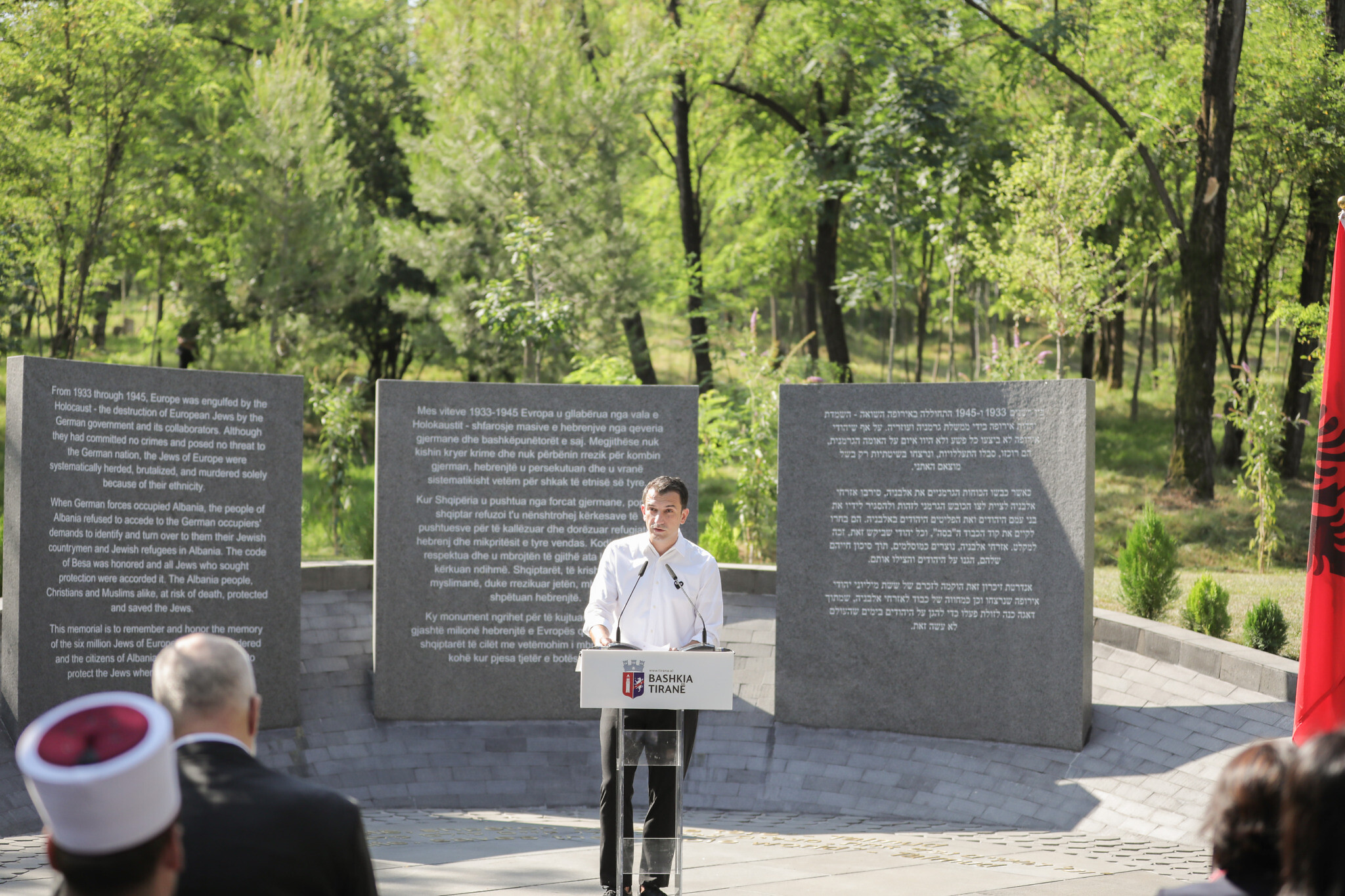
A feted New York architect who rose to prominence after surviving Buchenwald has spoken of his experience designing a Holocaust memorial for the Grand Park in the Albanian capital of Tirana.
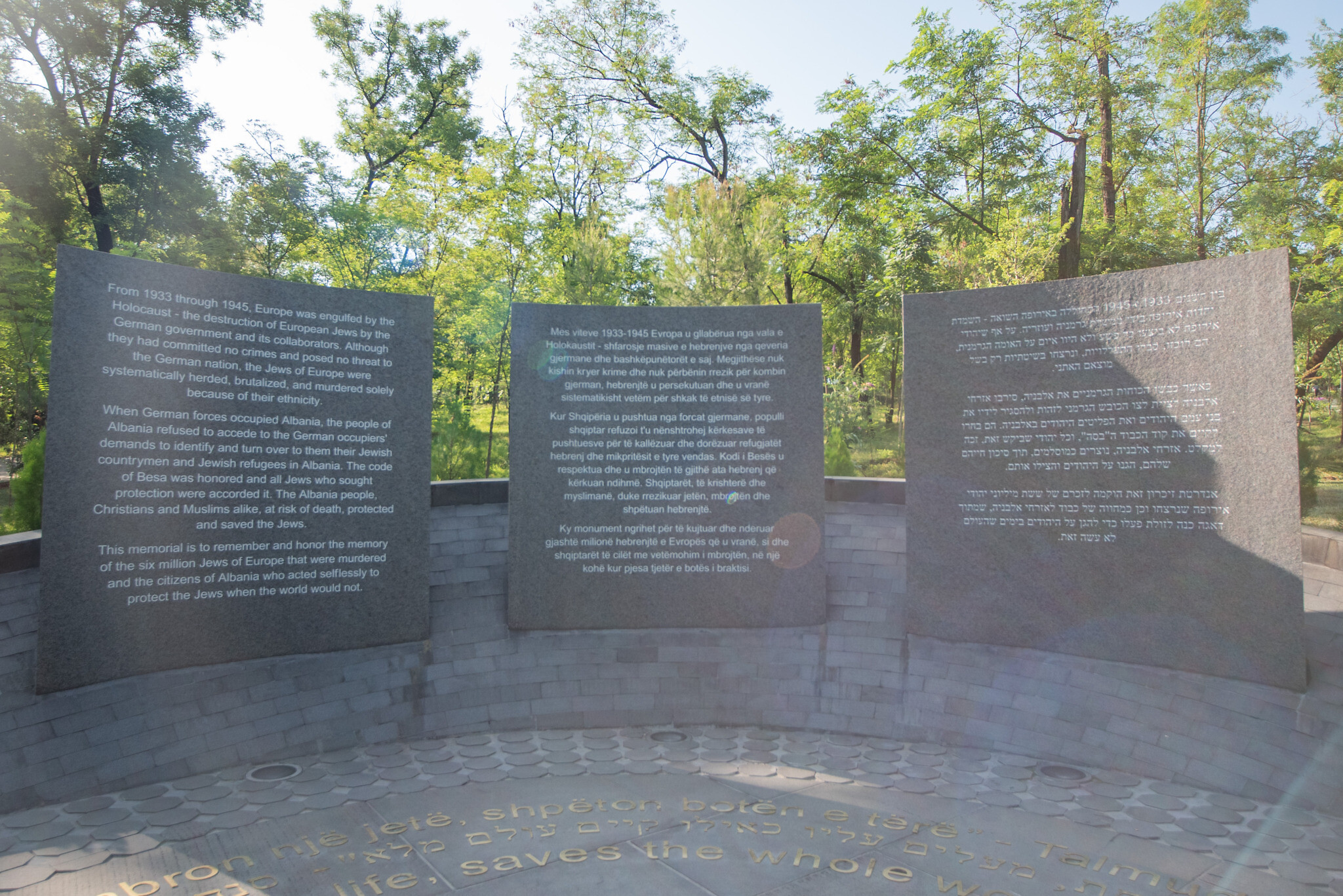
Stephen B. Jacobs, 81, whose three stone plaque memorial was opened last month, told JTA that it was “not simply about designing… it was a personal experience”.
The plaques, written in Albanian, English and Hebrew, showcase the stories of Albanians who saved Jews during the Holocaust, and the celebrated architect said he agreed to help when he learned that the Muslim-majority state was the only country in Europe with more Jews after the war than before.
“I thought this was a very important story that needed to be told,” he said, speaking about the relative lack of international recognition for Albanians who saved Jewish lives during the Second World War.
Born Stefan Jakubowicz in the Polish city of Lodz, Jacobs and his secular family moved to Piotrków, later site of the first Nazi ghetto housing 25,000 people, which was liquidated in 1942 when – aged five – he was sent to Buchenwald.
Jacobs has told of “fleeting memories” spent at the camp’s shoemaker’s shop or hiding in the tuberculosis ward of the camp hospital, where his father worked. His family survived and moved to the United States after its liberation on 11 April 1945.
The only Holocaust survivor ever to design a memorial, he was asked in the late 1990s to come up with the Buchenwald Holocaust Memorial by the US Commission for the Preservation of America’s Heritage Abroad.
The memorial was in the ‘Little Camp’ area of Buchenwald, where Jews were mostly confined, and inaugurated in 2002, on the 57th anniversary of the camp’s liberation.
“Albania of course was more remote, because I wasn’t there,” he said. “I didn’t know much about Albania before. I certainly didn’t know the story.”
Holocaust memorials in the former Soviet Union “tend to be one of two extremes,” he said. “Either the heroic Soviet-style memorial, the heroic resistance to fascism, or so totally abstract that the lay viewer needs an explanation of what he’s looking at.”
He added: “I felt that neither of these directions was appropriate. The most meaningful thing about a Holocaust memorial, particularly since we’re doing this for future generations, is to tell people exactly what happened here.”

Keep community journalism free.
Jewish News is free for everyone. No paywall. No barriers. Just trusted journalism for anyone who wants to stay connected to Jewish life in Britain.
If you value that, please support us.
From as little as £5 a month, you can help keep our journalism free and accessible to all.
Every day, we report on the issues that matter to our community. We celebrate achievements, support charities, challenge antisemitism and ensure Jewish voices are heard more widely.
From as little as £5 a month, you can help us continue to:
- Report on the stories shaping Jewish life in the UK and beyond
- Bring our community together through shared stories, events and campaigns
- Celebrate the people, culture and moments that define our community
- Support organisations doing vital work across Jewish Britain
You can make a one-off donation or become a regular supporter. Every contribution helps keep our journalism free, independent and accessible to all.
If everyone who values Jewish News gave a small amount, it would make a real difference to our future.