Prefer Jewish News on Google
Cancer breakthrough? Israeli scientists develop method to ‘destroy’ tumours
The scientific advance at Tel Aviv University is based on targeting tumours by using a combination of ultrasound and injection of nano-bubbles into the bloodstream
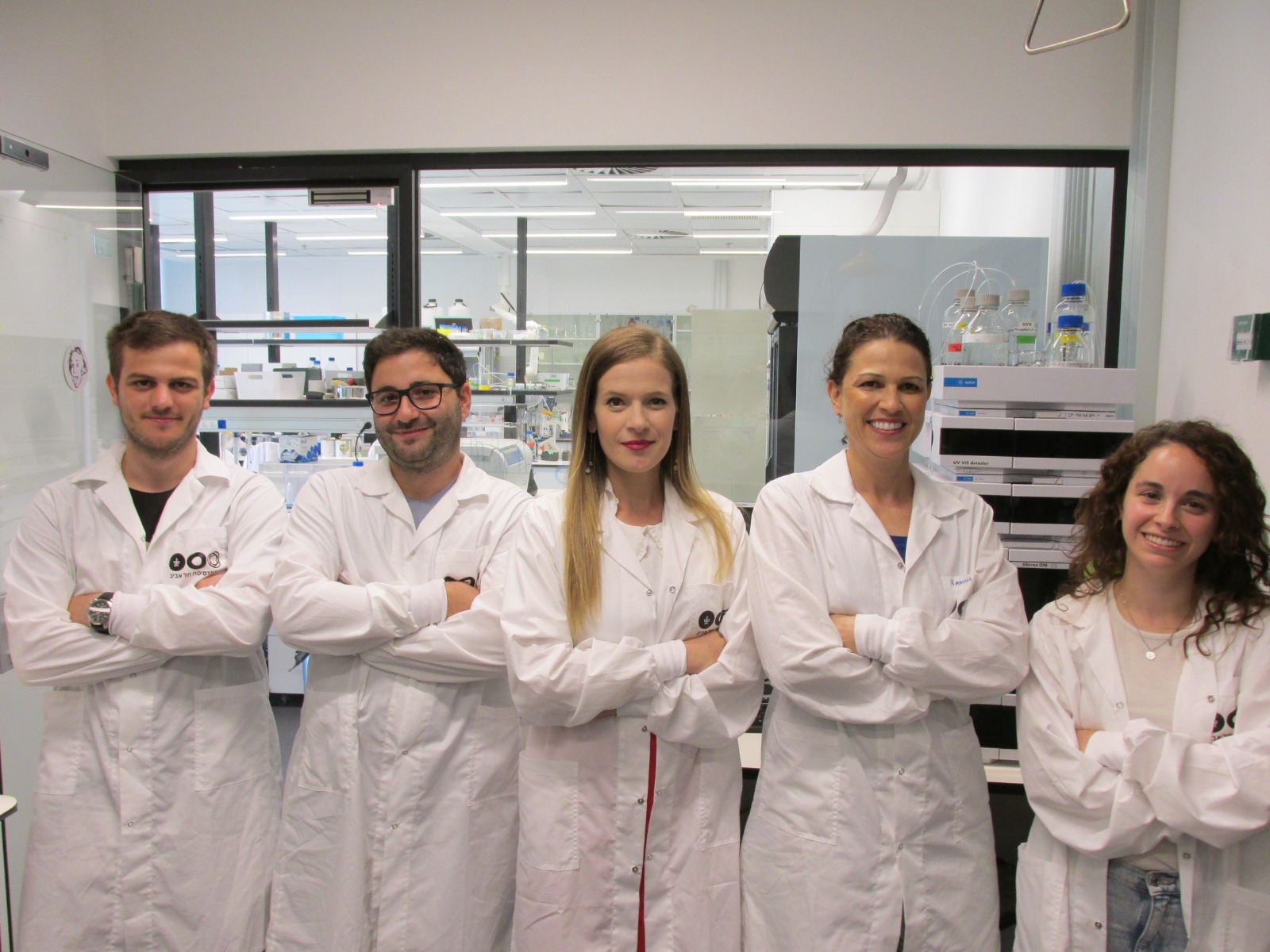
Israeli researchers have developed new technology that destroys cancerous tumours.
The research team at Tel Aviv University used a method of targeting tumours by using a combination of ultrasound and the injection of nano-bubbles into the bloodstream.
“Our new technology makes it possible, in a relatively simple way, to inject nano-bubbles into the bloodstream, which then congregate in the area of the cancerous tumour. After that, using a low-frequency ultrasound, we explode the nano-bubbles, and thereby the tumour,” Dr. Tali Ilovitsh at Tel Aviv University’s Department of Biomedical Engineering said.
Dr. Ilovitsh explained that the the combination of nano-bubbles and low frequency ultrasound waves provides a more specific targeting of the area of the tumour, and reduces off-target toxicity.
“Applying the low frequency to the nano-bubbles causes their extreme swelling and explosion, even at low pressures. This makes it possible to perform the mechanical destruction of the tumours at low-pressure thresholds.”

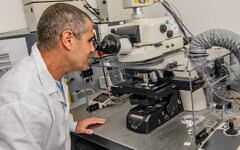

The research team said their method is safe, cost-effective, and clinically available.
Dr. Ilovitsh said that the use of low-frequency ultrasound also increases the depth of penetration, minimises distortion and attenuation, and enlarges the focal point.
“This can help in the treatment of tumours that are located deep with the body, and in addition facilitate the treatment of larger tumour volumes. The experiment was conducted in a breast cancer tumour mouse model, but it is likely that the treatment will also be effective with other types of tumours, and in the future, also in humans,” elaborated.
Keren Primor Cohen, CEO of Ramot, Tel Aviv University’s technology transfer company, said that it had applied for “several patents to protect this technology and its application.”
“We believe in the commercial potential of this breakthrough technology in cancer treatment, and we are in contact with several leading companies in Israel and abroad to promote it,” Cohen said.
The study was conducted under the leadership of doctoral student Mike Bismuth from the lab of Dr. Tali Ilovitsh at Tel Aviv University’s Department of Biomedical Engineering, in collaboration with Dr. Dov Hershkovitz of the Department of Pathology.
Prof. Agata Exner from Case Western Reserve University in Cleveland also participated in the study. The study was published in the journal Nanoscale.

Keep community journalism free.
Jewish News is free for everyone. No paywall. No barriers. Just trusted journalism for anyone who wants to stay connected to Jewish life in Britain.
If you value that, please support us.
From as little as £5 a month, you can help keep our journalism free and accessible to all.
Every day, we report on the issues that matter to our community. We celebrate achievements, support charities, challenge antisemitism and ensure Jewish voices are heard more widely.
From as little as £5 a month, you can help us continue to:
- Report on the stories shaping Jewish life in the UK and beyond
- Bring our community together through shared stories, events and campaigns
- Celebrate the people, culture and moments that define our community
- Support organisations doing vital work across Jewish Britain
You can make a one-off donation or become a regular supporter. Every contribution helps keep our journalism free, independent and accessible to all.
If everyone who values Jewish News gave a small amount, it would make a real difference to our future.