Prefer Jewish News on Google
Cancer diagnosis gives Cable Street director Adam Lenson a focus
The second run of the award-nominated show opens this week

In October 2002, American singer-songwriter Warren Zevon appeared on David Letterman’s chat show shortly after having been diagnosed with terminal lung cancer. In one memorable moment, he told the host: “I might have made a tactical error not going to a physician for 20 years. It was one of those phobias that didn’t pay off.”
It was an incredible performance but undoubtedly exactly that – a performance. Zevon’s son has made clear his father was simply acting out his dream of coming across like Humphrey Bogart on national TV when, in reality, he was scared.
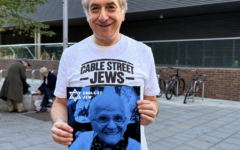
Theatre director Adam Lenson is happy to admit he’s scared. His situation is nothing like as bleak as Zevon’s (it turns out seeing doctors is definitely the way to go) but he does confess, early in our conversation: “I’m probably more likely to die of cancer than old age.” Watching the director in rehearsals for Cable Street, however, he seems to have just as much energy and enthusiasm as he had when we met as teenagers and he mastered the harmonica, if not chatting to girls.
Cable Street is a new musical that sold out its entire run earlier in the year off the back of rave reviews. The latest incarnation will run for five weeks at the Southwark Playhouse Elephant and, for Lenson, the entire journey has been a heady cocktail of the personal and political.
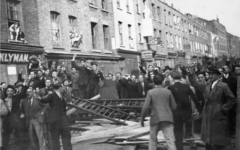
It all began in 2017 when he set up Signal, a musical theatre concert series aimed at challenging restrictive assumptions around the artform. It ran quarterly and the idea was that the songs showcased should be so new “the paint was still wet”. The following year, inspired by an article about the Battle of Cable Street as well as the contemporary political landscape, composer Tim Gilvin premiered a song entitled Only Words at Signal.
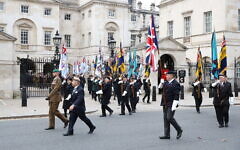
Another composer in attendance that night was struck by the timing. On the very same day, he had received an email from a playwright friend, Alex Kanefsky, eager to collaborate on a Cable Street musical. Gilvin and Kanefsky were introduced and wrote a new song for each of the next three Signal nights. Fast forward to March 2020 and Signal, like everything else, had moved online. Despite dodgy internet connections, a producer was sufficiently moved by a new song to commission a full musical and Adam was brought on as director.
That was not the only strange bit of timing. In March 2019, before the first Cable Street song was performed at Signal, Adam discovered he had cancer. That April, a revival of Falsettos was announced, a beloved Jewish musical brought back without a solitary Jewish presence in the cast or creative team. Lenson felt angry and hurt, not least because Falsettos is a show about illness, mortality and Jewishness. Uncharacteristically, he was open about his frustrations:
“I had been playing a slow game. You have to bide your time if you want to do things a bit differently in theatre but it suddenly occurred to me – what if I don’t have time?”

The director’s online activism led to him losing plenty of work he knows about and, he feels certain, plenty he doesn’t. He feels more philosophical these days, however, given he has made his own opportunities. This is a man who wrote a book about the importance of musical theatre and hosted a podcast exploring similar issues. He set up Signal and Signal led to Cable Street, “a show about Jewish inclusion and Jews finding space for themselves amid intersectional activism”. There was a clear path to this moment even if it didn’t seem obvious at the time.
In July of last year, Lenson learned all of his labour over the past few years had paid off and the show would open at the Southwark Playhouse in early 2024. In October, he discovered his cancer was back and gruelling treatment would begin in January. Through tears he explains:
“You can’t help but notice the timing. This artistic high of my life comes along at the same time as this personal tragedy. Maybe it’s part of the plan that these things come along at the same time. If I was ill with nothing to do that would be terrible. If I was doing the show and I was well then that would be great but it wouldn’t mean as much.”
The director used every bit of energy he had to stage the show but was unable to be present for the last two weeks of the run as he convalesced in a hospital spitting distance from the theatre. On the final day of the run, he entered the Southwark Playhouse in a wheelchair to thank the cast. With a wisdom that comes from hardship, Adam says: “I don’t believe in God but I do believe in timing.”
In Lenson’s most recent scans, in July, it emerged there were new cancer cells and treatment needs to resume. He is aware of his mortality in a way most people in their 30s are not. In the most famous moment from that Zevon interview with Letterman, the musician dropped the façade. His old friend asked him what had changed in his attitude towards life since the cancer diagnosis and Zevon replied, “You’re reminded to enjoy every sandwich.”
My old friend is in agreement: “Most people go through life in a way that’s not mindful of the present. I try to have a good time today because later is an illusion. I enjoy being outdoors with the breeze on my face and getting a coffee with my friends. Life is made of those moments. Now is what we have.”
Cable Street has received a nomination in the best actor in a musical category in The Stage Debut Awards for Joshua Ginsberg, who plays Sammy.
Cable Street runs at Southwark Playhouse Elephant from 6 September until 10 October. southwarkplayhouse.co.uk

Keep community journalism free.
Jewish News is free for everyone. No paywall. No barriers. Just trusted journalism for anyone who wants to stay connected to Jewish life in Britain.
If you value that, please support us.
From as little as £5 a month, you can help keep our journalism free and accessible to all.
Every day, we report on the issues that matter to our community. We celebrate achievements, support charities, challenge antisemitism and ensure Jewish voices are heard more widely.
From as little as £5 a month, you can help us continue to:
- Report on the stories shaping Jewish life in the UK and beyond
- Bring our community together through shared stories, events and campaigns
- Celebrate the people, culture and moments that define our community
- Support organisations doing vital work across Jewish Britain
You can make a one-off donation or become a regular supporter. Every contribution helps keep our journalism free, independent and accessible to all.
If everyone who values Jewish News gave a small amount, it would make a real difference to our future.