Prefer Jewish News on Google
Court of Appeal: Ban on Palestine Action is lawful
At the Court of Appeal on Monday, five judges said the ban was a “justified and proportionate” interference on freedom of expression rights
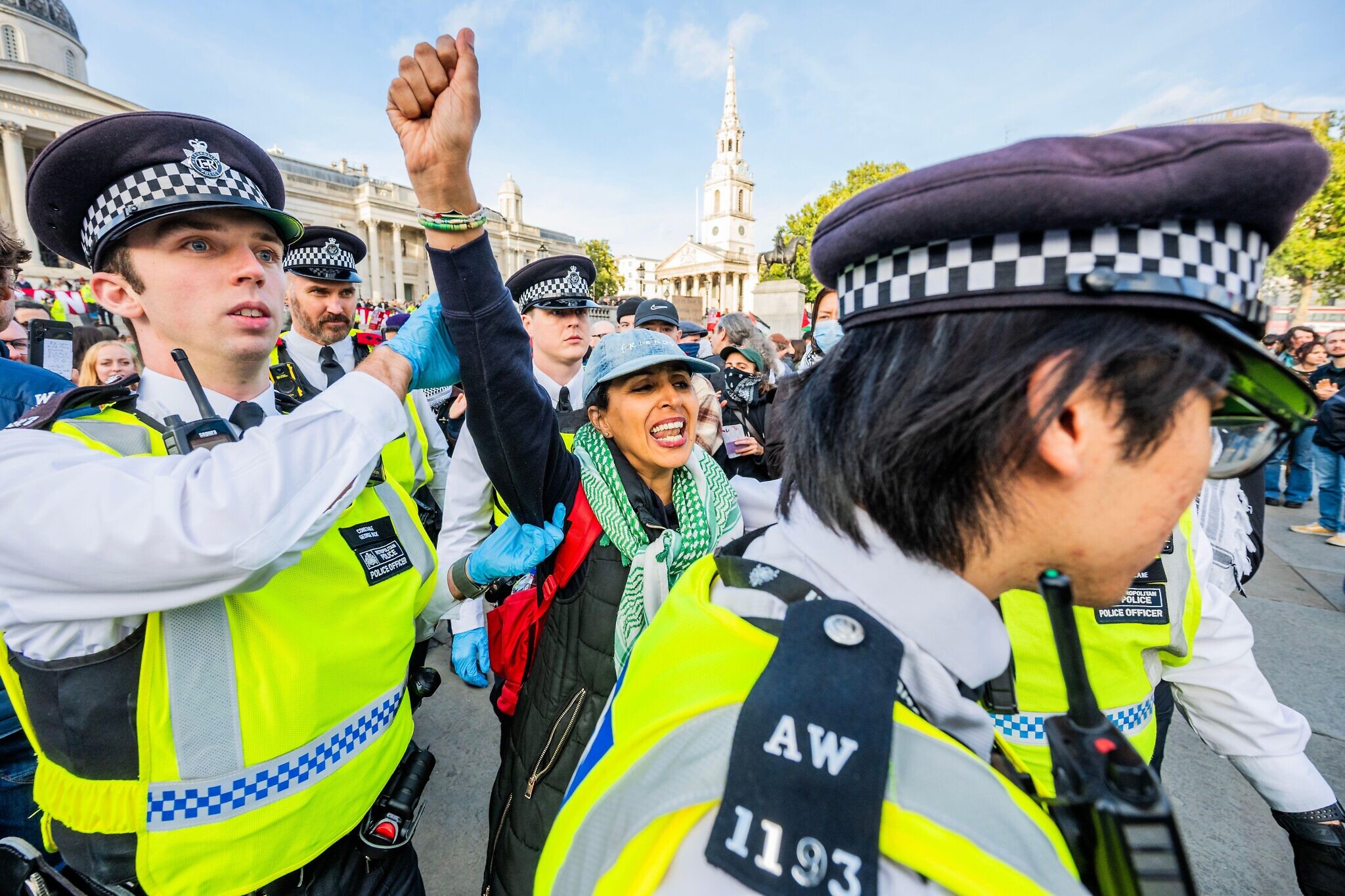
The decision to ban Palestine Action was NOT unlawful, the Court of Appeal has ruled.
At the Court of Appeal on Monday, five judges said the ban was a “justified and proportionate” interference on freedom of expression rights.
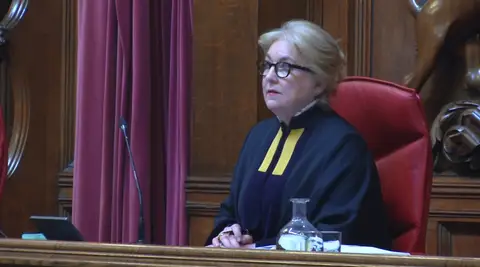
In a summary of the decision, the Lady Chief Justice Baroness Carr said the High Court had “materially understated the position” when considering how much latitude the Home Secretary had when deciding whether to proscribe.
The judge later said that comparisons to groups such as the suffragettes were “seriously flawed”.
She said:” Palestine Action is not a transparent, non-violent direct action protest group, as it claims.



“The whole premise of Palestine Action is to cause damage to property belonging to Elbit and other companies trading lawfully in the United Kingdom.
“It is a covert organisation that has revealed little about itself in these proceedings.
“Its activities are carried out by unidentifiable selves whose objective is to avoid detection, as reflected amongst other things in the underground manual.
“The future threats and risks posed to third-party individuals and property by Palestine action were perhaps the most important factors to weigh in the balance.
“In that connection, it was important to understand that the Home Secretary is in the best position to assess those future threats and risks. She was advised by experts, including specialist anti-terrorist police.”
The ruling was a vindication for the decision taken by former Home Secretary Yvette Cooper, who approved the ban on the group, which has targeted Jewish owned businesses in north London, along with military sites.
Three judges ruled in February that the then-home secretary Yvette Cooper’s decision to proscribe Palestine Action under the Terrorism Act 2000 last year was unlawful, following a legal challenge from the group’s co-founder, Huda Ammori.
The ban, which began on July 5 last year, made membership of, or support for, the direct action group a criminal offence punishable by up to 14 years in prison, and has remained in force as the Home Office has attempted to challenge the ruling.
But on Monday, Baroness Carr, sitting with Sir Geoffrey Vos, Lord Justice Edis, Lord Justice Lewis and Lady Justice Whipple, continued: “There is a distinction between the expression of an opinion or belief that is supportive of the objective of an organisation… and an expression of an opinion or belief that is supportive of an organisation itself.”
In the 44-page written judgment, judges accepted banning Palestine Action could dissuade law-abiding citizens from joining pro-Palestine protests for fearing of falling foul of anti-terrorism laws.
Baroness Carr said: “This group of people is likely to be significant in number.
“It is one thing for people voluntarily to hold a placard supporting Palestine Action which they know to be a proscribed organisation. That is a criminal act.
“It is quite another thing for a law-abiding person to be deterred from assembling lawfully or making their strongly-held anti-Israel and pro-Palestinian views public for fear of their actions being construed as support for Palestine Action.
“We accept that there are many people who may be subject to this ‘chilling effect’ as a direct result of the proscription decision.
“That said, however, as a matter of law, the proscription decision will not prevent public expressions of support for the Palestinian cause or opposition to Israel and to the Israeli Defence Force, or demonstrations targeted at Elbit.”
Baroness Carr concluded: “We recognise the proscription of an organisation like Palestine Action is highly controversial.
“We recognise too that Palestine Action is supported by many otherwise lawful citizens. But it is a fundamental mistake to overlook the fact that Palestine Action overtly promotes unlawful violence amounting to terrorism.
“It is not – as claimed – a direct action civil disobedience protest group like the suffragettes, operating transparently in the open.
“It is a covert organisation which operates with secret cells to avoid the detection and prosecution of those using violence to destroy property and cause injury.”
In the appeal, Sir James Eadie KC said in written submissions for the Home Office that “the line between criminality, sometimes violent criminality, and terrorism is not a bright one”, and that the criminal law had “demonstrably failed” to prevent the escalation of the group’s activities.
But Raza Husain KC, for Ms Ammori, said in written submissions that the High Court was right to find that the ban on the group did not correctly balance the human rights involved and that the ban on Palestine Action has created a “culture of fear” among campaigners for Palestinian rights.
Hundreds of people have been arrested across multiple demonstrations after holding up placards and wearing badges and t-shirts declaring support for Palestine Action.
The Chief Magistrate has put a pause on the progress of criminal cases for those charged, with a review hearing due to take place on June 30.
The Court of Appeal’s decision comes after four Palestine Action activists who mounted a “terrorist” raid on Israel-based defence firm Elbit Systems’ UK factory were jailed.
Charlotte Head, 30, Samuel Corner, 23, Leona Kamio, 30, and Fatema Rajwani, 21, used sledgehammers and crowbars to destroy computers, drones and other equipment before police and security intervened.
Corner, a former student at Oxford, struck police officer Kate Evans twice on the back with a seven-pound sledgehammer, leaving her with a fractured spine.
Mr Justice Johnson gave the four prison sentences of between seven years and eight months and four years and eight months, with each defendant also spending an extra year on licence.
During the hearing on Friday, the judge ruled that the raid amounted to an “act of terrorism”, having been carried out to try to influence the UK Government and intimidate a section of the public.
In a statement following the ruling, Palestine Action co-founder Huda Ammori said that she intended to take the case to the UK Supreme Court.
She said: “We are surprised by today’s judgment, after a panel of senior judges on the High Court, including the President of the King’s Bench Division, decisively ruled that the Government acted unlawfully in proscribing Palestine Action because of the significant interference with the rights to freedom of expression and peaceful assembly.
“We will fight this all the way. We will seek permission to appeal to the Supreme Court and, if need be, take this to the European Court of Human Rights.
“We are confident we will ultimately succeed because criminalising peaceful political protest in this way is a flagrant violation of our fundamental rights and freedoms in Britain, protected in the Human Rights Act, which enshrines the European Convention of Human Rights.”
Protesters outside the Royal Courts of Justice shouted “shame” as the Court of Appeal delivered its verdict.
Speaking outside court, Green Party peer Baroness Jones said listening to the verdict be delivered was “infuriating”.
Labour MP Luke Akehurst welcoming the Court of Appeal decision saying Palestine Action “crossed a line from legitimate protest into terrorism, with the violence at the Filton site, the attack at RAF Brize Norton, and the targeting of Jewish owned businesses, and suppliers to our armed forces.
“This is not legitimate protest for the Palestinian cause, it is proscription of dangerous and extreme violence.”

Keep community journalism free.
Jewish News is free for everyone. No paywall. No barriers. Just trusted journalism for anyone who wants to stay connected to Jewish life in Britain.
If you value that, please support us.
From as little as £5 a month, you can help keep our journalism free and accessible to all.
Every day, we report on the issues that matter to our community. We celebrate achievements, support charities, challenge antisemitism and ensure Jewish voices are heard more widely.
From as little as £5 a month, you can help us continue to:
- Report on the stories shaping Jewish life in the UK and beyond
- Bring our community together through shared stories, events and campaigns
- Celebrate the people, culture and moments that define our community
- Support organisations doing vital work across Jewish Britain
You can make a one-off donation or become a regular supporter. Every contribution helps keep our journalism free, independent and accessible to all.
If everyone who values Jewish News gave a small amount, it would make a real difference to our future.