Prefer Jewish News on Google
Danish parliament set to debate proposal to ban circumcision
Discussion by politicians follows petition signed by more than 50,000 requesting its criminalisation
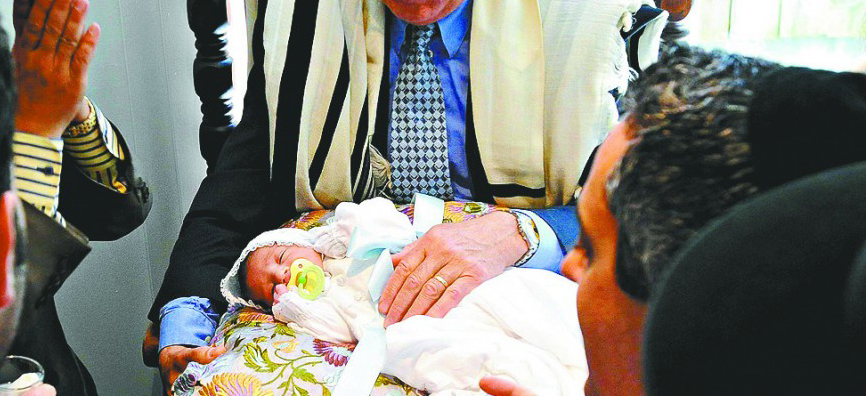
Denmark’s parliament is set to debate and possibly vote on whether non-medical circumcision of boys should be banned, after more than 50,000 people signed a petition requesting its criminalisation.
The petition by the group Denmark Intact crossed the 50,000 mark Friday, four months after its launch. According to regulations passed in January, petitions approved for posting on the Danish parliament’s website are brought to a vote as nonbinding motions if they receive that level of support within six months.
The petition describes circumcision as a form of abuse and corporal punishment, equating it with female genital mutilation. The petition states that parents who have their children circumcised outside Denmark should be exposed to legal action in Denmark, which has 8,000 Jews and tens of thousands of Muslims.
But last week, spokespeople for all the parties in the Danish parliament stated their faction’s positions on the issue. The tally showed that a majority of lawmakers would vote against supporting a ban if the issue is brought to a vote, the Kristeligt Dagblad daily newspaper reported. Nonetheless, a vote on the petition is likely to take place in fall this year unless its language is deemed unconstitutional.
Some parties, including large coalition partners, are split on the issue. But Finn Rudaizky, a former leader of the Jeeich community of Denmark, said that “parliament will not change the law” that currently allows circumcision. Still, he said, the petition “does mean a great deal because it shows just how many have involved themselves with this issue.”
Whereas some of those who oppose nonmedical circumcision do so because of their understanding of children’s rights, “many others use the situation to show that they are against Jews, Muslims and they can express anti-Semitism and xenophobia without admitting to it,” Rudaizky said. “I am not proud of this situation.”
No country in Europe has banned circumcision since the defeat of Fascism in World War II.
In 2014, Denmark joined a handful of European Union countries that forbid the slaughter of animals for meat without stunning, as required by Jewish and Muslim religious laws. Earlier this week, Denmark joined several EU countries banning the wearing in public of face-covering garments, such as the burka and nikab veils favoured by some Muslim women.
Iceland’s parliament earlier this year briefly processed a bill to ban circumcision. It was put on ice following a parliamentary committee’s recommendation to nix it amid international pressure.
Opposition to circumcision and to the ritual slaughter of animals in Europe features liberal activists who cite humanist motivations and anti-immigration individuals who view these customs as undesirable foreign imports.

Keep community journalism free.
Jewish News is free for everyone. No paywall. No barriers. Just trusted journalism for anyone who wants to stay connected to Jewish life in Britain.
If you value that, please support us.
From as little as £5 a month, you can help keep our journalism free and accessible to all.
Every day, we report on the issues that matter to our community. We celebrate achievements, support charities, challenge antisemitism and ensure Jewish voices are heard more widely.
From as little as £5 a month, you can help us continue to:
- Report on the stories shaping Jewish life in the UK and beyond
- Bring our community together through shared stories, events and campaigns
- Celebrate the people, culture and moments that define our community
- Support organisations doing vital work across Jewish Britain
You can make a one-off donation or become a regular supporter. Every contribution helps keep our journalism free, independent and accessible to all.
If everyone who values Jewish News gave a small amount, it would make a real difference to our future.