
 Prefer Jewish News on Google
Finchley man finds evidence of Persian emperor while walking in Israel
Eylon Levy, advisor to President Herzog, was passing through an ancient archaeological site when he found the slice of history
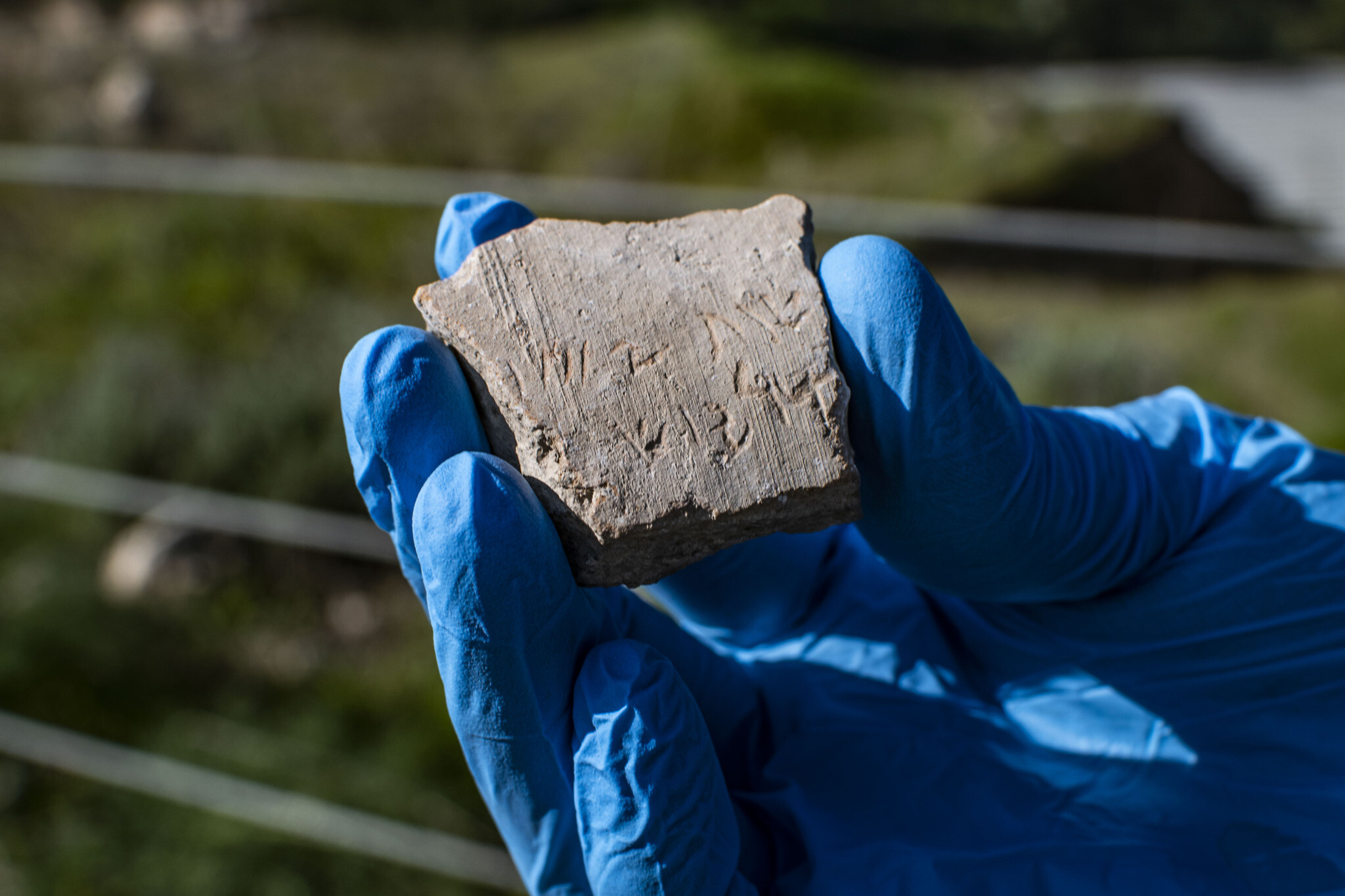
When two friends went for a walk through an Israeli national park and archaeological site in December last year, the broken piece of ceramic they found stood out as being of immediate interest.
The shard they found in Tel Lachish, an area of ruins with a rich biblical history, bore an Aramaic inscription. In what was once an ancient Canaanite and Israelite city, the pair suspected that they had stumbled across a real piece of history.
They sent it off to an advanced analytical lab to be studied by experts from the Israel Antiquities Authority, who soon reported back that what they had found was evidence for the Persian royal administration at Lachish in the Archaemenid period around 2,500 years ago.
The inscription reads ‘Year 24 of Darius’, in reference to Persian king Darius the Great, father of Ahasuerus – also known as the biblical Achashverosh from the Book of Esther, which is read annually on the Jewish festival of Purim.
“When I picked it up and saw the inscription my hands shook,” said Eylon Levy, who discovered the shard with his friend Yakov Ashkenazi. “I looked left and right for the cameras. I was sure someone was playing a prank on me!”
Levy, who grew up in Finchley, north London, now lives in Israel and works as an international media advisor to President Isaac Herzog, but never thought we would be in the news himself as someone who had just found evidence of a Persian emperor.
Experts believe that the inscription may have been an administrative note, not unlike a receipt for goods, with the fortified city of Lachish having been a regional centre for tax collection for the Persian king’s treasuries.
The British Archaeological Expedition carried out excavations at Tel Lachish in the 1930s and uncovered an elaborate administrative building from the Persian period, built on top of the podium of the destroyed palace-fort of the Judean kings.
The Persian-era residence extended over a large area and comprised elaborate halls and courtyards with a majestic columned portico entrance in Persian style.
Today, only the pillar bases remain in place on the mound as the British expedition dismantled the remains of the elaborate Persian building in order to excavate the underlying Judean palace.

Keep community journalism free.
Jewish News is free for everyone. No paywall. No barriers. Just trusted journalism for anyone who wants to stay connected to Jewish life in Britain.
If you value that, please support us.
From as little as £5 a month, you can help keep our journalism free and accessible to all.
Every day, we report on the issues that matter to our community. We celebrate achievements, support charities, challenge antisemitism and ensure Jewish voices are heard more widely.
From as little as £5 a month, you can help us continue to:
- Report on the stories shaping Jewish life in the UK and beyond
- Bring our community together through shared stories, events and campaigns
- Celebrate the people, culture and moments that define our community
- Support organisations doing vital work across Jewish Britain
You can make a one-off donation or become a regular supporter. Every contribution helps keep our journalism free, independent and accessible to all.
If everyone who values Jewish News gave a small amount, it would make a real difference to our future.





















