Prefer Jewish News on Google
Tory government planned to sanction Smotrich and Ben-Gvir
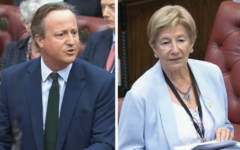
Lord Cameron says he was 'working up' sanctions on Israeli finance minister Bezalel Smotrich and national security minister Itamar Ben-Gevir prior to the general election

David Cameron was planning to sanction two Israeli ministers before the previous Conservative government left office, the former foreign secretary has said.
Lord Cameron told the BBC Radio 4 Today programme he had been “working up” sanctions on Israeli finance minister Bezalel Smotrich and national security minister Itamar Ben-Gvir as a way of putting “pressure on Netanyahu” to act within international law.
He said: “Before we left office I was working up sanctions on these two ministers, ministers Smotrich and Ben-Gvir, who, when you look at what they say, they have said things like encouraging people to stop aid convoys going into Gaza, they have encouraged extreme settlers in the West Bank with the appalling things they have been carrying out.
“So, actually saying to Netanyahu, ‘yes, we support your right to self-defence, no, we are not going to end the sale of arms, but actually when ministers in your government who are extremists and behave in this way, we are prepared to use our sanctions regime to say this is not good enough and has to stop’.”
Carmeron urged the current Government to “look again at this sanctions issue” rather than go down the “wrong path” of suspending arms exports.

Asked why the sanctions did not go ahead, Lord Cameron said he had been advised that it would have been “too much of a political act” during the election.
Earlier this year, Smotrich suggested it might be “justified and moral” to starve Gazans and has called for Palestinian residents to leave and make way for Israelis who could “make the desert bloom”.
In his BBC interview Cameron continued to defend the thrust of Israel’s policy to eradicate the threat posed by Hamas and Hezbollah.
He said: “On 7 October Israel was not just attacked in the south by Hamas but then continually with rockets by Hezbollah in the north. We all want this conflict to end but it has to end in a way that is sustainable so that it does not restart. That is why it is right to back Israel’s right of self-defence. But it is not a blank cheque, it’s not unconditional. We do want to see aid get through to Gaza and we do want the role of the UN in Lebanon to be respected.”
Cameron said of Labour’s move that restricting arms sales to Israel while simultaneously helping to protect the country from Iranian attacks “made no sense”.
The former PM said everyone wanted to see the conflict end, but “end in a sustainable way”.
He said Israel had faced attacks from Hamas in the south and Hezbollah in the north and it was right to back the country’s right to self-defence.
“But it is not a blank cheque, it is not unconditional,” he said.
“We do want to make sure aid gets through into Gaza, we do want to see the role of the UN in Lebanon to be respected.”
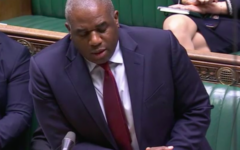
Weeks after taking office, his successor David Lammy announced the suspension of around 30 of the UK’s 350 arms export licences to Israel amid a “clear risk” they could be used to breach international humanitarian law relating to the treatment of Palestinian detainees and the supply of aid to Gaza.
Tom Keatinge from the Royal United Services Institute think tank told the BBC that putting sanctions on Ben-Gvir and Smotrich would be a “significant move” aimed at sending a “major political message” to Israel.
He also said there was “not a precedent” for the UK government sanctioning elements of an ally country.
He added that there were “practical issues” as sanctions required “a lot of work” and that the Foreign Office’s sanctions director was already “heavily overworked” due to issues related to Russia.

Keep community journalism free.
Jewish News is free for everyone. No paywall. No barriers. Just trusted journalism for anyone who wants to stay connected to Jewish life in Britain.
If you value that, please support us.
From as little as £5 a month, you can help keep our journalism free and accessible to all.
Every day, we report on the issues that matter to our community. We celebrate achievements, support charities, challenge antisemitism and ensure Jewish voices are heard more widely.
From as little as £5 a month, you can help us continue to:
- Report on the stories shaping Jewish life in the UK and beyond
- Bring our community together through shared stories, events and campaigns
- Celebrate the people, culture and moments that define our community
- Support organisations doing vital work across Jewish Britain
You can make a one-off donation or become a regular supporter. Every contribution helps keep our journalism free, independent and accessible to all.
If everyone who values Jewish News gave a small amount, it would make a real difference to our future.