Prefer Jewish News on Google
EU settlement labelling policy under scrutiny after opposition to president
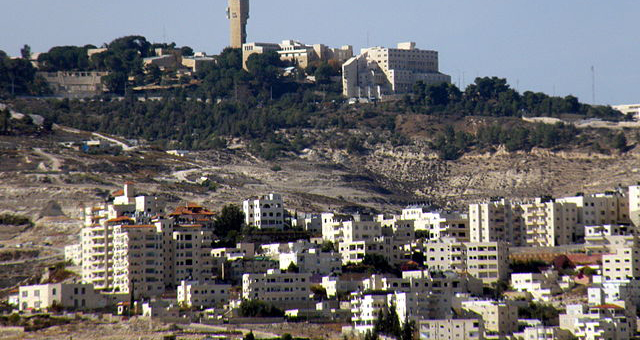
European policy on the labelling of products from the Golan Heights and the West Bank seemed to be in confusion this week, after two senior figures were reported to have shared their concerns about the new system with Israeli leaders.
Martin Schultz, president of the European Parliament, and Federica Mogherini, European Union foreign policy chief, were reported to have expressed reservations, with Mogherini telling Benjamin Netanyahu that it was “non-binding.”
Schultz came under pressure to confirm his position on the labelling of products from disputed and Palestinian territories after parliamentarians wrote to him about his “unexpected and distressing” statements opposing them.
Anger follows his meeting in Germany last month with the Speaker of the Israeli Parliament (Knesset), in which Schultz told Yuli Edelstein that he “opposed” new EU labelling guidelines because “it will mainly hurt the Palestinians”.
The rules, which require goods once labelled as ‘Made in Israeli’ to be labelled as ‘Made in Israeli Settlements,’ were adopted unanimously in November last year, and Members of the European Parliament (MEPs) have now sent Schultz an open letter asking him to clarify the remarks he made in Berlin.
The letter, initiated by Scottish nationalist MEP Alyn Smith, reminded Schultz that the European Parliament “unequivocally expressed its support for the Labelling Guidelines, including in its latest resolution on the Middle East Peace Process, which was co-signed by all political groups last September”.
Smith and others then blast Schultz, who personally endorsed the guidelines, for failing to represent this position in his conversations with Israeli leaders and for his “newly-declared opinion… that settlements are an economic benefit to Palestinians”.
Elsewhere, Israeli Prime Minister Benjamin Netanyahu alluded to “friction” on the issue when he said he had had “welcome” discussions with Mogherini, who confirmed that Europe was “opposed to boycotts”.
Addressing his cabinet, Netanyahu said: “I heard from her that the EU is opposed to any boycott of Israel, and about their action regarding product labelling, she defined it as non-binding and said that it does not reflect their position regarding the final borders of the State of Israel, which can be determined – this is what she said – only in direct negotiations between the sides.”
He said Israel was “entitled to receive support from Europe, not just criticism,” adding: “This step is welcome… Of course, this is not to say that there will not be friction. There are things that we do not agree on… But the fact that the EU High Representative for Foreign Affairs and Security Policy has come out strongly against BDS and against economic sanctions against Israel, is – of course – a step in the right direction.”

Keep community journalism free.
Jewish News is free for everyone. No paywall. No barriers. Just trusted journalism for anyone who wants to stay connected to Jewish life in Britain.
If you value that, please support us.
From as little as £5 a month, you can help keep our journalism free and accessible to all.
Every day, we report on the issues that matter to our community. We celebrate achievements, support charities, challenge antisemitism and ensure Jewish voices are heard more widely.
From as little as £5 a month, you can help us continue to:
- Report on the stories shaping Jewish life in the UK and beyond
- Bring our community together through shared stories, events and campaigns
- Celebrate the people, culture and moments that define our community
- Support organisations doing vital work across Jewish Britain
You can make a one-off donation or become a regular supporter. Every contribution helps keep our journalism free, independent and accessible to all.
If everyone who values Jewish News gave a small amount, it would make a real difference to our future.