Prefer Jewish News on Google
OPINION: Far-right ministers in Jerusalem would have global consequences for Israel
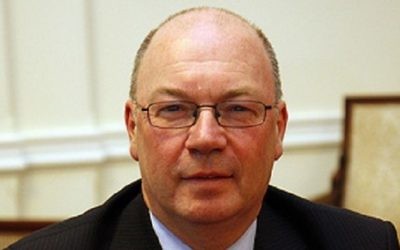
Former Middle East minister Alistair Burt warns about the potential impact of Bezalel Smotrich and Itamar Ben Gvir entering Government.

Israel’s voting system has long been an object of fascination. A PR system is massively inclusive, but at the same time produces coalitions so inherently unstable that collapsed governments are an increasingly likely.
A fundamental rule of foreign affairs is that those in liberal democracies do not seek to influence elections in other countries. This must be right, not least for the fact that such interventions are usually counterproductive.
But if it is wrong to influence an election somewhere else, which is not my business, recognising votes cast abroad in those elections have consequences, and making that clear to my own Government, is very much my business.
This has come to light in the wake of recent comments by the very senior, pro-Israel US politician, Senator Bob Menendez, who chairs the influential Foreign Relations Committee of the US Senate. Menendez, in unretracted reports, apparently warned Benjamin Netanyahu against the inclusion of far-right party leader MK Itamar Ben Gvir in any coalition government.
The claim is that Netanyahu needs every possible combination of parties and seats to join his Likud coalition to win the forthcoming election, even from those he rejected in the past. This would include Gvir’s party, currently running in a joint list as Religious Zionism and, according to some polls, is set to win some 13 seats – a key component of the 61 seats needed for a Knesset majority. Menendez warned that his inclusion in Government would harm US-Israel relations.



Gvir needs little introduction. A past follower of rabbi Meir Kahane, he was convicted of racism in 2007 and has a long record of aggressive politics and gestures, turning up last weekend in Sheikh Jarrah brandishing a gun. He has politically teamed up with MK Bezalel Smotrich, the political leader about who the Board of Deputies tweeted earlier this February, attacking his “abominable views and hate-provoking ideology” and calling for him to “get back on the plane” and leave the UK. An MP called for the Home Office to intervene. Religious Zionism, according to Smotrich this week, predicts up to five portfolios for the party and is interested in defence, finance and justice.
There has been predictable concerns in some quarters that Menendez broke the rule of commenting on someone else’s election. The row should not be why he and some others spoke out, but why there should be any concern about speaking out. The same should apply here. We are entitled to consider what our Government would do when faced with a government containing elements which the UK considers harmful. Protecting the UK’s reputation is our business.
The relationship between Israel and the UK is a strong one and deeply felt. But there are current elements which cause strain, which the UK Government notes. Frankly, it’s getting worse. This is not just the UK talking. The attitudes and activity associated with these individuals is causing heartache to Israelis abroad. It is difficult to see how the addition to the Israeli Government of those with the backgrounds above could add positively to a relationship where a degree of mutual understanding and trust in difficult times is crucial.
My Israeli sources are mixed as to the chance of Gvir and Smotrich getting their way. Some think their path to Government is certain, because of numbers. Others say that Netanyahu is using the possibility to warn others that Israel would risk being a pariah if he had to take them into Government, thus boosting his chances of securing power again with a more moderate coalition.
We do not know the outcome, but that risk he talks of has some serious credibility.
- Rt Hon. Alistair Burt is a former Middle East minister

Keep community journalism free.
Jewish News is free for everyone. No paywall. No barriers. Just trusted journalism for anyone who wants to stay connected to Jewish life in Britain.
If you value that, please support us.
From as little as £5 a month, you can help keep our journalism free and accessible to all.
Every day, we report on the issues that matter to our community. We celebrate achievements, support charities, challenge antisemitism and ensure Jewish voices are heard more widely.
From as little as £5 a month, you can help us continue to:
- Report on the stories shaping Jewish life in the UK and beyond
- Bring our community together through shared stories, events and campaigns
- Celebrate the people, culture and moments that define our community
- Support organisations doing vital work across Jewish Britain
You can make a one-off donation or become a regular supporter. Every contribution helps keep our journalism free, independent and accessible to all.
If everyone who values Jewish News gave a small amount, it would make a real difference to our future.