Prefer Jewish News on Google
How Roald Dahl play Giant turned a director into a writer
Mark Rosenblatt had the idea and Nicholas Hytner convinced him to write the play himself
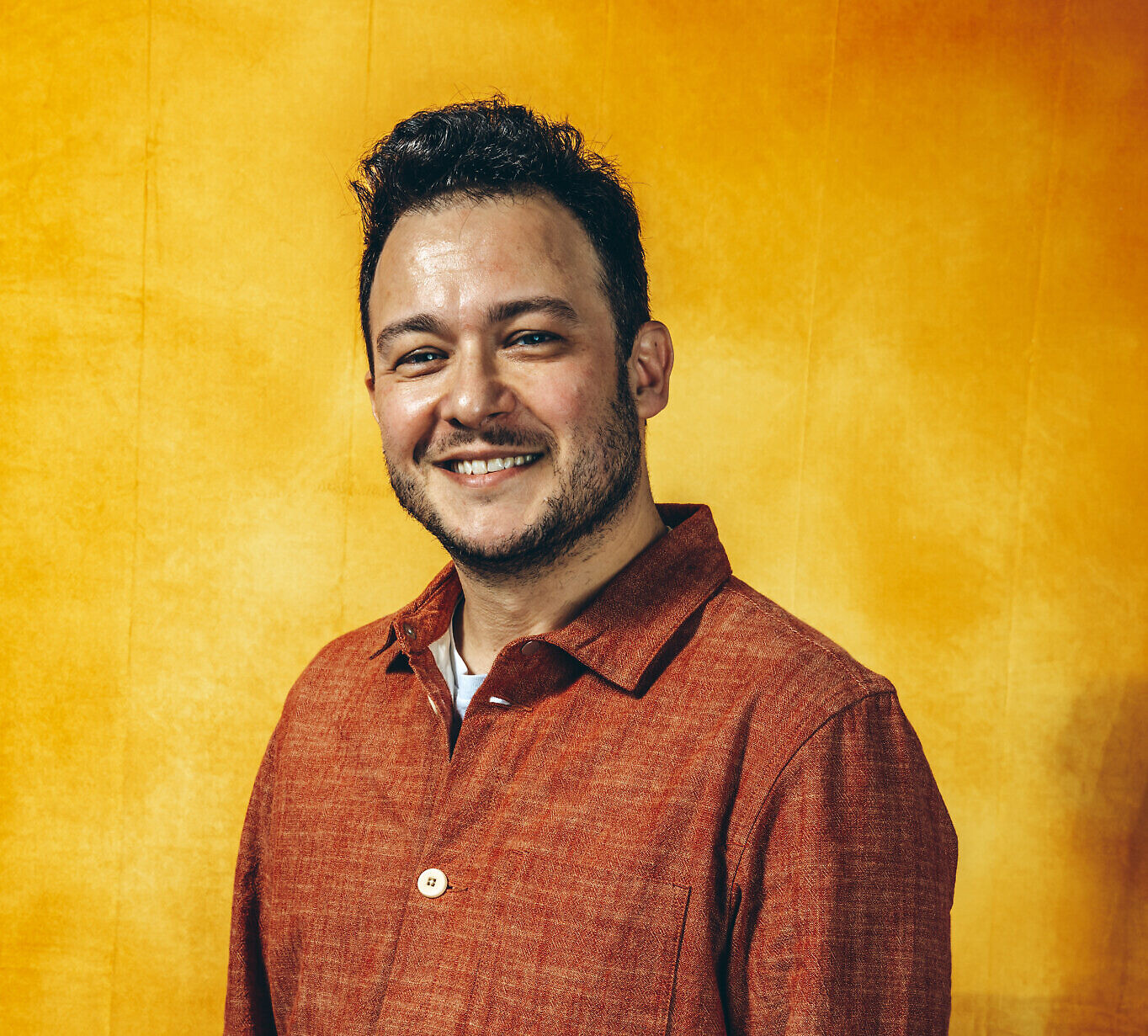
Mark Rosenblatt is the toast of the West End but we meet for a coffee in East Finchley. His first play, Giant, premiered at the Royal Court last year to rave reviews and has now transferred to the Harold Pinter Theatre for a run of 14 weeks. At this year’s Olivier Awards, he took home the prize for Best New Play. It’s not bad going for a director in his 40s who didn’t think he was the man to write a play about Roald Dahl.
Dahl, appropriately enough, looms large for Rosenblatt. He grew up loving the books, in print and on cassette, and refers to them as “the wallpaper of my childhood”. He does not remember the moment he first learned about the beloved children’s author’s propensity for antisemitism but there cannot be many people who’ve thought about it more deeply in recent times.
Rosenblatt never had aspirations to be a playwright. He had seen enough plays over the years to be convinced he did not “have the confidence or the skill to hold an audience in that very pure way”. He has written some adaptations for the screen but considers the “exacting demands” of theatre an entirely different beast: “You have to keep an audience captive for two hours with one locked off wide shot using language.”
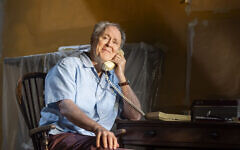
He had the idea for the play and felt it was something he would like to direct if only he could find someone to write the thing. It was pitched to Nicholas Hytner, one of the country’s greatest living theatre directors, and he suggested Rosenblatt try and write it himself. The result is a balanced and moving character study anchored by an extraordinary performance from the peerless John Lithgow.
The play was not written with a single message in mind and Rosenblatt was not interested in “beating Dahl up for two hours. He’s already told us he’s an antisemite in his own language and some of that language is in the play. The pressure was off, in a way. I needed to present complexity… He was complicated and nuanced, as we all are. That felt much more interesting.”


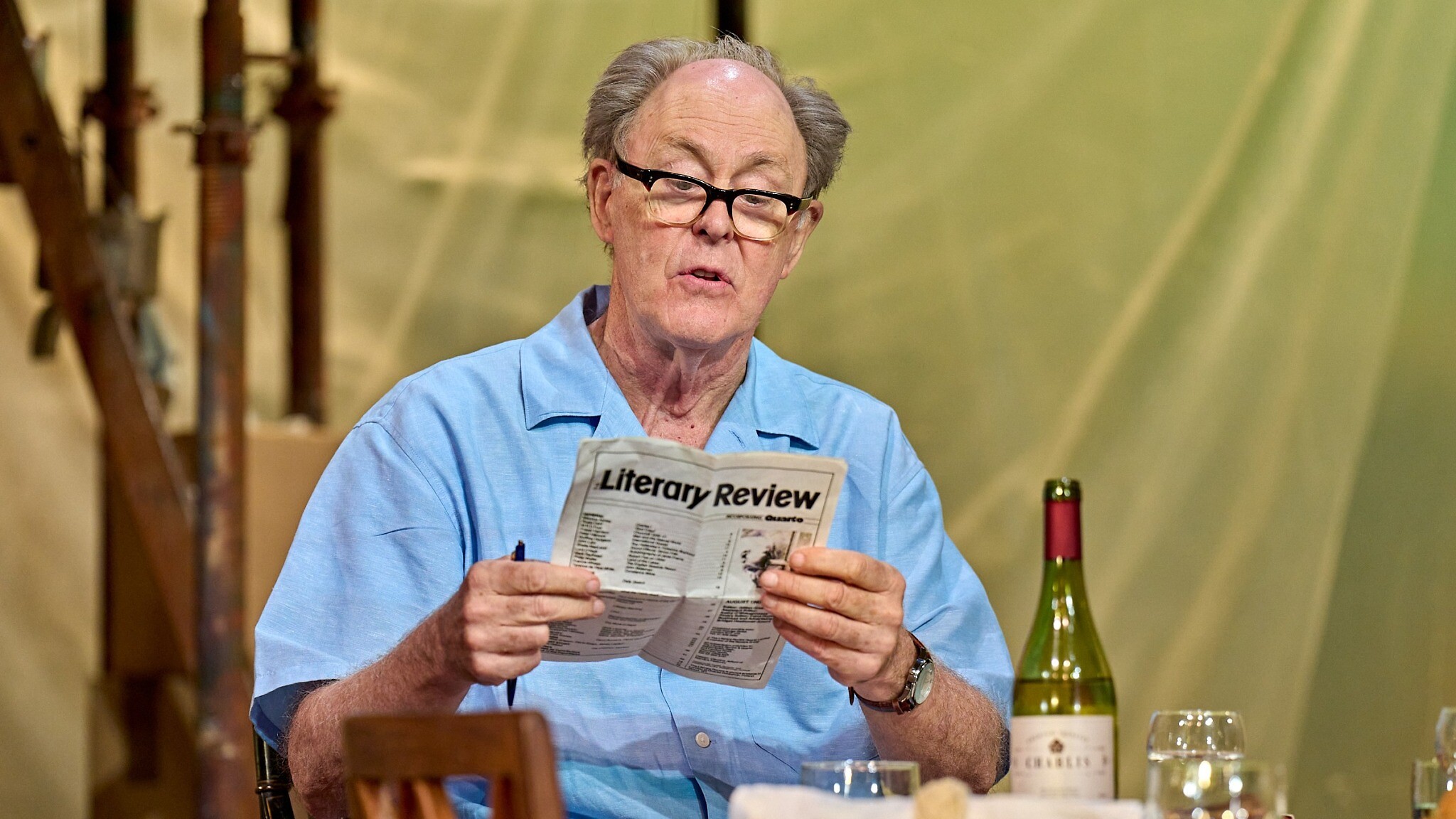
Before he came to Dahl, the intention was to explore “the difference between meaningful conversations about Israel and Palestine and where it bleeds into antisemitism” in the wake of the inquiry into the Labour Party. Dahl felt like the perfect proxy since he wrote a piece critical of Israel’s actions in Lebanon in 1982 blended with “medieval antisemitic stereotypes”. It was, in Rosenblatt’s words, the “perfect mirror” and, though the writing began in lockdown, Giant feels more relevant than ever in 2025.
The playwright has no problem separating the art from the artist and still reads Dahl to his sons. Some of the most moving moments in the play involving moments of connection and compassion related to children in peril: “You can’t understand some of his cruelty and anger without understanding the tenacity with which he went about trying to fix problems in his life. His son was very badly injured when a taxi went into his pram and Dahl noticed in hospital that the valve draining fluid from the brain was leaky. He went and invented a new one and got it on the market.”
Rosenblatt thinks the author struggled to deal with those things he could not fix. He felt impotent about the situation in Lebanon so he “threw something at it that was vile”. In conversation and in his writing, it’s clear the playwright is attempting to understand Dahl but not excuse him. Evidently this was a man of contradictions, one who fought the Nazis but would later claim Hitler had his reasons since “there is a trait in the Jewish character that does provoke animosity.” Those words, a verbatim quote used at the play’s denouement, cause audible gasps on a nightly basis.
In the same interview, Dahl chose to refer to Hitler as a “stinker”, an extraordinary word choice from a man renowned for his ability to construct sentences. Rosenblatt thinks the comments remain so shocking because “it incorporates Hitler into a club room, joshing environment. It’s like he’s describing a house prefect rather than one of the worst people ever.” The play is, in part, an attempt to unravel the normalisation of racism and antisemitism through “club room” language and the way in which such behaviour “makes the unsayable sayable”.
London theatre has been dogged by controversies about representation and antisemitism in recent years so Giant feels especially timely. There is nothing hectoring or didactic about the dialogue, though, and Rosenblatt has discovered “people from across the political spectrum feel included by the arguments of the play.”
Dahl’s estate has not objected to the play although that would be difficult, given the fact that “the worst things the play says are the things that Roald Dahl himself said”. Some people have seen the play and vowed never to read another book by the author but Rosenblatt will continue to enjoy the work while not losing sight of the full facts about the man responsible for Matilda, The BFG et al.
It is rare to see a great work or art about a great artist but Giant is precisely that. It asks uncomfortable questions and provokes debate without attempting to censor its subject. For Rosenblatt, Dahl was, like the rest of us, “a mass of contradictions” and the result is a fully rounded character who can be as alternately endearing and maddening as a human being we actually know. Not bad going for someone who never intended to write a play.
Giant is at Harold Pinter Theatre until 2 August. haroldpintertheatre.co.uk

Keep community journalism free.
Jewish News is free for everyone. No paywall. No barriers. Just trusted journalism for anyone who wants to stay connected to Jewish life in Britain.
If you value that, please support us.
From as little as £5 a month, you can help keep our journalism free and accessible to all.
Every day, we report on the issues that matter to our community. We celebrate achievements, support charities, challenge antisemitism and ensure Jewish voices are heard more widely.
From as little as £5 a month, you can help us continue to:
- Report on the stories shaping Jewish life in the UK and beyond
- Bring our community together through shared stories, events and campaigns
- Celebrate the people, culture and moments that define our community
- Support organisations doing vital work across Jewish Britain
You can make a one-off donation or become a regular supporter. Every contribution helps keep our journalism free, independent and accessible to all.
If everyone who values Jewish News gave a small amount, it would make a real difference to our future.