Prefer Jewish News on Google
I told Parliament about the Iranian regime threat; here is what must be done now
Tom Tugendhat, former Minister of State for Security, writes for Jewish News about what the country must do to face down the IRGC's attempts to target Britain's Jewish community
In February 2023, I told the House of Commons what our intelligence agencies had discovered: between 2020 and 2022 the Iranian regime had been collecting intelligence on UK-based Israeli and Jewish individuals in preparation, we believed, for future lethal operations. In short, Tehran was drawing up a target list of British Jews on British soil.
I did not use those words lightly, and as I said at the time, I would not have mentioned Israeli and Jewish targets without good reason, because we had been seeing sustained Iranian operational activity directed at the community, and by that month we had counted fifteen credible plots since the start of 2022 to kill or kidnap British or UK-based individuals. This was not, as I said then, the work of rogue elements but the strategy of the Iranian regime.
The Iranian state does not always send officers of the Islamic Revolutionary Guard Corps to carry out its work. Increasingly, it subcontracts, paying organised criminal gangs based in Britain to conduct the surveillance.
The regime’s spokesmen like to present this as an extension of their quarrel with Israel, but it is nothing of the sort. Antisemitism is embedded in the ideology Khomeini built, the old libels grafted onto the theology of the revolution and then exported by the IRGC wherever it operates.
At the launch of United Against Nuclear Iran’s Khamenei-Free Zone campaign last year I called that framing complete rubbish, and I do not retract a word, because British Jews are targeted for who they are rather than for anything to do with Israel.
The obsession this regime has with Jews is not incidental: Ali Khamenei himself translated the writings of Sayyid Qutb, the key Islamist theologian behind the Muslim Brotherhood, into Persian as a young cleric, and Qutb’s antisemitism, including the pamphlet Ma’rakatuna ma’a al-Yahud (Our Struggle with the Jews), runs through the ideological foundations of the Islamic Republic.
In office I did what I could to close the gaps, and the National Security Act 2023, the first serious update to our espionage laws in a generation, gave prosecutors the tools to pursue foreign intelligence activity conducted through criminal proxies, while the Defending Democracy Taskforce coordinated the response across government.
Elsewhere in Whitehall, the Iranian envoy was summoned, and armed policing responded to threats to Iran International’s London site; I also told Parliament, in terms, that anyone associating with the IRGC should expect us to come after them.
What I did not achieve was the step that would have sent the clearest signal, because although I argued inside government for the proscription of the IRGC as a terrorist organisation, the Foreign Office fell back on the definitional argument that proscription was designed for non-state actors and the IRGC was constitutionally an organ of the Iranian state. My view then, and now, is that the IRGC is a standalone instrument of terror that should have been listed.
Today, the threat to British Jews has not receded but has, if anything, sharpened, because although the war with Israel has weakened the regime and Khamenei himself is gone, weakened regimes lash out, proxies take initiative in the absence of central direction, and criminal networks already on the IRGC payroll do not stand down when Tehran is having a bad week.
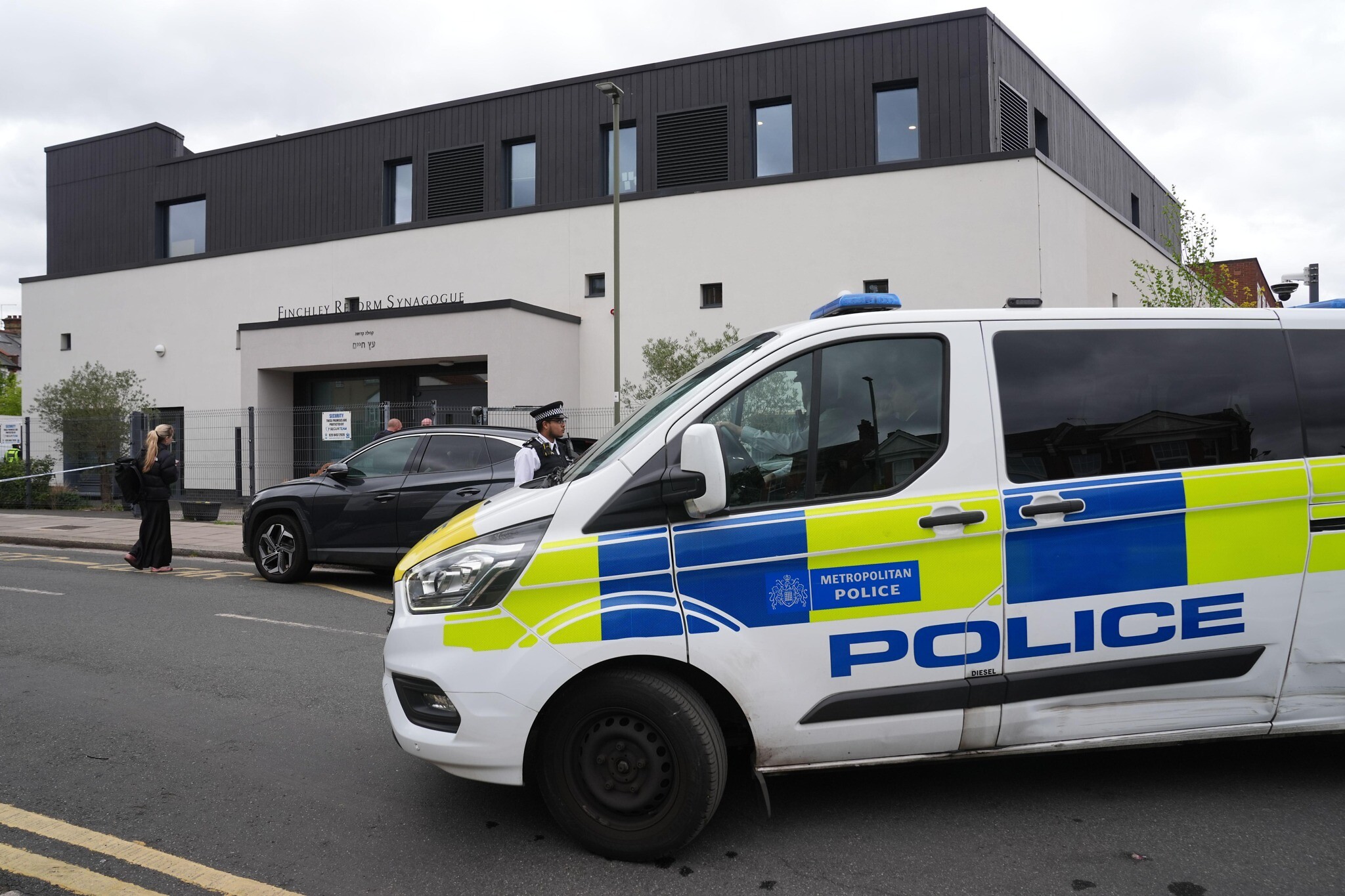
So it was no surprise when four men were arrested last month for spying on sites linked to the Jewish community in London, nor when MI5’s Director General disclosed in October that more than twenty lethal Iran-backed plots had been foiled over the previous year.
What should happen next isn’t complicated, just overdue. The IRGC should be proscribed; the Islamic Centre of England and others affiliated should be scrutinised and, where the evidence justifies it, closed; the Ayatollah’s designated representatives in this country should be expelled; the powers written into the 2023 Act should be used for the purpose they were drafted; and where organised criminal gangs act as contract intelligence officers for a foreign state, they should be charged on that basis rather than merely for the underlying offence.
To the community itself I would say only this: the police, the intelligence agencies and the Home Office know what I have set out here, and you are neither imagining the threat nor carrying it alone; our country must and will protect all its citizens. A country that cannot keep its Jewish citizens safe on its own streets has stopped being a free country, and Britain has not reached that point, nor will it, provided we act with the resolve the moment demands.
Tom Tugendhat is MP for Tonbridge

Keep community journalism free.
Jewish News is free for everyone. No paywall. No barriers. Just trusted journalism for anyone who wants to stay connected to Jewish life in Britain.
If you value that, please support us.
From as little as £5 a month, you can help keep our journalism free and accessible to all.
Every day, we report on the issues that matter to our community. We celebrate achievements, support charities, challenge antisemitism and ensure Jewish voices are heard more widely.
From as little as £5 a month, you can help us continue to:
- Report on the stories shaping Jewish life in the UK and beyond
- Bring our community together through shared stories, events and campaigns
- Celebrate the people, culture and moments that define our community
- Support organisations doing vital work across Jewish Britain
You can make a one-off donation or become a regular supporter. Every contribution helps keep our journalism free, independent and accessible to all.
If everyone who values Jewish News gave a small amount, it would make a real difference to our future.