Prefer Jewish News on Google
Israeli analyst says ‘Hezbollah is involved’ in Beirut blast
Former IDF intelligence officer says: 'Even if it’s just a regular accident, Hezbollah controls both the airport and sea-port in Lebanon so it’s responsible'
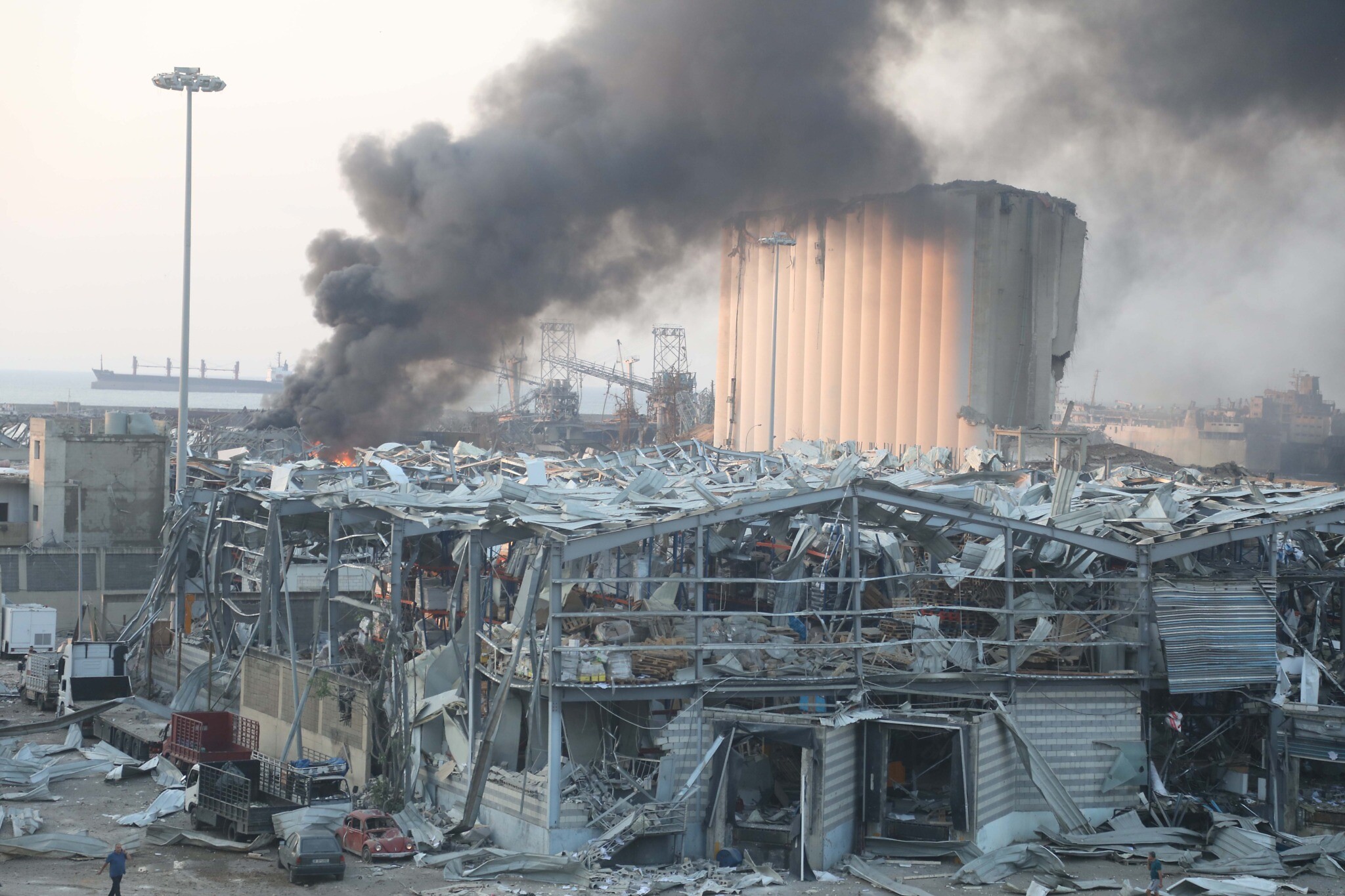
Israeli analysts have said Hezbollah bears responsibility for the blast that blew up Beirut’s port last week as the country’s government resigned amid rising anger.
The huge explosion, which killed 200 and injured 6,000, was caused by the combustion of 2,700 tonnes of ammonium nitrate sitting in a warehouse, but while most suspect that negligence and unsafe storage contributed to the blast, others saw malign influences at work.
Lebanon’s President Michael Aoun, a Christian leader who governs through a pact with Hezbollah, is among them, saying: “There are two possibilities. Either it was a result of negligence, or external interference by a missile or a bomb.”
Lt. Col. (Res) Sarit Zehavi, a former IDF intelligence officer who specialises on Israel’s northern border, said: “Any way you look at it, Hezbollah is involved. Even if it’s just a regular accident, which this [the port blast] probably is, Hezbollah controls both the airport and sea-port in Lebanon so it’s responsible.”
Speaking to the BICOM Podcast, she said: “Assessments in Israel are that Hezbollah will not carry out a terrorist attack against Israel [in response]. If anything comes, it will take time, at least a month or two.


“The damage in Beirut is so big and Hezbollah has to defend itself against criticism in Lebanon. I can’t imagine how busy Hezbollah combatants have been in the last few days, hiding signs of their ammunition in areas that were damaged.”
Over recent months, Hezbollah’s control over Lebanon has grown, in stark contrast to the country’s freefalling economy, soaring debt and skyrocketing inflation, and this week’s renewed protests over government corruption and mismanagement pre-date the coronavirus pandemic by six months.
Even before Beirut’s port was blown up, Lebanese families were having to contend with food and electricity shortages, as the functions of the state disintegrated. This has led to a thriving black market controlled by Hezbollah, which uses it to close the funding gap caused by international sanctions.
Hezbollah leader Hassan Nasrallah has insisted it does not control Beirut’s port, but few analysts treat that claim as credible. Such is the group’s grip on Lebanon that the country’s government recently turned down a much-needed offer of financial aid from the IMF because it was conditional on Hezbollah disarming.
“What will happen now, since this explosion has caused a humanitarian disaster in Beirut, a lot of money and financial assistance will come in,” says Zehavi. “The big question is whether they use the money to rebuild Beirut, or whether it will be lost to corruption and end up in the hands of Hezbollah.”

Keep community journalism free.
Jewish News is free for everyone. No paywall. No barriers. Just trusted journalism for anyone who wants to stay connected to Jewish life in Britain.
If you value that, please support us.
From as little as £5 a month, you can help keep our journalism free and accessible to all.
Every day, we report on the issues that matter to our community. We celebrate achievements, support charities, challenge antisemitism and ensure Jewish voices are heard more widely.
From as little as £5 a month, you can help us continue to:
- Report on the stories shaping Jewish life in the UK and beyond
- Bring our community together through shared stories, events and campaigns
- Celebrate the people, culture and moments that define our community
- Support organisations doing vital work across Jewish Britain
You can make a one-off donation or become a regular supporter. Every contribution helps keep our journalism free, independent and accessible to all.
If everyone who values Jewish News gave a small amount, it would make a real difference to our future.