
 Prefer Jewish News on Google
Israeli foreign minister discusses ‘regional issues’ with Russian counterpart Lavrov
Eli Cohen was criticised by Republican Senator Lindsey Graham for saying he will "speak less" about the war in Ukraine than his predecessor.
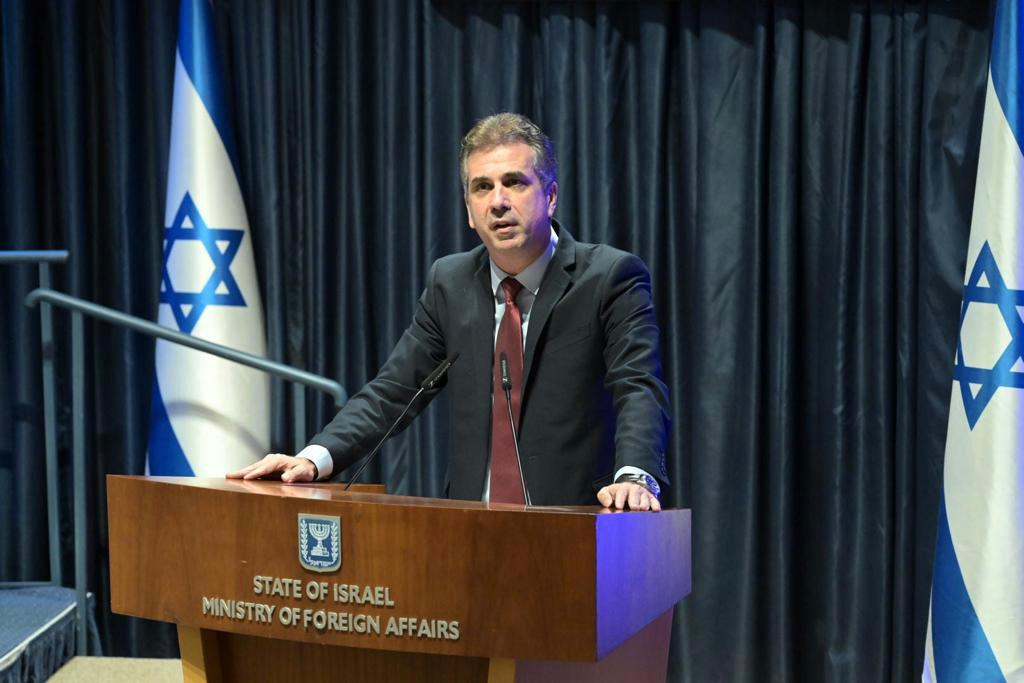
Israel’s Foreign Minister Eli Cohen spoke with his Russian counterpart Sergey Lavrov on Tuesday, discussing “regional issues” as well as the importance of the Jewish community in Russia.
Cohen also stressed how important the Russian speaking Israelis are to the relationship between the two countries.
In his inaugural speech on Monday, Cohen said the new government would differ from the previous regarding its rhetoric vis a vis the war in Ukraine.
“With regard to the Russia-Ukraine issue, we will do one thing for certain. In public – we will talk less. We will prepare a detailed reference from the Ministry of Foreign Affairs to the Cabinet to formulate a responsible policy. In any case, the significant humanitarian aid to Ukraine will continue,” Cohen said.
Former Prime Minister and Foreign Minister Yair Lapid was especially vocal in his criticism of Russia, accusing it of war crimes.


“The images and testimony from Ukraine are horrific. Russian forces committed war crimes against a defenseless civilian population. I strongly condemn these war crimes,” Lapid said as foreign minister in April last year.
Cohen’s intention to “talk less” about the war in Ukraine was criticised by top Republican U.S. Senator Lindsey Graham, who said “the idea that Israel should speak less about Russia’s criminal invasion of Ukraine is a bit unnerving.”
Graham also mentioned the phone call between Cohen and Lavrov, saying he hoped the Israeli foreign minister “understands that when he speaks to Russia’s Lavrov, he’s speaking to a representative of a war criminal regime that commits war crimes on an industrial scale every day. To stay quiet about Russia’s criminal behaviour will not age well.”
Prime Minister Benjamin Netanyahu told USA TODAY before the elections that he would “look into” supplying Ukraine with weapons if he was re-elected, but it’s still unclear if he will change Israel’s policy on the issue.

Keep community journalism free.
Jewish News is free for everyone. No paywall. No barriers. Just trusted journalism for anyone who wants to stay connected to Jewish life in Britain.
If you value that, please support us.
From as little as £5 a month, you can help keep our journalism free and accessible to all.
Every day, we report on the issues that matter to our community. We celebrate achievements, support charities, challenge antisemitism and ensure Jewish voices are heard more widely.
From as little as £5 a month, you can help us continue to:
- Report on the stories shaping Jewish life in the UK and beyond
- Bring our community together through shared stories, events and campaigns
- Celebrate the people, culture and moments that define our community
- Support organisations doing vital work across Jewish Britain
You can make a one-off donation or become a regular supporter. Every contribution helps keep our journalism free, independent and accessible to all.
If everyone who values Jewish News gave a small amount, it would make a real difference to our future.





















