Prefer Jewish News on Google
Jozef Walaszczyk, Poland’s oldest rescuer of Jews, dies at 102
Although he was responsible for saving at least 50 Jews, his story is relatively unknown in Poland and beyond, partly because of his aversion to being celebrated as a hero.
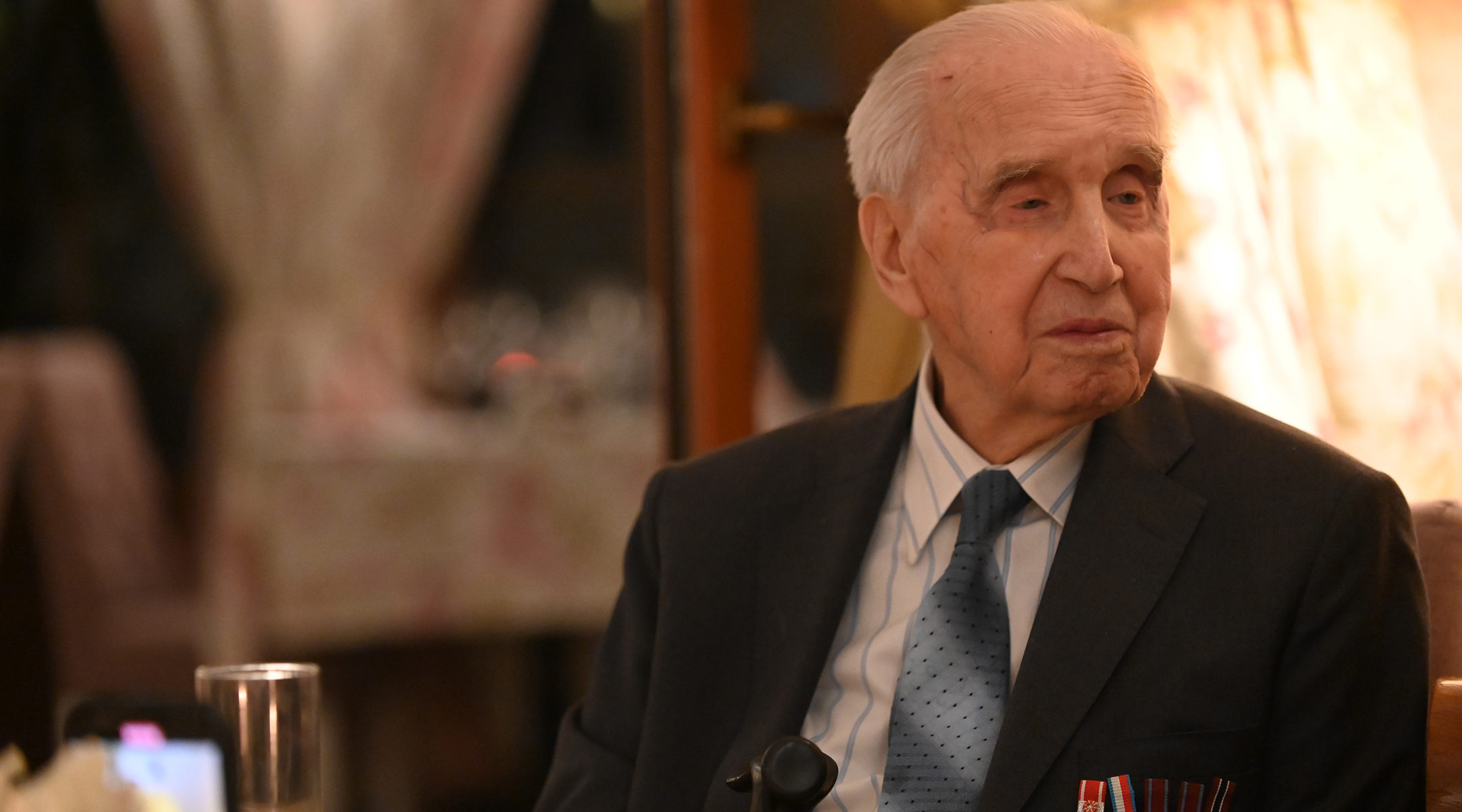
As an undercover partisan in Nazi-occupied Poland, Jozef Walaszczyk had little desire to add any more risks to his plans.
But Walaszczyk, who died in Warsaw on Monday at the age of 102, fell in love with a Jewish woman and became compelled to rescue her and dozens of other Jews from the Holocaust.
Although he was responsible for saving at least 50 Jews, Walaszczyk’s story is relatively unknown in Poland and beyond, partly because of his aversion to being celebrated as a hero.
“It was a process of one thing leading to another. There was a lot of fear and uncertainty,” he told the Jewish Telegraphic Agency in 2020.
Walaszczyk was recognised by Israel in 2002 as a Righteous Among the Nations, the Jewish state’s title for non-Jews who risked their lives to save Jews from the Holocaust. He was believed to be Poland’s oldest living Righteous, according to the From the Depths Holocaust commemoration group. (That title now belongs to Stanisław Wróbel, who was born six months after Walaszczyk. He and his family hid Jews in their attic and were recognised as Righteous in 1989.)
Walaszczyk’s rescuing story began at a hotel room near Warsaw, where he was with his girlfriend in 1941, as Nazi officers barged in and demanded to inspect the guests’ papers. Walaszczyk’s girlfriend told him then that she was Jewish as the officers descended on their room — so Walaszczyk hid her in a closet and left the room while feigning a bout of vomiting that distracted the Germans.
He later married her and provided her with a fake, non-Jewish identity. But she was again arrested with 20 other Jewish women in hiding.
Walaszczyk would bribe Polish police officers to release them. He helped at least 30 other Jewish people find hiding places.
“I probably took on too many risks,” he told JTA. “But helping people in real need has been something I couldn’t resist.”
An only child, Walaszczyk’s father died when he was 8, leaving his mother struggling financially and often at the mercy of strangers, Walaszczyk said.
Walaszczyk and his wife Irena divorced after World War II. He remarried and had one son with his second wife, before divorcing again and having another son with the third.
Walaszczyk was afraid of being betrayed to the Germans by other Poles during the war. In his interview with JTA, he said that he does not support laws in Poland that censor what can be said about collaboration.
“There were many rescuers. There were also traitors,” he said. “I know because some of my friends were killed because of traitors. We need to speak about both at the same time because the existence of each one of those groups helps us understand the significance of the actions of both.”

Keep community journalism free.
Jewish News is free for everyone. No paywall. No barriers. Just trusted journalism for anyone who wants to stay connected to Jewish life in Britain.
If you value that, please support us.
From as little as £5 a month, you can help keep our journalism free and accessible to all.
Every day, we report on the issues that matter to our community. We celebrate achievements, support charities, challenge antisemitism and ensure Jewish voices are heard more widely.
From as little as £5 a month, you can help us continue to:
- Report on the stories shaping Jewish life in the UK and beyond
- Bring our community together through shared stories, events and campaigns
- Celebrate the people, culture and moments that define our community
- Support organisations doing vital work across Jewish Britain
You can make a one-off donation or become a regular supporter. Every contribution helps keep our journalism free, independent and accessible to all.
If everyone who values Jewish News gave a small amount, it would make a real difference to our future.