Leap of faith: What would Micah say about keeping kosher?
A stimulating series where our progressive rabbis consider how biblical figures might act when faced with 21st century issues
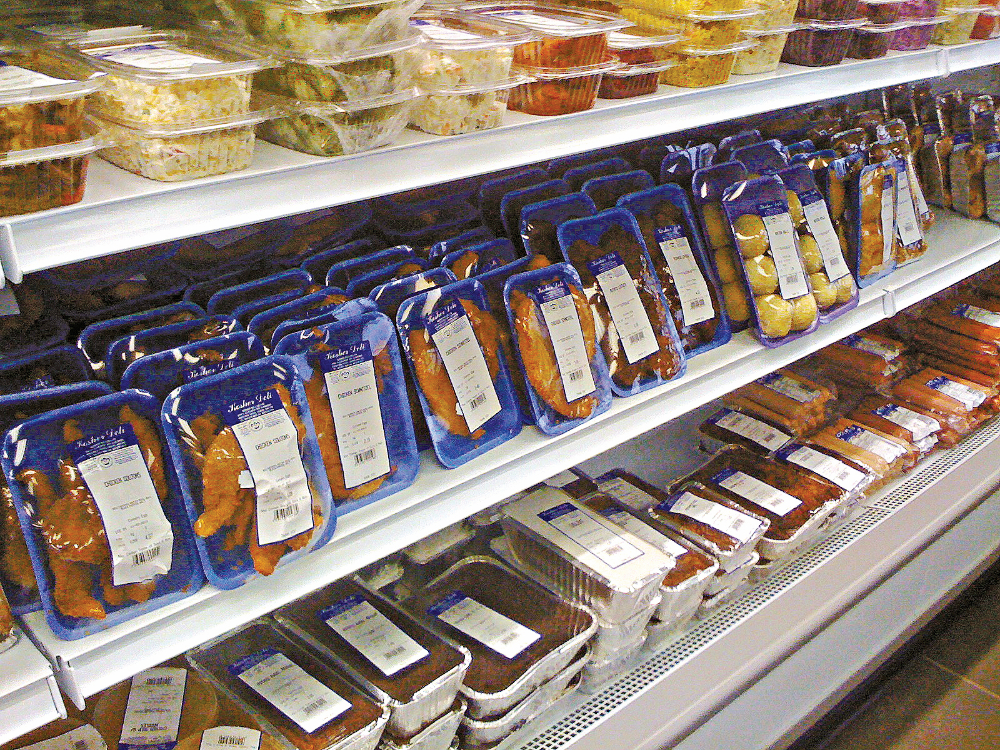
On a Bnei Mitzvah parents’ Facebook group recently a mother was complaining that her daughter attended a simchah where it was not clear if the meat was or was not kosher and provision was not made for those who do observe kashrut.
This is an issue of derech eret – having respect for each other’s level of Jewish observance. Progressive Jews observe a wide spectrum of kashrut. Many choose to observe the same kashrut as Orthodox observant Jews, seeking kosher labels on all packaged foods, separating milk and meat, and buying only kosher meat and fish. Others make different choices.
Kashrut is a matter of degree, and it starts from the principle that there are some foods which it is not right to eat, even though they are edible, because it is not fitting for a person who lives by Jewish values to consume them or to encourage their production.
Rabbi Zalman Schachter-Shalomi writes: “In every age Jews exist to ask the question, ‘What is Kosher?’ Kashrut is a continual effort to find what is clean, pure and good for the natural processes of the universe.” As Progressive Jews we acknowledge that the ways in which animals are raised and slaughtered can range from those with no respect for the animal’s well-being (only its productivity), to those who recognise that we should use every means possible to avoid tza’ar ba’lei chayyim – causing a fellow living being pain.
Many Progressive Jews will therefore buy only free-range eggs and meat as an aspect of their kashrut today. They will include conditions of the workers who produce our food to be part of kashrut by seeking out fair trade in production. Many will feel that we need to include the mitzvah to steward the world in a way that does not wreck the environment in our understanding of kashrut, and thus seek out sustainable fisheries, or foods that have not been air-freighted. Some choose to be vegetarian or vegan. Indeed, our youth movements RSY-Netzer and LJY-Netzer cater vegan on their day camps and residential camps wherever possible.


In the Torah itself, the reason given for kashrut is that it helps us to approach God’s holiness. This means that kashrut cannot be something static. Instead, it is one of the dynamic ways in which we interact with creation to try to bring the world a little closer to God. The prophet Micah says what God truly requires of us is to behave justly, treasure compassionate lovingkindness, and to walk humbly with our God. (Micah 6:8). It is a wonderful aspect of Judaism that we can do this through every mouthful that we eat to fuel our bodies.

Keep community journalism free.
Jewish News is free for everyone. No paywall. No barriers. Just trusted journalism for anyone who wants to stay connected to Jewish life in Britain.
If you value that, please support us.
From as little as £5 a month, you can help keep our journalism free and accessible to all.
Every day, we report on the issues that matter to our community. We celebrate achievements, support charities, challenge antisemitism and ensure Jewish voices are heard more widely.
From as little as £5 a month, you can help us continue to:
- Report on the stories shaping Jewish life in the UK and beyond
- Bring our community together through shared stories, events and campaigns
- Celebrate the people, culture and moments that define our community
- Support organisations doing vital work across Jewish Britain
You can make a one-off donation or become a regular supporter. Every contribution helps keep our journalism free, independent and accessible to all.
If everyone who values Jewish News gave a small amount, it would make a real difference to our future.