Prefer Jewish News on Google
LISTEN: 70 years after recording, Bubbe’s riddle is finally solved
Peter Freedman's chance discovery of a clip with his Polish-born grandmother in 1950s is deciphered as a song about immigrant life in London’s East End, albeit as a parody.
A man who unearthed a recording of his Polish-born grandmother singing an old Yiddish song after she had settled in London in 1903 has finally found out what she was singing about after 70 years’ of not knowing.
Peter Freedman, who now lives in Israel, recorded his grandmother Sarah singing – with backing from some of her grandchildren – in the 1950s, and for 70 years the song’s subject matter remained a mystery.
Now, with the help of the Board of Deputies’ archive project Hidden Treasures and Yiddishist Dr Vivi Lachs, it has been revealed that she was singing about immigrant life in London’s East End, albeit as a parody.
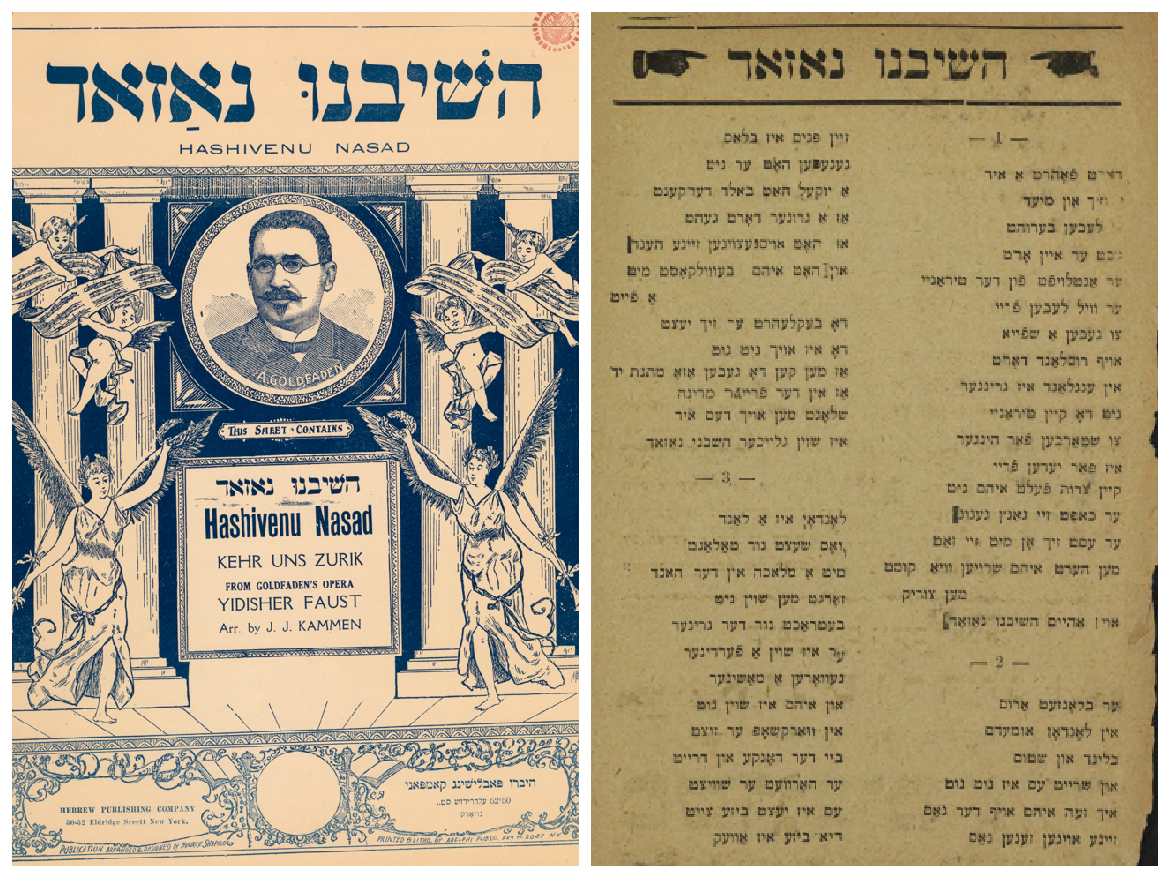
Sachs, whose book ‘Whitechapel Noise’ examines Jewish immigrant life in Yiddish song and verse in London between 1884 and 1914, was evidently the right person to ask – she immediately identified the song as ‘Hashiveynu Nazad’.
Sarah came to the UK from Posnan in Poland at the turn of the century, arriving in London and later going to live in Manchester. It seems the song she was singing was a parody of a song by Avrom Goldfaden from his opera, ‘The Jewish Faust.’
Listen to it here:
Lachs said it had been sung by Yiddish speaking Jews in London at the beginning of the 20th century, and had been given a very Jewish twist.
“The original song has a Zionist theme suggesting that life for Eastern European Jews would be better in Palestine,” said Lachs.
“The London parody suggests that life for Jewish immigrants in London, where they were poverty-stricken and subject to violent attack, was even worse than their life back in Eastern Europe and that they should return there.
“The parody is both moving and humorous and mentions local London landmarks such as Goulston Street and Petticoat Lane. It was popular in Britain and beyond and was reproduced in songbooks and song-sheets.”
Lachs added that it was “a unique recording, the only one by someone who obviously knew London and the Yiddish spoken there… It’s very exciting to have found it!”
The answer to Freedman’s 70-year puzzle was found with help from Peter’s great nephew Joel Salmon, who sent the recording to the Board of Deputies project.
“This certainly is a ‘Hidden Treasure’ and we are so pleased to have helped solve the 70 year old mystery of this family heirloom which has turned out to be so important,” said Board president Marie van der Zyl.
“Members of the Jewish community have been sending in pictures of a whole range of Jewish heirlooms. We look forward to seeing what else people have at home.”

Keep community journalism free.
Jewish News is free for everyone. No paywall. No barriers. Just trusted journalism for anyone who wants to stay connected to Jewish life in Britain.
If you value that, please support us.
From as little as £5 a month, you can help keep our journalism free and accessible to all.
Every day, we report on the issues that matter to our community. We celebrate achievements, support charities, challenge antisemitism and ensure Jewish voices are heard more widely.
From as little as £5 a month, you can help us continue to:
- Report on the stories shaping Jewish life in the UK and beyond
- Bring our community together through shared stories, events and campaigns
- Celebrate the people, culture and moments that define our community
- Support organisations doing vital work across Jewish Britain
You can make a one-off donation or become a regular supporter. Every contribution helps keep our journalism free, independent and accessible to all.
If everyone who values Jewish News gave a small amount, it would make a real difference to our future.