Prefer Jewish News on Google
Lord Pickles speaks of profound challenges posed to Holocaust memory by AI
The Conservative peer spoke at the UK co-sponsored Conference on Holocaust Distortion and Education in Bucharest
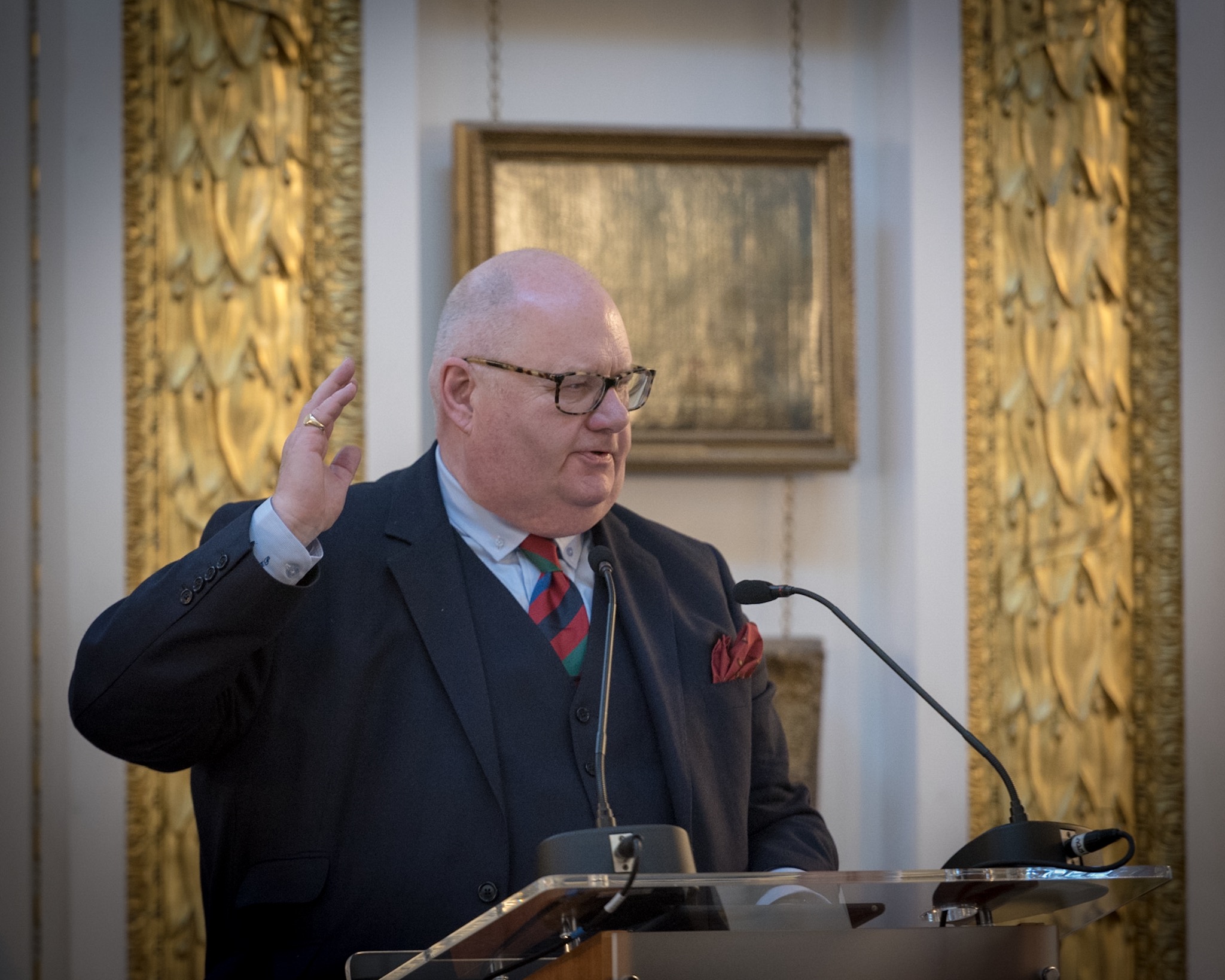
Lord Pickles has warned of the “profound consequences” to society of faked imagery relating to the Holocaust produced through generative AI and other emerging technologies.
In a speech given at the UK co-sponsored Conference on Holocaust Distortion and Education in Bucharest, Hungary, the International Holocaust Remembrance Alliance chair said:” The consequences of cheap, widespread fakery are likely to be profound.
“It is possible to imagine Holocaust survivor testimony being manipulated.
“We may see Holocaust survivors with false words put into their mouths; the concentration camps were ‘not that bad’; ‘we had plenty of food’; ‘we played cards on a Thursday with SS’ and such like..”
He continued:”The threats associated with AI in safeguarding the record of the Holocaust are many, including the potential for manipulation by malicious actors, the introduction of falsehoods or dissemination of biased information, and the gradual erosion of public trust in authentic records.
“As this decade progresses, the number of survivors who witnessed the Holocaust as children will move from contemporary memory into history. In anticipation of this, much effort is being made to secure testimony and protect archives. The very depth of this knowledge might be our Achilles’ heel.”
Reflecting on how to meet this challenge, the Tory peer said:”The first thing we need to understand is AI is here to stay. That governments will always be playing catch up to cheep widely used AI.
“The second thing is: we ourselves will use AI to improve our archives, it will find links and connections. We will use it to improve training and teaching
“We need to enhance AI literacy and research skills so that users know how to verify AI-produced texts.”
He said key to this is the necessity of understanding Large Language Models, “and those in the Large Language Model community will need to understand the Holocaust to ensure its accurate representation,” added Pickles.
He noted that big tech companies struggle to understand the issues around the Holocaust “the same way we struggle to understand AI.”
“The intersection of understanding between policy makers, AI experts and Holocaust experts needs to grow,” added the peer.
“That is why we will be focusing on Large Language Models during a special AI conference in London as part of the UK IHRA Presidency.
“The conference will bring together those involved in creating Large Language Models and our experts. It is an opportunity to learn from each other and to expand our work.
“More than a decade ago IHRA adopted a working definition of Holocaust denial and distortion.
“We made countering Holocaust distortion a pillar of the IHRA strategy.
“With the support of voluntary contributions by Germany, Israel and the United States the IHRA established the Global Task Force against Holocaust Distortion.
“Now the dangers of Holocaust distortion are addressed in the EU Strategy for Combating Antisemitism and Fostering Jewish Life.”

Keep community journalism free.
Jewish News is free for everyone. No paywall. No barriers. Just trusted journalism for anyone who wants to stay connected to Jewish life in Britain.
If you value that, please support us.
From as little as £5 a month, you can help keep our journalism free and accessible to all.
Every day, we report on the issues that matter to our community. We celebrate achievements, support charities, challenge antisemitism and ensure Jewish voices are heard more widely.
From as little as £5 a month, you can help us continue to:
- Report on the stories shaping Jewish life in the UK and beyond
- Bring our community together through shared stories, events and campaigns
- Celebrate the people, culture and moments that define our community
- Support organisations doing vital work across Jewish Britain
You can make a one-off donation or become a regular supporter. Every contribution helps keep our journalism free, independent and accessible to all.
If everyone who values Jewish News gave a small amount, it would make a real difference to our future.