Prefer Jewish News on Google
Making sense of the sedra: B’ha’alotecha
Our mission is to keep the light burning
Transition periods are incredibly difficult, and we often reference periods of our life as those before or after a big event to give a context to our experiences. We describe the post-Holocaust era, reminisce about life pre-Covid and now we contextualise our Jewish identity and all that it entails post-October 7.
Each chag that comes around forces us to ask ourselves some serious questions. How can we celebrate Pesach, the festival of freedom, when our people are not free? How do we frame Yom Ha’atzmaut, when our right to exist has again been called into question? At Mount Sinai, God designates us to be “a kingdom of priests and a holy nation,” (Exodus 19:6) but what does that mean for us as a nation on Shavuot 3,336 years later? The Sforno (a 16th century commentator) explains this as both a mission and a promise. The mission is to share God’s worldview with the whole of humanity by teaching them Torah through our example, and it’s a promise that we’ll be around forever in order to fulfil that mission.
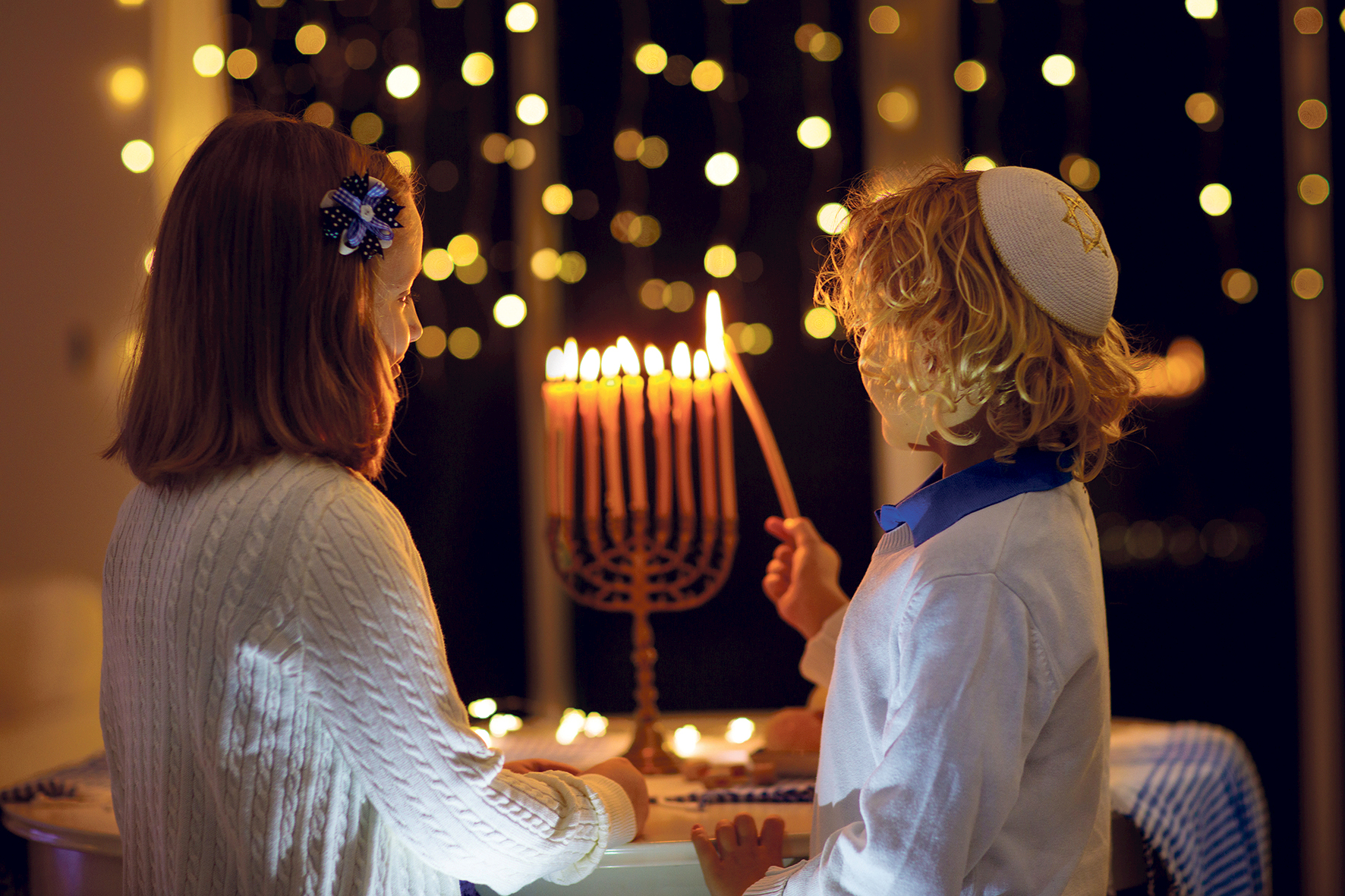
This duality is reflected in parsha B’ha’alotecha this week, which begins with God instructing Aaron the Kohen Gadol (High Priest), to light the menorah. He had to do this same job, on repeat, every single day. Interestingly, in the Temple, although all seven lamps of the menorah were filled with the same amount of oil, one light – the Western light – would remain lit till the next day, so that the Kohen could use it to relight the others. This constant flame came to an end when Shimon Hatzadik (the Righteous) died. He led us through another difficult transition, as he marked the end of the era of the Men of the Great Assembly and the beginning of the Mishnaic era, ensuring that the flame of Judaism would continue even after the second Temple was consumed by fire.
Why is there a miraculous ner tamid – a constant light – as well as the need to relight daily? Being a part of the Jewish nation, means recognising that our mission is to actively light the flame anew every day, whilst living through the miraculous promise from God that our flame will never be extinguished.
As Shavuot approached, I found myself thinking about my friend Maya, who was going through the process of converting to Judaism at this time of national crisis. When I asked her how that felt, her answer blew me away. “Your pain is my pain is our pain. Your hope is my hope is our hope. After thousands of years, we’re still here; still standing, still growing and still thriving. During times of darkness, it is crucial to find light and to be light.” It is the quintessential Jewish response in times of tragedy; to unite through our collective grief, grow through our shared aspirations, whilst offering each other mutual support through that difficult transition. Maya completed her conversion in time to celebrate Shavuot and take on the responsibility, along with the rest of us, to be a Light unto the Nations (Isaiah 49:6).


Keep community journalism free.
Jewish News is free for everyone. No paywall. No barriers. Just trusted journalism for anyone who wants to stay connected to Jewish life in Britain.
If you value that, please support us.
From as little as £5 a month, you can help keep our journalism free and accessible to all.
Every day, we report on the issues that matter to our community. We celebrate achievements, support charities, challenge antisemitism and ensure Jewish voices are heard more widely.
From as little as £5 a month, you can help us continue to:
- Report on the stories shaping Jewish life in the UK and beyond
- Bring our community together through shared stories, events and campaigns
- Celebrate the people, culture and moments that define our community
- Support organisations doing vital work across Jewish Britain
You can make a one-off donation or become a regular supporter. Every contribution helps keep our journalism free, independent and accessible to all.
If everyone who values Jewish News gave a small amount, it would make a real difference to our future.