Prefer Jewish News on Google
Making Sense of the Sedra: Korach
When a cholent party created unity
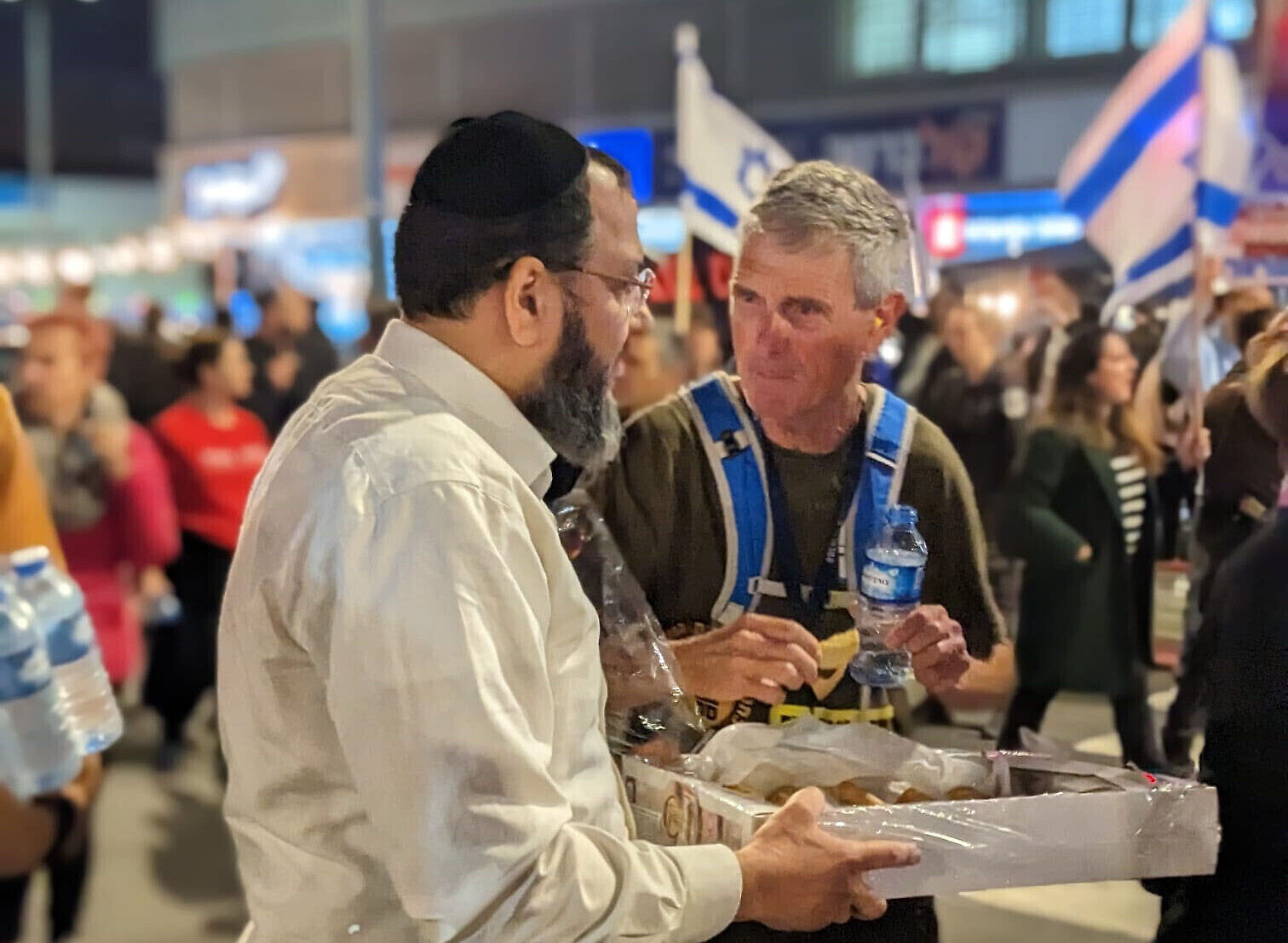
In March anti-judicial reform protesters announced that they would march in Bnei Brak. Many people feared that the presence of mainly secular protesters in a dominantly ultra-Orthodox city could lead to confrontation. Senior figures on both sides pleaded with their followers, stressing that disagreement must not lead to violence.
However, the result could not have been more different. The people of Bnei Brak united to welcome the protesters with smiles, food and Jewish music. Dubbed the ‘cholent party’, locals started handing out kugel and cholent. People from opposite sides of the religious and political spectrum met, sharing friendly conversations instead of angry clashes.
This is a modern-day example of a machloket le’shem shamayim, a debate for the sake of Heaven. Whilst they might have radically different political views, they were able to love and respect one another.
In this week’s sedra, Korach, Pirkei Avot (Ethics of our Fathers) 5:17 cites Korach’s rebellion against Moshe’s leadership as the prime example of a dispute that is not for the sake of Heaven. Korach was fuelled by petty jealousy. He was angry that Moshe, his cousin, had risen above him. He made rhetorical and resentful swipes at Moshe, not allowing him a chance to respond.
In contrast, we are told in the Mishneh that the prototype of disputes for the sake of Heaven is those between Hillel and Shammai. They debated in order to reach the truth, enjoying a friendly relationship. Despite disagreeing in areas of halacha, they were happy for their children to marry each other (Yevamot 14b).


Rabbi Sacks explained: “The sages were drawing a fundamental distinction between two kinds of conflict: argument for the sake of truth and argument for the sake of victory.”
This is a critical point to bring into our lives and communities today. If we can remain focused on reaching the truth, rather than simply gaining the upper hand over the ‘other’, then we can build unity whilst still disagreeing. This is what was achieved during the recent protest in Bene Brak.
Indeed, an emotional video filmed by a bystander at that protest went viral. It showed a secular man moved to tears when he heard Shalom Aleichem (a prayer sang on the Sabbath) played over the loudspeakers. It was a song that he had last heard sung by his late father many years earlier. This man later stated: “My father had love for every Jew and wanted to see us united.”
It is exactly this unity that Hillel and Shammai tried to create. And it was this that Korach threatened to destroy.

Keep community journalism free.
Jewish News is free for everyone. No paywall. No barriers. Just trusted journalism for anyone who wants to stay connected to Jewish life in Britain.
If you value that, please support us.
From as little as £5 a month, you can help keep our journalism free and accessible to all.
Every day, we report on the issues that matter to our community. We celebrate achievements, support charities, challenge antisemitism and ensure Jewish voices are heard more widely.
From as little as £5 a month, you can help us continue to:
- Report on the stories shaping Jewish life in the UK and beyond
- Bring our community together through shared stories, events and campaigns
- Celebrate the people, culture and moments that define our community
- Support organisations doing vital work across Jewish Britain
You can make a one-off donation or become a regular supporter. Every contribution helps keep our journalism free, independent and accessible to all.
If everyone who values Jewish News gave a small amount, it would make a real difference to our future.