Prefer Jewish News on Google
Maus creator Art Spiegelman: ‘I’ll never revisit the Holocaust’
The Swedish-born cartoonist discusses his new show and why his most famous work will never be turned into a film
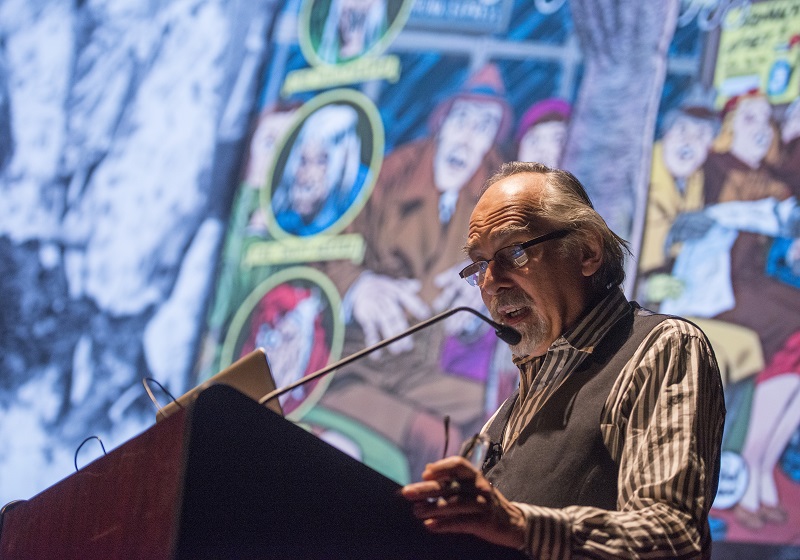
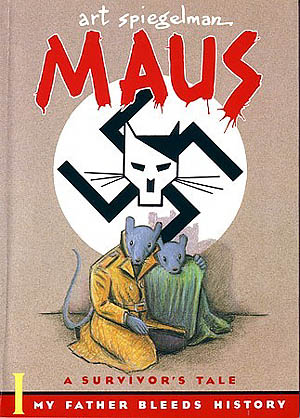
“I always feel like there is a giant mouse chasing me wherever I go,” admits Art Spiegelman, the Pulitzer Prize-winning cartoonist behind Holocaust memoir, Maus.
First published in 1980, Spiegelman sparked controversy – and debate – by translating the events of the Second World War into a graphic novel, where Jews are famously depicted as mice and Nazis as cats.
The 68-year-old Swedish-born artist is making coffee when we speak about his touring show, Wordless, an exploration of graphic novels through history set to music by jazz composer Phillip Johnston, which arrives at The Barbican tomorrow (Friday).
Ahead of his trip to London, Spiegelman asks if the weather is cold enough to warrant taking a coat, admitting an overt part of his Jewish identity is his extreme anxiety, something he acquired from his incredibly anxious, Holocaust survivor parents, who both feature in Maus.
Before his seminal work was first published, the New York resident recalls that he previewed it at a Holocaust conference to an audience of mostly retired Jews.


“One of them gets up and says: ‘Couldn’t you wait until we were dead to make fun of us?’
“I felt like I was facing an audience of my fathers and explained that although it’s a comic it doesn’t mean that it’s funny and I’m not making fun of you.
“I made a promise then that I had to finish the book, but once it was done I promised never to do the Holocaust again and I have since tried to keep that promise.”
It is only recently that Spiegelman touched on the Holocaust again and asserts: “I’m not a Holocaust expert – I just happen to live through parents who gave me a doctorate in it.”
Speaking about the effect of growing up with two parents who survived such atrocities, he reflects: “I think everybody is defined by their parent’s history.
“My father wasn’t willing to talk to me when I was a kid, but came forth when I was older.
“My mother had it leaking into conversations all the time without any context and obviously it affected me.
“I am a child of a survivor, but they can’t be allowed to define you, because they stop you from being human.”
As the conversation flows on, Spiegelman is keen to discuss the latest book he has been working on, a retrospective of his close friend, Jewish artist Si Lewen.
Explaining his work is a “remastered version of his original drawings,” Si Lewen’s Parade: An Artist Odyssey, it trails the life of Lewen, a refugee from Nazi Germany, who arrived in New York in 1935 and died recently aged 98.
“This is the first time I have returned to the topic of the Holocaust and it is for a number of complex reasons.
“I vowed after Maus not to touch it, when every offer came along to make a movie that I could imagine, but I never had any desire for that.”
Still, he concedes: “I am very grateful to Maus because it has allowed for my other follies, like Wordless and beyond, which keeps me thinking, breathing and experimenting.”
Speaking of his latest show, which he describes as “intellectual Vaudeville”, Spiegelman says: “It’s the most fantastic thing we have ever done and why we keep going out of our way to perform it.”
He adds: “I’ve never seen anything like it before. It’s a hybrid medium that doesn’t translate into anything else, a lecture about words and pictures and how they fight with each other and how they supplement each other and what happens when you remove one of those elements in a more and more visual culture.”
Wordless! featuring Art Spiegelman and Phillip Johnston takes place on 11 November, 7.30pm at The Barbican, Silk Street. Details: www.barbican.org.uk

Keep community journalism free.
Jewish News is free for everyone. No paywall. No barriers. Just trusted journalism for anyone who wants to stay connected to Jewish life in Britain.
If you value that, please support us.
From as little as £5 a month, you can help keep our journalism free and accessible to all.
Every day, we report on the issues that matter to our community. We celebrate achievements, support charities, challenge antisemitism and ensure Jewish voices are heard more widely.
From as little as £5 a month, you can help us continue to:
- Report on the stories shaping Jewish life in the UK and beyond
- Bring our community together through shared stories, events and campaigns
- Celebrate the people, culture and moments that define our community
- Support organisations doing vital work across Jewish Britain
You can make a one-off donation or become a regular supporter. Every contribution helps keep our journalism free, independent and accessible to all.
If everyone who values Jewish News gave a small amount, it would make a real difference to our future.