Prefer Jewish News on Google
Meet the Brit sharing Israel’s vax skills in the developing world
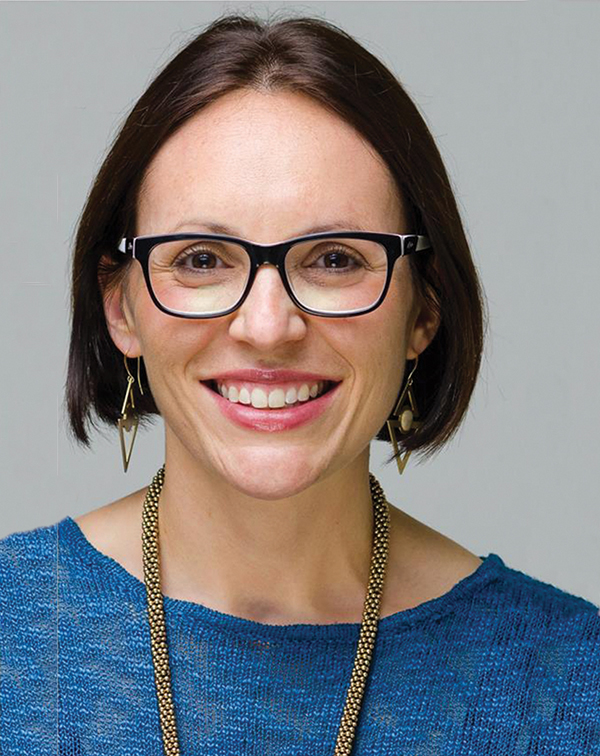
IsraAID's Tamar Kosky Lazarus is directing a team helping in crisis and post-crisis spots
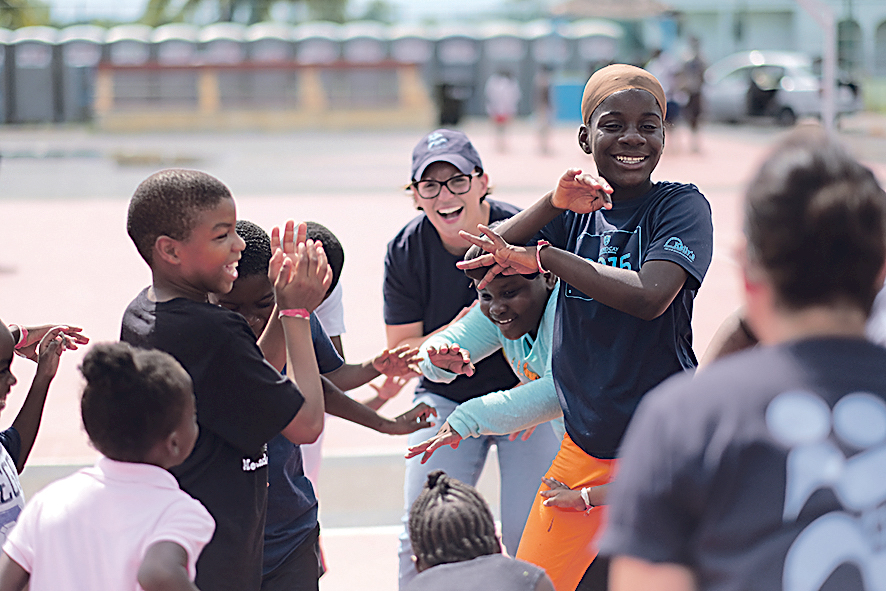
A British expat is helping to mastermind the first operation aimed at sharing Israel’s vaccine expertise across the developing world.
And as Tamar Kosky Lazarus directs the aid trip she helped plan from mission control in Tel Aviv, another British-Israeli, epidemiologist Michael Edelstein who recently relocated from London to Israel, is part of the team getting to work in Africa.
Kosky Lazarus, 39, is senior development director at IsraAID, a non-profit organisation that has 350 staff helping in crisis and post-crisis spots. This week it launched what it says will be the first of several vaccine-focused aid operations and sent a team to the small African country of Eswatini (formerly Swaziland).
The euphoria felt in Israel as vaccination got under way at record speed pushed her and her colleagues to think how the knowhow could be shared with those less fortunate.
“When I received a vaccine in Israel it was emotional,” she said. “We’re very lucky and privileged. Global vaccine roll-out has been concentrated on a small number of wealthier countries, but we cannot allow the pandemic to rage on uninhibited across lower income countries. It’s important we take responsibility to help create a situation where every person in the world can have a vaccine.”
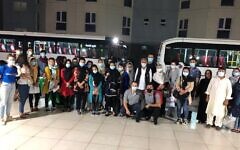
Eswatini is a country of just over one million people bordering South Africa and Mozambique. It faces intense poverty, sky-high Aids rates, and is reeling from the pandemic, following high infections and the death of prime minister Ambrose Dlamini in December, four weeks after he tested positive for coronavirus.
South Africa-based Jewish billionaire Nathan Kirsh, a citizen of Eswatini, provided funds to IsraAID for the mission. The government, which invited the nonprofit, already has vaccines on the way, but wanted help planning the logistics and public education ahead of the roll-out.
The mission involves meetings with health officials and doctors, and addressing many questions facing the vaccination campaign, from how best to transport shots to rural villages and inform citizens about the benefits and safety
of vaccines.
“People around the world have seen what’s been happening in Israel,” said Kosky Lazarus. “The Eswatini government was interested in learning how our organisation could provide a holistic approach to the vaccine roll-out.”
As Kosky Lazarus and her Tel Aviv colleagues assembled a crack team in less than a month, she tapped fellow British-Israeli Michael Edelstein, a key figure in Public Health England’s pandemic strategy, before his move last summer to Bar Ilan University’s Azrieli Faculty of Medicine.
“I am hoping my experience in managing vaccine programmes, and in particular vaccination data, will help Eswatini run a successful vaccine campaign,” he said.
The graduate of Leeds University and UCL, who made aliyah 10 years ago, said the issue of vaccine inequality was on her mind ever since Israel and the UK started vaccinating.
She is accustomed to working under pressure on missions planned at short notice, but said even for her, this one presented new difficulties.
“We faced challenges like airports opening and closing, Different countries’ Covid regulations, and need for extra tests along the way.”
Kosky Lazarus is motivated in the current mission not only by a desire to see an end to illness and death caused by the virus, but also by dismay at the knock-on effects: malnutrition, growing education gaps, increased gender-based violence rates and child protection issues. “The pandemic has led to many indirect side effects and has reinforced the vulnerability of already vulnerable communities.”
But, she added, it was very exciting having the team on the ground. “This isn’t just another mission; it feels really groundbreaking. We expect to stay in Eswatini for the long-term, and will look into replicating this
type of ‘vaccine access’ mission in other countries.”

Keep community journalism free.
Jewish News is free for everyone. No paywall. No barriers. Just trusted journalism for anyone who wants to stay connected to Jewish life in Britain.
If you value that, please support us.
From as little as £5 a month, you can help keep our journalism free and accessible to all.
Every day, we report on the issues that matter to our community. We celebrate achievements, support charities, challenge antisemitism and ensure Jewish voices are heard more widely.
From as little as £5 a month, you can help us continue to:
- Report on the stories shaping Jewish life in the UK and beyond
- Bring our community together through shared stories, events and campaigns
- Celebrate the people, culture and moments that define our community
- Support organisations doing vital work across Jewish Britain
You can make a one-off donation or become a regular supporter. Every contribution helps keep our journalism free, independent and accessible to all.
If everyone who values Jewish News gave a small amount, it would make a real difference to our future.