Prefer Jewish News on Google
My grandfather’s life as a Second World War secret listener
Comedienne Helen Lederer takes a fascinated group round exhibits at the Imperial War Museum
It’s not every day one receives an invitation from the Imperial War Museum to host an internal tour, specifically to showcase certain exhibits “relevant to my own family story” for the paying public.
I was both flattered and daunted, which explains why last week I channeled my new tour guide persona with a host of strangers, while I carefully revealed some family secrets alongside the relevant artefacts .
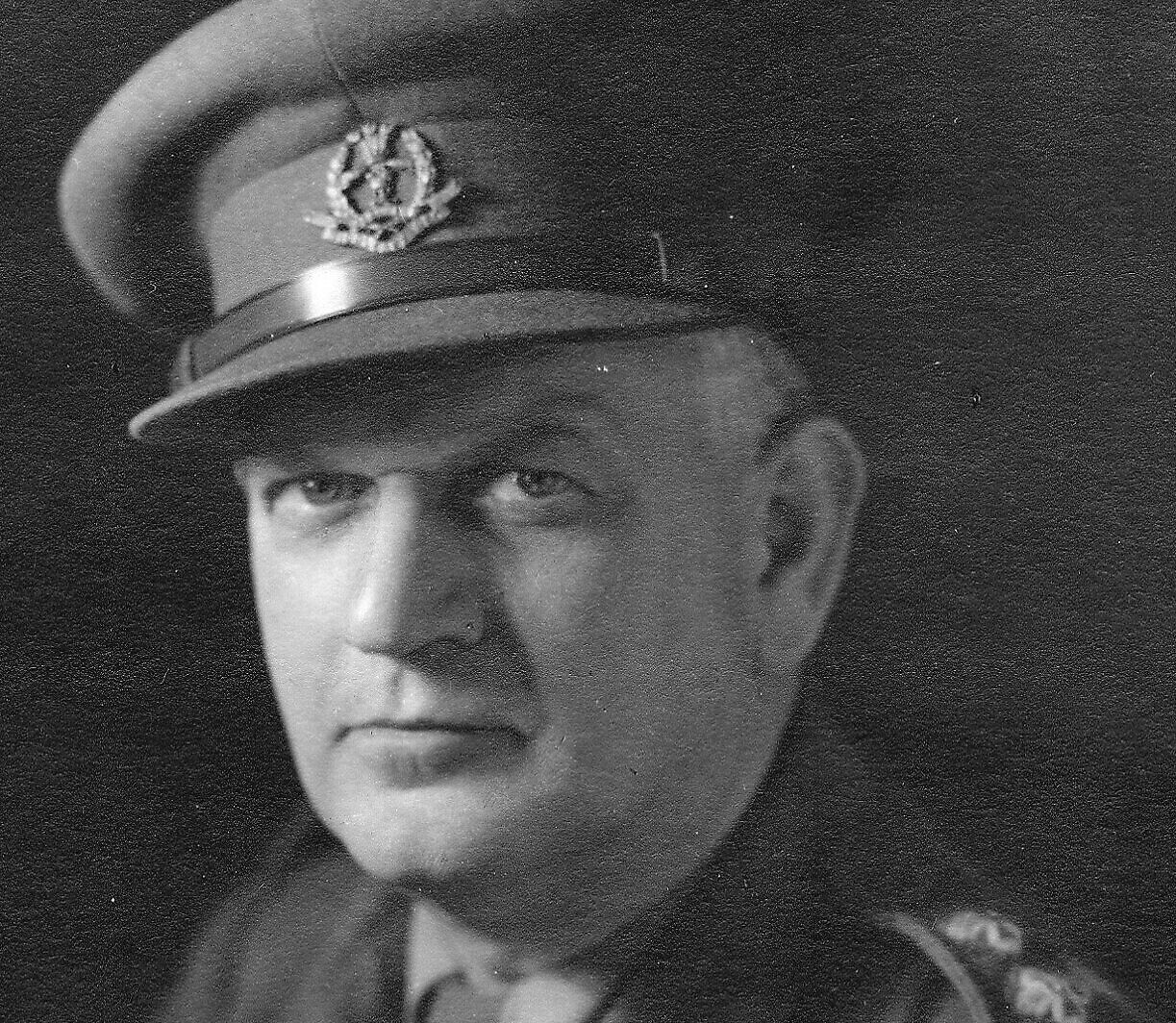
Exhibit one began with an exposé of a family secret — a secret that was completely unknown until a Channel Five documentary unveiled the fact that my Czech refugee grandfather was in fact a Secret Listener at Trent Park, north London, during the Second World War.

As I invited people to gather round the Home Guard rule-book, conveniently placed next to another and very differently purposed book called the “Black Book” — we compared items.
The latter was stamped “Geheim!” (Secret) and bore a handwritten title “Gestapo Arrest List for England”, offering a list of names of Jews, politicians, actors and other “undesirables” considered worthy of either being arrested, sent to a concentration camp or killed — for when Germany invaded Great Britain.
In contrast, the Home Guard book set out a sturdy set of rules, calmly explaining how we were to defend Britain but basically we were “to take no prisoners”. Gone was the image of a Dad’s Army soldier, characterised by humour and a powerless band of brothers — suddenly we were seeing what serious imminent invasion meant and how defence and surveillance would bear a crucial part.
I confess I had to look up Operation Sea Lion to comprehend fully just how confident the Germans were of invasion in 1940… but it was close, apparently.
The connection to these two exhibits was unusual, but true. As my Czech grandmother cheerily waved my grandfather off to guard Hampstead Heath as a member of the Home Guard, Ernst Lederer (Big Baba to me) did a U-turn, before making his way to Cockfosters, in order to slip downstairs into the basement of Trent Park House and put his headphones on.
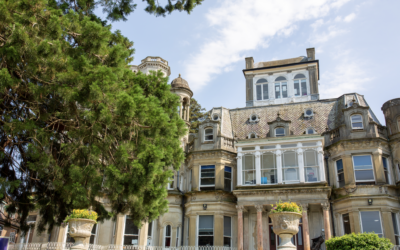
Once installed in secrecy, he would begin listening to the captured German generals upstairs, who were living in apparent luxury in the government-requisitioned country house, previously belonging to socialite Philip Sassoon, who died in 1939.
The very house that played host to guests such as the Mitford sisters, Charlie Chaplin and Winston Churchill was now a highly-bugged and highly-prized five-star prison for German prisoners, run by British Intelligence.

Now my tour group were face to face with an Enigma machine, which led me to say “don’t ask me how it works’” —luckily no-one did. Opposite the machine was a Special Operations Executive suitcase, used by spies such as the half-French Violette Bushell, (better known as Violette Szabo), who ended up blowing up a viaduct.
As far as I know, my mother was not one of these brave spies — but she was invited to work at Bletchley Park in Hut 6, having just graduated from King’s College in London. And while I never knew exactly what mother Jeanne did in Hut 6, she has been mentioned several times in an enticing diary called A Grand Gossip by Basil Cottle. I read out some of these gossipy snippets to my lovely audience — just to prove I wasn’t making it up.
Next, we all looked skywards to see parts of a German “wonder weapon”— a V1 (that fell on Lambeth) — as well as the nose from a V2 rocket which caused even more death and destruction. However, secret information about the location of the manufacturing base in Germany was gleaned by some of the Secret Listeners at Trent Park (the German generals were becoming too relaxed to conceal their knowledge), which led to an RAF bombing raid to destroy these bomb factories, making a neat link between Home Guard, Black Book and the German-speaking Secret Listeners working for the British.
Then it was time for a final stop to view a food bowl, belonging to a Czech resistance fighter called Prem Dubius. Prem was sent to Mauthausen concentration camp for helping a Jewish family, but his language skills got him a job as a clerk, and he survived.
Then we joined historians James Bulgin and Sarah Paterson, where my own family story (uncovered by chance by that earlier TV documentary) got to be told. We were joined by other trustees of Trent Park House — Alan Perkin, Winston Newman, Francesca Mendes Andrew Kafkaris, architrave project manager Chezzy Bowen, fundraiser Cynthia Wainwright and museum curator Tori Reeve, so I made sure I was prepped.
Trent Park will be opening as a museum to tell its story next year – so from one established magnificent museum to a new one – let us salute each other. History is for everyone — .and museums offer the key to the past, so we can live the future in an informed way.
The Secret Listeners | Trent Park House of Secrets My IWM: Helen Lederer | Imperial War Museum

Keep community journalism free.
Jewish News is free for everyone. No paywall. No barriers. Just trusted journalism for anyone who wants to stay connected to Jewish life in Britain.
If you value that, please support us.
From as little as £5 a month, you can help keep our journalism free and accessible to all.
Every day, we report on the issues that matter to our community. We celebrate achievements, support charities, challenge antisemitism and ensure Jewish voices are heard more widely.
From as little as £5 a month, you can help us continue to:
- Report on the stories shaping Jewish life in the UK and beyond
- Bring our community together through shared stories, events and campaigns
- Celebrate the people, culture and moments that define our community
- Support organisations doing vital work across Jewish Britain
You can make a one-off donation or become a regular supporter. Every contribution helps keep our journalism free, independent and accessible to all.
If everyone who values Jewish News gave a small amount, it would make a real difference to our future.