Prefer Jewish News on Google
New modernist exhibition shows works by Jewish artists
Artists and refugees have often sought solace in Sussex, home to new art display
He was born in Romania, imprisoned in Ukraine and after escaping Nazi persecution found peace and inspiration in Sussex, that green coastal corner of England which has attracted so many painters and sculptors.
Arnold Daghani, one of several Jewish artists who called Sussex home, is among the chosen few being profiled in a soul-stirring new exhibition at the Towner in Eastbourne. Six of this largely-forgotten painter’s works are on show, alongside three by Gluck (as the rebellious Hannah Gluckstein styled herself) and five by celebrated 20th century sculptor and draughtsman Jacob Epstein.
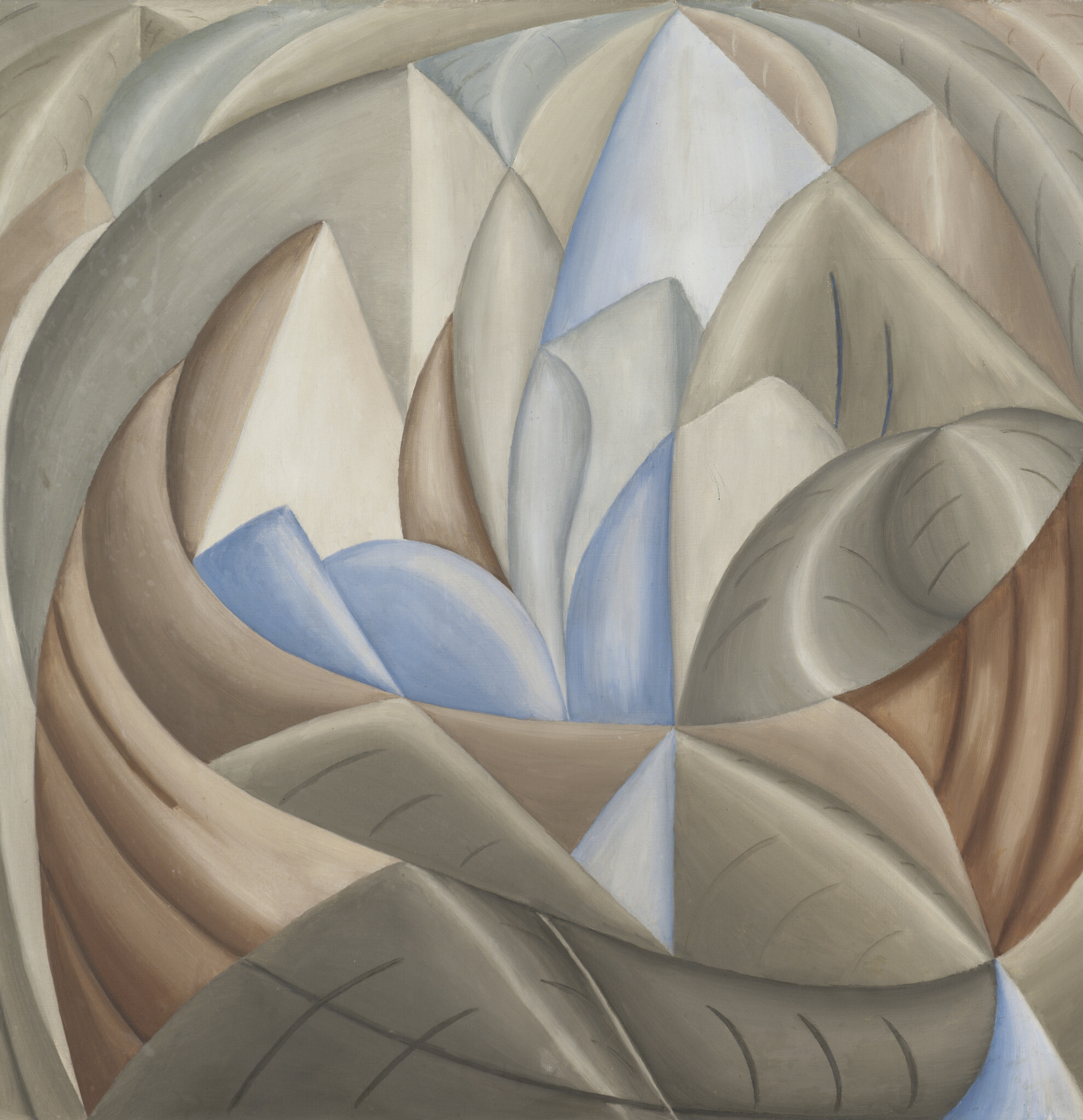
Then there are works by Margaret Dora Mendelssohn Benecke, an artist even more adept at visual art than her multi-talented grandfather, the composer Felix Mendelssohn. Benecke, whose work has been in the Towner collection for many decades, scandalised the more conservative folk of fashionable Eastbourne with her move into abstraction before, like the equally-controversial Gluck and Daghani, dropping out of view and public memory.
Sussex is a place of dramatic landscapes punctuating its gallery-packed coastal towns – Eastbourne, Bexhill, Rye and Hastings form an art trail of their own – and it was the sandstone cliffs rising above the sea near his rented bungalow at Pett Level (later harnessed by David Bowie as the backdrop for his Ashes To Ashes video) which inspired Benecke’s contemporary, Jacob Epstein, to create a robot drilling into rock. This stretch of coast is where Epstein – equally controversial but never sidelined into obscurity – also conceived a pair of monumental pregnant women, one of which, Maternity, has returned to Sussex more than a century after its creation for the Towner show.
“Epstein dreamed of building a temple on the Sussex Downs peopled by the stone figures he created for it,” says Hope Wolf, curator of the show, whose Jewish great-grandfather shared with Daghani the terror of being arrested by the Gestapo during World War II.
As a member of the diaspora, on whose book Sussex Modernism the new art exhibition is based, Wolf makes the point that modernism and the diaspora have been linked by many art historians: “Emigres tend to have the distance to see their new surroundings in a fresh way.”
Many Jewish refugees passed through Sussex, including Erich Mendelsohn, architect of the iconic De la Warr Pavilion down the coast from the Towner at Bexhill. The building, a Modernist masterpiece considered controversial in its time, was captured for posterity by another emigre Jew, Laszlo Moholy-Nagy, one of whose photographs is in the Towner show.

While she has beautifully showcased works by Daghani and Epstein, Wolf regrets the space constraints which prevented the inclusion of other Jewish artists who worked in Sussex and whose works are detailed in her book. “They include Hans Feibusch, who fled Germany, converted to Christianity but returned to his Jewish faith at the end of his life and is buried in Golders Green, and Alfred Cohen, an American who made paintings of rainbows over Fairlight on the Sussex coast.”
Gluck was the professional name chosen by Hannah Gluckstein, whose need for refuge was due to gender stereotyping. Born in 1895 into the Gluckstein family which founded J. Lyons and the Corner House chain, she studied at the St John’s Wood School of Art during World War I before joining a flourishing art colony in Cornwall. She returned to North West London to live with various partners, including society florist Constance Spry, before settling down with the love of her life, Nesta Obermer, in Plumpton, East Sussex, in 1936. She spent most of her remaining 42 years in the county, where the Towner is exhibiting her last major painting – a fish head decomposing on the beach, poignantly titled: Rage, Rage Against the Dying of the Light.
“It was completed near the end of her life, when she was preoccupied with death and decay,” says Wolf of Gluck, who died the following year. For an artist who styled herself as a man, her exquisite flower paintings are surprisingly delicate and feminine, and Gluck’s Still Life with a Scallop and Shetland Myrtle Blossom is one of the most beautiful paintings in the Towner show.
Another of its prize exhibits is Gluck’s landscape Sulky Spring, believed to never have been seen in public before.

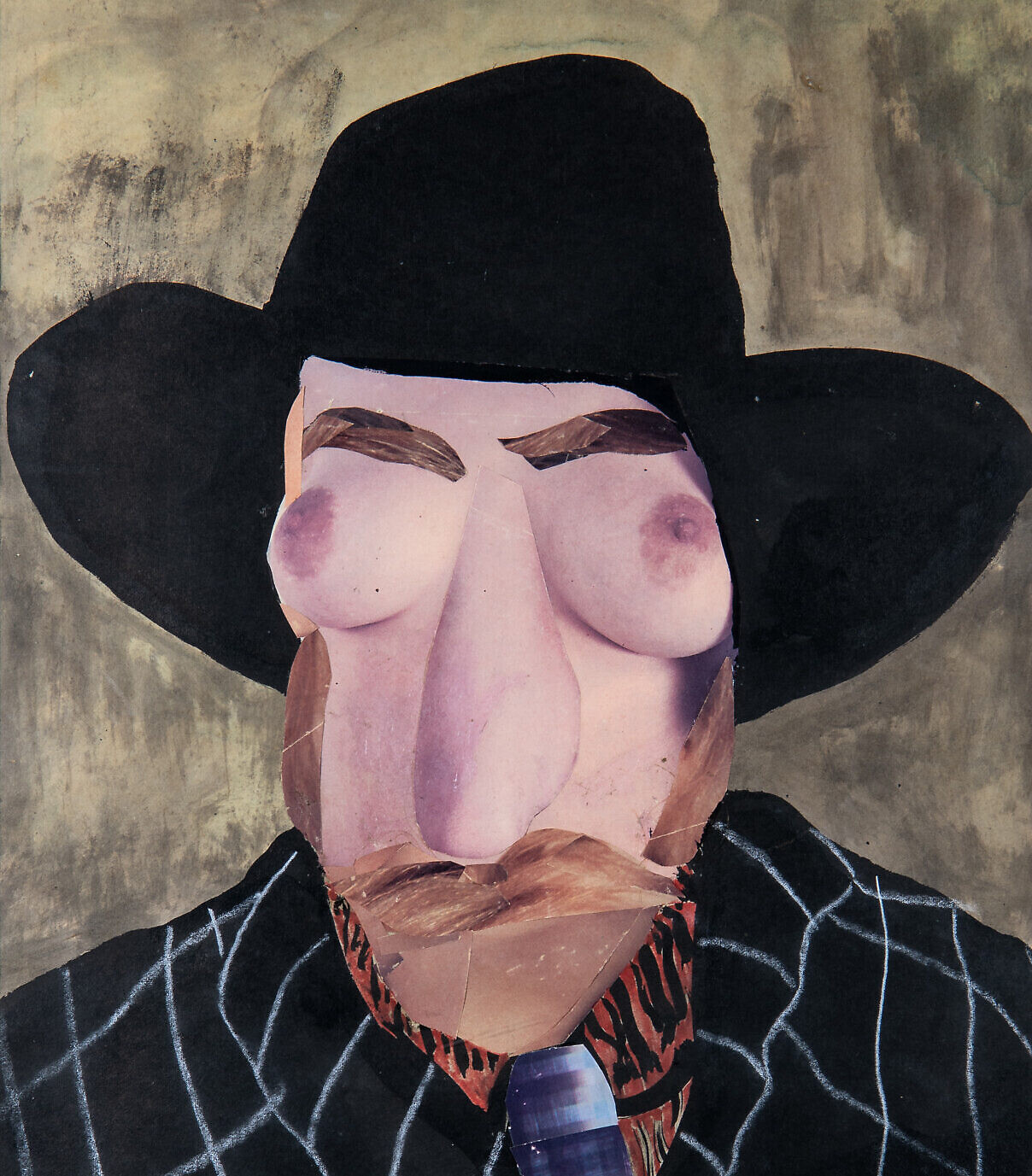
Of all the Jewish artists, Daghani has won special respect from Wolf, who has given the artist a wall all to himself, as he would have felt was his just desserts. As well as a rude depiction of a commercial art dealer with breasts for eyes, and a handful of poignant drawings, some made in Brighton Hospital when he was ill, there is one of his handmade books, featuring a self-portrait and his diatribe against the commercialised art world he so despised. This rare exhibit is alone worth visiting the Towner show to see, and to understand why Sussex has provided refuge as well as inspiration for so many creatives from all over the world who sought a haven to make work the way they wanted.
Sussex Modernism runs at the Towner Eastbourne 23 May – 28 September. townerastbourne.org.uk

Keep community journalism free.
Jewish News is free for everyone. No paywall. No barriers. Just trusted journalism for anyone who wants to stay connected to Jewish life in Britain.
If you value that, please support us.
From as little as £5 a month, you can help keep our journalism free and accessible to all.
Every day, we report on the issues that matter to our community. We celebrate achievements, support charities, challenge antisemitism and ensure Jewish voices are heard more widely.
From as little as £5 a month, you can help us continue to:
- Report on the stories shaping Jewish life in the UK and beyond
- Bring our community together through shared stories, events and campaigns
- Celebrate the people, culture and moments that define our community
- Support organisations doing vital work across Jewish Britain
You can make a one-off donation or become a regular supporter. Every contribution helps keep our journalism free, independent and accessible to all.
If everyone who values Jewish News gave a small amount, it would make a real difference to our future.