Prefer Jewish News on Google
OPINION: 30 years after Srebenice
The UK's National Srebrenica Memorial Day was solemnly commemorated at St. Paul's Cathedral in London
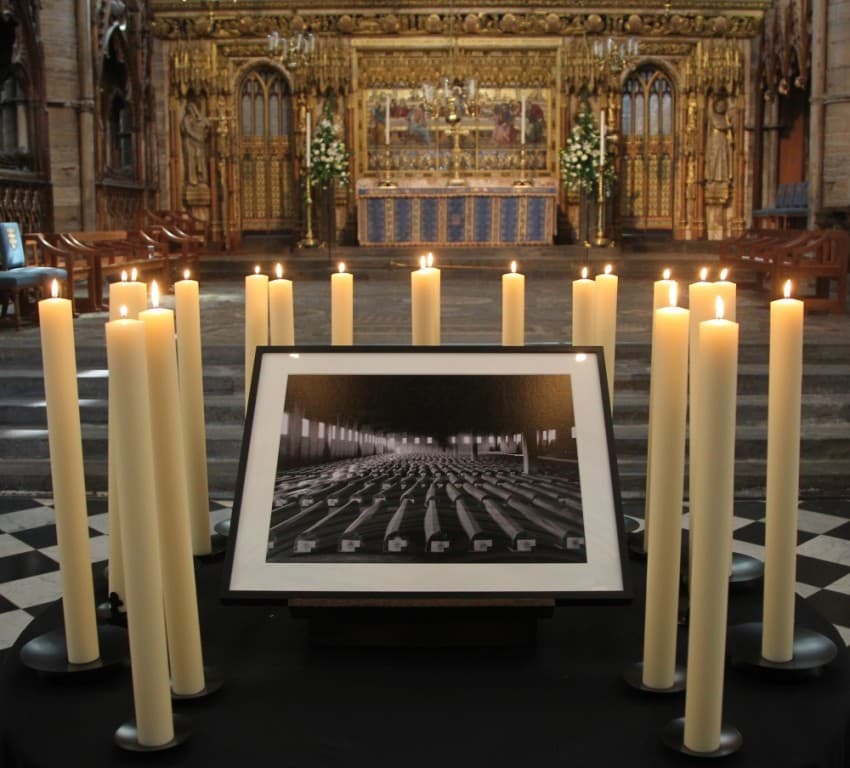
When one remembers what happened at Srebenice, one hears echoes of the Jewish experience at the hands of the Nazis. During the breakup of Yugoslavia, the Serbian reaction to Croatia’s declaration of independence saw the descent into a terrible war, combining the grimmest elements of religious zealotry and nationalism. It was in Bosnia, however, that it became something darker still.
For there is a difference between war, however awful, and the genocide that took place in Bosnia, where people were herded into camps, where one part of a family would face murder, while the remnant would be treated as less than animals.
The last genocide to take place in Europe happened thirty years ago, where thousands of Muslim men and boys were murdered, at Srebrenice, on the basis of their religion. Now in 2025, at St Paul’s Cathedral, we gathered to commemorate, and remember.
In one sense, it felt odd to be commemorating this with a Christian service in St Paul’s cathedral. In another way, it felt right that such a commemoration should happen in such an illustrious setting in London. The UK bears its share of responsibility for failing to act – and perhaps even for preventing others, such as NATO, from acting prior to Srebrenice. When Britain, under a new government, did join the military campaign, the Serbians under Slobodan Milosevic would ultimately be defeated. British politicians such as Tony Blair and Paddy Ashdown came away with hero status for many. In Kosovo, people would name children ‘Tonibler’. And while many non-interventionists have regularly congratulated themselves on their own wisdom and sagacity in the wake of the terrible aftermath of the Iraq War, they often seem oddly quiet about their opposition to military intervention in the Balkans, half a decade earlier.
It was a fitting commemoration, in one of London’s finest settings.
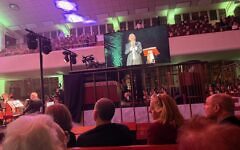
The Processional Hymn, ‘O God, our help in ages past’ – saw the Canons, in full Church dress walk past. Following this, the crowd was addressed by prominent politicians, including Deputy Prime Minister Angela Rayner, Mayor of London Sir Sadiq Khan, Equalities Minister Lord Wajid Khan and Baroness Warsi. But they – along with the admirable Christian clergy, including the wonderful Bishop of London – were bit players, as I’m sure they themselves would acknowledge. The real focus was, as it should be, on the survivors on their testimony – something which we in the Jewish community can appreciate better than most.
Munira Subasic who spoke of the 22 lost members of her family including her husband and son, “who she loved the most in this world”. She described how “our innocent children who were killed in the UN protected zone while the world and Europe watched”. She spoke of the denial of the Bosnian genocide.
Emina Kulasic spoke of leaving grandparents behind in the belief they would be safe – they were murdered and 30 years later her family are still looking for their remains – and the awful treatment in the Trnopolje Concentration camp, including torture, starvation and murders.
The Grand Mufti of Bosnia Herzegovina read verses of the Qur’an, which cite the day of judgement: “When the sun is wrapped up in darkness and the stars fall…when the records are laid open and the sky is stripped away…on that day each soul will know what deeds it has brought.”
Emerging into the light of Paternoster Square, it felt so important to remember Srebenice, and for us, however difficult at this time, to stand together with other faith communities.
- Andrew Gilbert, vice president, Board of Deputies

Keep community journalism free.
Jewish News is free for everyone. No paywall. No barriers. Just trusted journalism for anyone who wants to stay connected to Jewish life in Britain.
If you value that, please support us.
From as little as £5 a month, you can help keep our journalism free and accessible to all.
Every day, we report on the issues that matter to our community. We celebrate achievements, support charities, challenge antisemitism and ensure Jewish voices are heard more widely.
From as little as £5 a month, you can help us continue to:
- Report on the stories shaping Jewish life in the UK and beyond
- Bring our community together through shared stories, events and campaigns
- Celebrate the people, culture and moments that define our community
- Support organisations doing vital work across Jewish Britain
You can make a one-off donation or become a regular supporter. Every contribution helps keep our journalism free, independent and accessible to all.
If everyone who values Jewish News gave a small amount, it would make a real difference to our future.