OPINION: Doubling down and redevelopment: what next for Gaza and the Middle East
Trump's astonishing assertion that the US will transform war-torn Gaza into a 'Riviera' has had a mixed reception, writes Richard Pater

Despite the meeting taking place after midnight Israel time, all eyes were on the White House as President Trump appeared to renew his bromance with Israeli Prime Minister Netanyahu. Netanyahu’s visit to DC marked the 14th time he has enjoyed the hospitality at Blair House (the traditional base for visiting VIPs), an all-time record for any foreign leader.
At their meeting in the Oval Office one had the impression it was back to business for the pair, who fell out when Netanyahu had the audacity to congratulate then President Biden on his 2019 victory. Trump, as usual made numerous references to his predecessors failures, repeating that October 7th and the Russian invasion of Ukraine would never have happened if he was in office. Netanyahu was slightly more subtle, preferring to focus on the rejuvenated alliance.
Between them they recalled previous success’s and favourably mentioned Trump’s decisions two weeks into his second term including; the renewal of weapons deliveries, the US withdrawal from problematic UN agencies, and returning to the “maximum pressure” campaign on Iran.
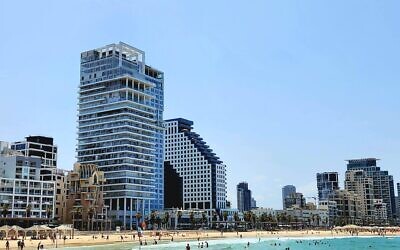
However, the most remarkable aspect of their latest encounter was Trump’s assertion that the US would take over the Gaza Strip and redevelop it, “as a kind of Riviera of the Middle East.”

He also doubled down on his idea of relocating 1.8million Gazans, seemingly oblivious to historic Palestinian trauma associated with relocation. Furthermore, he caused anxiety among two of Israel’s neighbours and closest allies Egypt and Jordan suggesting that they would provide a home for the Gazan refugees.



In a third act to agitate the Arab world, Trump suggested that Saudi Arabia was not demanding a Palestinian state in return for normalisation with Israel. This triggered the Saudi Foreign Ministry to issues a denial at 4am local time.
Whilst all this is all a US plan and not an Israeli initiative, it no doubt is convenient for Netanyahu in his efforts to keep his right wing coalition partners placated inside the government. However, for many Israelis the key priority is to see the hostage deal extended beyond the first phase, and see all of the hostages return home.
- Richard Pater is the director of the Britain Israel Communications and Research Centre (BICOM) in Israel

Keep community journalism free.
Jewish News is free for everyone. No paywall. No barriers. Just trusted journalism for anyone who wants to stay connected to Jewish life in Britain.
If you value that, please support us.
From as little as £5 a month, you can help keep our journalism free and accessible to all.
Every day, we report on the issues that matter to our community. We celebrate achievements, support charities, challenge antisemitism and ensure Jewish voices are heard more widely.
From as little as £5 a month, you can help us continue to:
- Report on the stories shaping Jewish life in the UK and beyond
- Bring our community together through shared stories, events and campaigns
- Celebrate the people, culture and moments that define our community
- Support organisations doing vital work across Jewish Britain
You can make a one-off donation or become a regular supporter. Every contribution helps keep our journalism free, independent and accessible to all.
If everyone who values Jewish News gave a small amount, it would make a real difference to our future.