Prefer Jewish News on Google
OPINION: Is the RSPCA assuring abattoirs or advancing an anti-faith agenda?
The RSPCA’s obsessive focus on shechita smells of something more insidious than concern for animal welfare
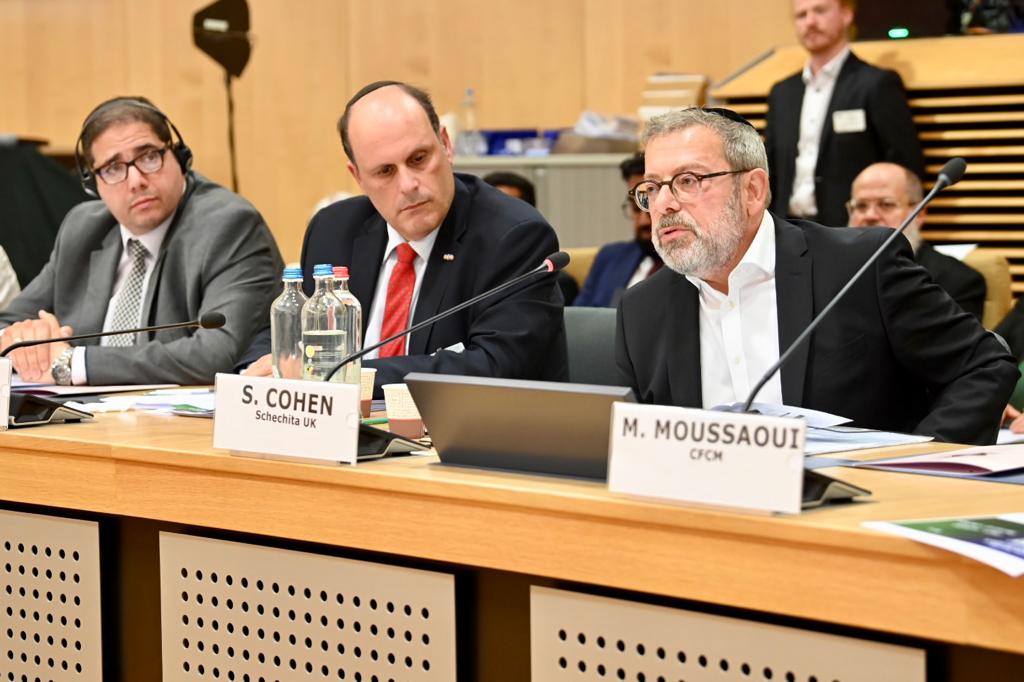
Once again, the RSPCA stands exposed, not as the bastion of animal welfare it declares to be, but as an agenda-driven lobby group. Earlier this month, the Food Standards Agency (FSA) published the findings of its 2024 Slaughter Sector Survey with data collected from all slaughterhouses in England and Wales taken over a representative week this past February.
As the survey showed, Shechita accounts for just 0.3% of animals slaughtered in England and Wales, a minute fraction of the total. However, for the RSPCA, the published report meant only one thing. They seized the opportunity, not to analyse the data of the 20 million animals slaughtered, but to launch another tired tirade against Shechita, the Jewish religious humane method of animal slaughter for food, issuing a statement demanding a ban.
For some odd reason, mechanical stunning, including electrified water baths, gas chambers, free bullets, electrocution tongs and captive bolt guns are viewed by the RSPCA as much kinder methods than Shechita, which, incidentally, conforms to the EU definition of stunning and meets all the norms of accepted animal welfare standards.
Shechita slaughter takes place at abattoirs properly regulated by our religious authorities, unlike mechanical stunning methods so adored by the RSPCA, which have never had anything to do with welfare
As a small faith community practicing a humane method of slaughter for our own food use, the RSPCA’s bias is par for the course. That is why Shechita UK exists. Yet all this blinkered bias came to an ironic head this week.
On Thursday 12 December, The Times, Farming UK and others published a shocking exposé of abuses at RSPCA Assured abattoirs. Hidden cameras revealed scenes of appalling cruelty. Sheep, pigs and cows improperly stunned before their throats were cut, leaving animals writhing pain, workers shouting obscenities at terrified animals and gross breaches of legal standards, including the alarming use of electric prods in ways that violate the law and the most basic, humane sensibilities.
At one facility, sheep and pigs were shackled and hoisted while still conscious. Another failed even the RSPCA’s own requirement of ensuring animals are slaughtered within 15 seconds of stunning. There were reports of torture with workers inserting fingers in animals’ wounds. Again, all these crimes occurred in RSPCA Assured abattoirs.
Happily, shechita slaughter takes place at abattoirs properly regulated by our religious authorities. Unlike the mechanical stunning methods so adored by the RSPCA, which have never had anything to do with animal welfare but are factory processes designed to speed up the kill process. Shechita is not prone to these failings.
So why does the RSPCA obsess over this humane slaughter practice while ignoring the cruelty that exists in their own RSPCA Assured abattoirs? Why do they focus on 0.3% of Shechita slaughtered animals instead of addressing the horrors captured at their own accredited and supposedly regulated facilities?
The RSPCA’s obsessive focus on Shechita smells of something far more insidious than concern for animal welfare. Is it deflection from their failures or something more sinister? The Jewish community will no longer tolerate being preached to in attempts to ban kosher meat provision by a lobby group whose pulpit is stained with its own terrible oversights. The time has come for the RSPCA to abandon its passion against Shechita and focus instead its purported mission to “prevent cruelty” by cleaning up the abattoirs it licenses. Otherwise, the only matter “assured” by the RSPCA is its warped agenda, and certainly not the welfare of animals.
- Shimon Cohen is campaign director of Shechita UK

Keep community journalism free.
Jewish News is free for everyone. No paywall. No barriers. Just trusted journalism for anyone who wants to stay connected to Jewish life in Britain.
If you value that, please support us.
From as little as £5 a month, you can help keep our journalism free and accessible to all.
Every day, we report on the issues that matter to our community. We celebrate achievements, support charities, challenge antisemitism and ensure Jewish voices are heard more widely.
From as little as £5 a month, you can help us continue to:
- Report on the stories shaping Jewish life in the UK and beyond
- Bring our community together through shared stories, events and campaigns
- Celebrate the people, culture and moments that define our community
- Support organisations doing vital work across Jewish Britain
You can make a one-off donation or become a regular supporter. Every contribution helps keep our journalism free, independent and accessible to all.
If everyone who values Jewish News gave a small amount, it would make a real difference to our future.