Prefer Jewish News on Google

OPINION: Oil isn’t the only risk as war with Iran threatens global food chains
Higher fuel costs and supply disruption are pushing up grocery prices worldwide, with governments increasingly constrained in their response, writes Jonathan Morris, a partner at Bryan Cave Leighton Paisner
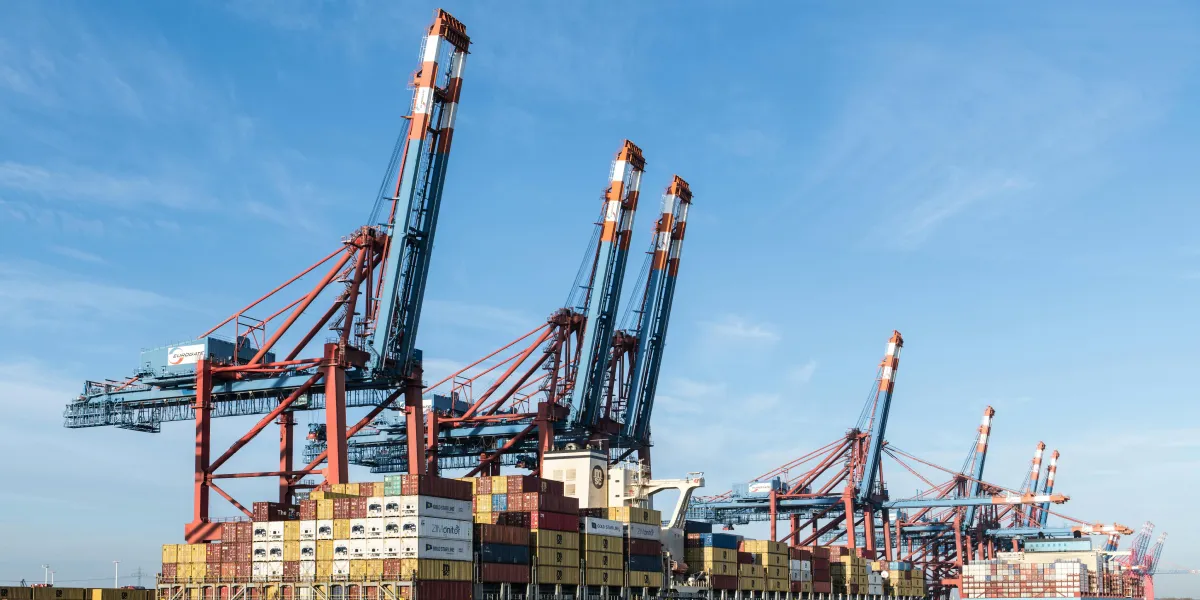
Whilst the cost of oil has been dominating the news headlines, regardless of whether or not the war between the US, Israel and Iran comes to an end any time soon, the question of food security will also be at the very top of the political and economic agenda for a long time to come.
As has already been covered extensively, food commodity prices across the globe are already rising due to the inflationary impact of the increase in the cost of oil. In early April, the UN’s Food and Agricultural Organization (FAO) issued a report stating that the FAO Food Price Index, which tracks monthly changes in the international prices of a basket of globally-traded food commodities, averaged 128.5 points in March, up 2.4 percent from February and 1.0 percent above its level a year ago. It is quite likely that their next report will show even larger rises.

The negative effect upon consumers is going to be significant as many governments, still grappling with the financial consequences of the huge Covid bailouts, lack the necessary resources to cushion the blow for all but the very few, unless accompanied by substantial cuts to public expenditure and/or the imposition of substantial tax rises, neither of which is likely to be particularly palatable.
As a result, the economic outlook doesn’t look very rosy. But none of this should come as too much of a surprise. Well before the outbreak of the latest war in the Middle East, concerns were raised about how well-prepared we are to handle a food crisis, whether due to environmental, climate, pandemic, conflict or other factors.
The closure of the Strait of Hormuz also coincides with a period when the agri-food sector is facing a range of other challenges. For example, McKinsey’s latest annual dairy executive survey highlights a host of these in addition to inflation, including labour constraints, input volatility, greater uncertainty around trade and regulation, animal health issues, extreme weather and structural constraints in the milk supply sector.
So what can do to seek to minimise food scarcity in the future? A globally agreed plan of action would certainly be a preferred route but the likelihood of achieving that, given ongoing geopolitical tensions, remains slim at best.
Rather, we need to redouble our focus on technological solutions for the foodtech and agtech sector, especially in artificial intelligence, robotics, alternative proteins and renewable energies. We have already seen major technological advances but more emphasis on these is needed. This will require a clear steer, with financial incentives, from government so that the money required to fund this innovation is made available. This may be difficult to secure but failing to do so risks the possibility of a pretty stark future for all of us.
Jonathan Morris is a partner and co-leader of the Food and Agribusiness sector team at the international law firm, Bryan Cave Leighton Paisner LLP

Keep community journalism free.
Jewish News is free for everyone. No paywall. No barriers. Just trusted journalism for anyone who wants to stay connected to Jewish life in Britain.
If you value that, please support us.
From as little as £5 a month, you can help keep our journalism free and accessible to all.
Every day, we report on the issues that matter to our community. We celebrate achievements, support charities, challenge antisemitism and ensure Jewish voices are heard more widely.
From as little as £5 a month, you can help us continue to:
- Report on the stories shaping Jewish life in the UK and beyond
- Bring our community together through shared stories, events and campaigns
- Celebrate the people, culture and moments that define our community
- Support organisations doing vital work across Jewish Britain
You can make a one-off donation or become a regular supporter. Every contribution helps keep our journalism free, independent and accessible to all.
If everyone who values Jewish News gave a small amount, it would make a real difference to our future.