Prefer Jewish News on Google
OPINION: Banning BDS in public bodies is not the way to advocate for Israel
Leaders of Jewish youth movements Habonim Dror, RSY Netzer, LJY Netzer and Noam Masorti Youth, insist 'many young British Jews share our opposition' to Michael Gove's new bill
We are the future leaders of the British Jewish community from a broad spectrum of Zionist youth movements.
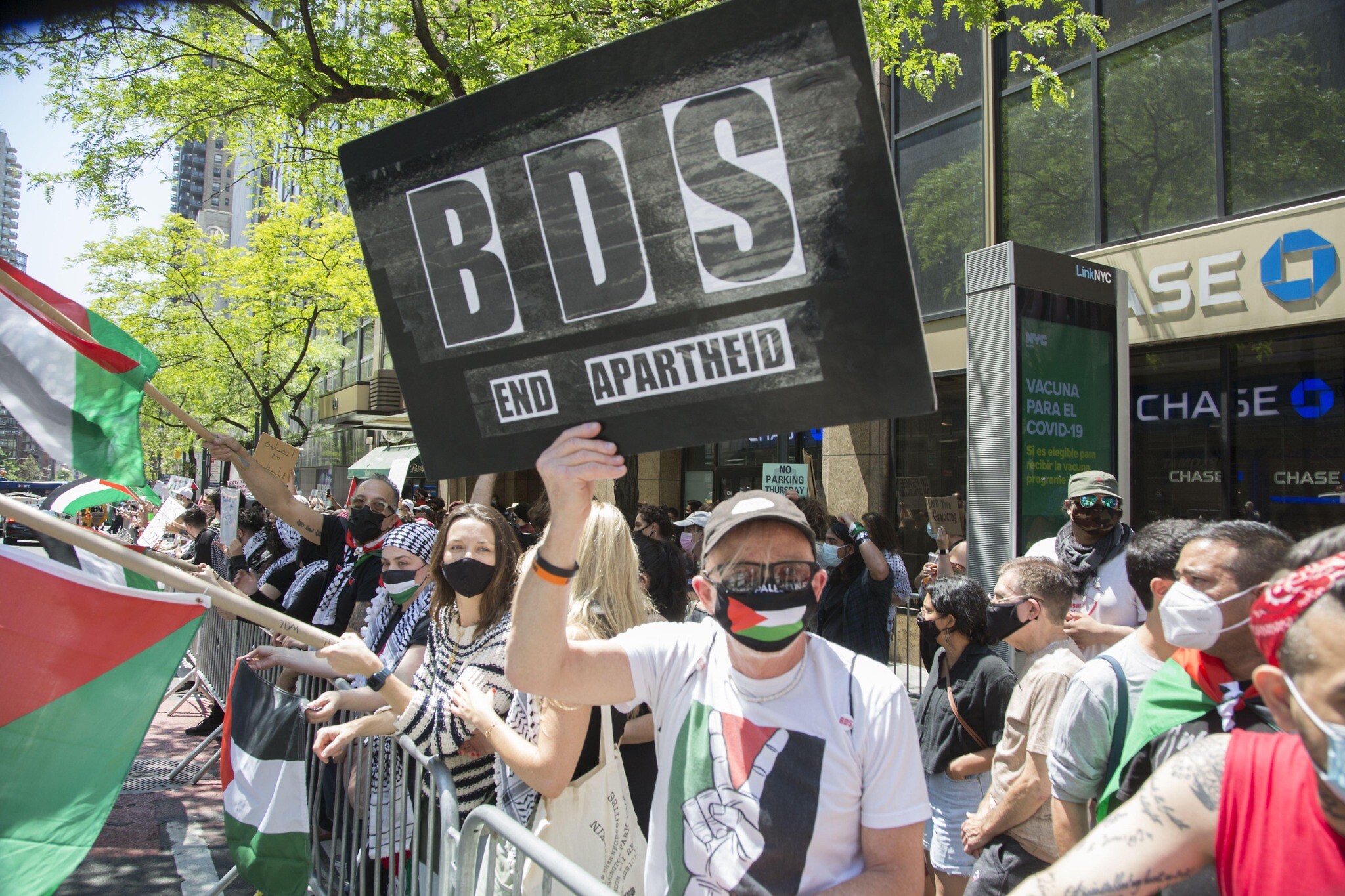
In February of this year, we wrote to the President of the Board of Deputies and the Chair of the Jewish Leadership Council to express our grave concerns at the British government’s proposed ‘Boycott, Divestment, and Sanctions Bill’.
We called on both organisations not to support or advocate for this bill on behalf of the British Jewish community. The response that we received was far from adequate and seemed dismissive of our concerns.
The fact that several mainstream Jewish communal organisations, including the Board and the JLC, have campaigned for this legislation in recent years and are continuing to do so now that it has been announced, has impelled us to state our opposition to the bill publicly.
The proposed bill will prevent public bodies from supporting boycotts of or sanctions against countries that violate human rights. It will limit our civil rights and ability to impact a range of social justice issues from climate change to global poverty.


The legislation places restrictions on freedom of expression. Public bodies will not even be allowed to say that they would support divestment from any country with whose behaviour they do not agree.
Even vocalising your support for economic protest will be legislated against. It will disempower our young members and prevent them from affecting change in the Jewish community and beyond, including at their universities and local councils.
We do not support the BDS movement and remain committed to Israel as a Jewish and democratic state.
We also strongly believe that the basic right to non-violent protest must be safeguarded. Defending our civil rights and freedom of speech necessitates that we protect the right to express views with which we disagree. We recognise that BDS is one of many forms of non-violent protest that the British government is seeking to prohibit with this bill.
We do not believe that banning BDS in public bodies is an effective way to advocate for Israel — on the contrary, it may well do the opposite. Non-violent protest can be debated and opposed; it should not be banned.
Many young British Jews share our opposition to this bill.
At this year’s Union of Jewish Students conference, attended by almost 400 Jewish students, a motion passed unanimously stating that ‘UJS reaffirms its support for the democratic right to non-violently protest and opposes the government’s proposed Boycott Bill, which is a curtailment of that right, as well as presenting a risk to British Jewish communities and a set-back to Israeli-Palestinian peace’.
The current UJS President has since written to Michael Gove detailing their opposition to this legislation.
In defence of the bill, the Board and the JLC reference the impact of BDS on community cohesion on university campuses.
Therefore, we had hoped that they would heed the voices of the majority of Jewish students who are present on these campuses on a daily basis. Our membership consists of Jewish student activists who are very involved in student life at their universities.
Alongside members of UJS, our members are the ones who are confronting this issue on campus day-to-day; their opinions on the proposed bill are based on first-hand experience. Surely, our voices should count in this debate.
The Board and the JLC’s support and advocacy for the British government’s proposed bill is extremely harmful to the British Jewish community.
It depicts us as opposing the wide range of social justice movements whose protests the bill will stifle.
This includes Friends of the Earth, Liberty, and the Uyghur community, the latter having written a public letter expressing their concerns about the bill’s impact.
The Board has repeatedly claimed to stand in solidarity with the Uyghur community, but this is at odds with their support and advocacy for the government bill.
We wholeheartedly object to the Board and the JLC taking this stance in our name. We wish to make it explicitly clear that these organisations do not represent young British Jews and cannot claim to be speaking on our behalf when supporting this legislation.
At a time when Israel’s democracy is under existential threat, we are appalled that the British government would consider proposing a bill that so severely limits civil rights and the right to protest. The hundreds of thousands of Israelis who have taken to the streets are fighting for their right to live in a democratic state.
We, as Diaspora Jews, must support them. Freedom of expression and the right to protest have never been more important.
We remain committed to both Israel and the democratic right to express opposition and dissent peacefully. These are core values of our four youth movements.
It is important for us to ensure that it is known beyond private correspondence that a different perspective exists in our community, and one which is widely held by the next generation of British Jews.
Leaders of Habonim Dror, RSY Netzer, LJY Netzer and Noam Masorti Youth

Keep community journalism free.
Jewish News is free for everyone. No paywall. No barriers. Just trusted journalism for anyone who wants to stay connected to Jewish life in Britain.
If you value that, please support us.
From as little as £5 a month, you can help keep our journalism free and accessible to all.
Every day, we report on the issues that matter to our community. We celebrate achievements, support charities, challenge antisemitism and ensure Jewish voices are heard more widely.
From as little as £5 a month, you can help us continue to:
- Report on the stories shaping Jewish life in the UK and beyond
- Bring our community together through shared stories, events and campaigns
- Celebrate the people, culture and moments that define our community
- Support organisations doing vital work across Jewish Britain
You can make a one-off donation or become a regular supporter. Every contribution helps keep our journalism free, independent and accessible to all.
If everyone who values Jewish News gave a small amount, it would make a real difference to our future.