Prefer Jewish News on Google
Polish government donates £21 million to preserve major Jewish cemetery
Okopowa Cemetery's quarter of a million Polish Jewish graves will be restored and protected with funds from the state
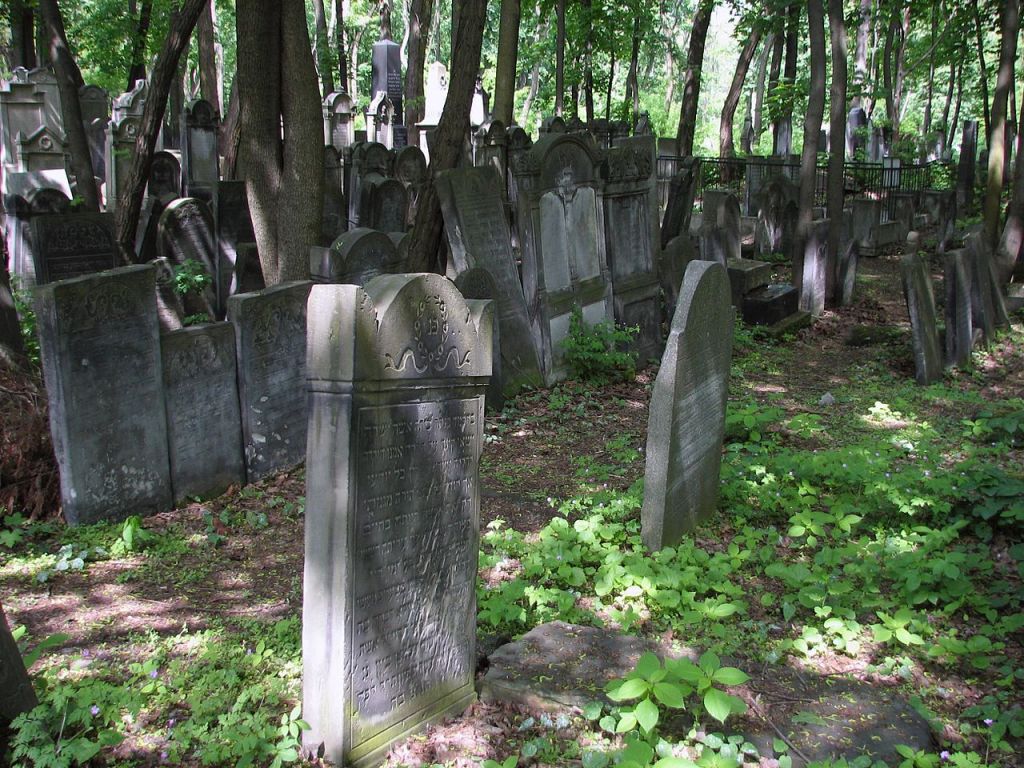
The Polish government has donated 100 million zlotys (£21 million) to restore and protect a major Jewish cemetery in Warsaw, one of the country’s largest public contributions toward preserving the Jewish culture nearly wiped out in the Holocaust.
The Okopowa Street Jewish Cemetery, established in 1806, is the resting spot of 250,000 Polish Jews – Yiddish writers, rabbis, philanthropists, scholars, bankers and ordinary citizens who once belonged to a vibrant community that made up one-third of Warsaw’s population before the Second World War.
Among the notable people buried at the Okopowa Street cemetery are Ludwik Zamenhof, the creator of the Esperanto language (1859-1917), and Samuel Orgelbrand, publisher of Poland’s first modern encyclopedia (1810-1868).
Today, decades after the community was uprooted and destroyed, many sections of the cemetery are a desolate sight.
Some tombstones are broken or disappearing below decades of decomposing vegetation, and others bear inscriptions rendered unreadable by erosion.


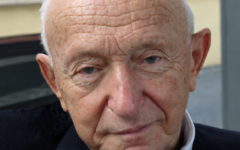
“It’s a disaster. It’s a large territory in the middle of the city which looks like a jungle,” said Michal Laszczkowski, the head of the Cultural Heritage Foundation, a private organisation that preserves Polish heritage sites.
“That’s why we decided to do something.”
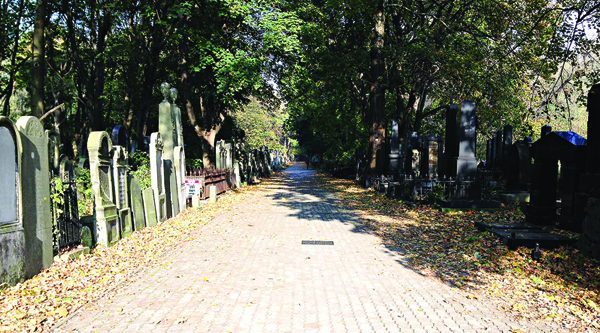
The foundation will oversee the preservation work at the Jewish cemetery. Catholic churches, monuments and cemeteries have been among the organisation’s focus.
In Warsaw on Friday, Polish culture minister Piotr Glinski signed a contract with Mr Laszczkowski that formalised the government donation.
The money established an endowment, returns from which are supposed to go to cleaning the cemetery, preserving its tombstones and monuments and reinforcing an outer wall.
Anna Chipczynska, the head of the Warsaw Jewish community, and Michael Schudrich, an American who is the country’s chief rabbi, attended the signing.
While many Poles see Jews as a foreign nation or separate people despite centuries of co-existence, Mr Glinski described the cemetery as an element of “Poland’s cultural and national heritage”.
“It’s the duty of the Polish state to care for our heritage,” the culture minister said.
Mr Schudrich called Mr Glinski’s words “honey to my heart” and added: “It’s obvious, but sometimes it needs to be said.”
Poland’s Jewish population numbered nearly 3.5 million on the eve of the Second World War.
Most were murdered in ghettos or death camps set up by the Nazis during the wartime occupation of Poland.
A Jewish community that numbers in the thousands now struggles to maintain hundreds of cemeteries and depends on local communities, volunteers and foreign donations for help.

Keep community journalism free.
Jewish News is free for everyone. No paywall. No barriers. Just trusted journalism for anyone who wants to stay connected to Jewish life in Britain.
If you value that, please support us.
From as little as £5 a month, you can help keep our journalism free and accessible to all.
Every day, we report on the issues that matter to our community. We celebrate achievements, support charities, challenge antisemitism and ensure Jewish voices are heard more widely.
From as little as £5 a month, you can help us continue to:
- Report on the stories shaping Jewish life in the UK and beyond
- Bring our community together through shared stories, events and campaigns
- Celebrate the people, culture and moments that define our community
- Support organisations doing vital work across Jewish Britain
You can make a one-off donation or become a regular supporter. Every contribution helps keep our journalism free, independent and accessible to all.
If everyone who values Jewish News gave a small amount, it would make a real difference to our future.