Prefer Jewish News on Google
Progressively Speaking: As Prince Charles turns 70, what’s our view on monarchy?
Deborah Blausten reflects on a topical issue with a progressive Jewish response
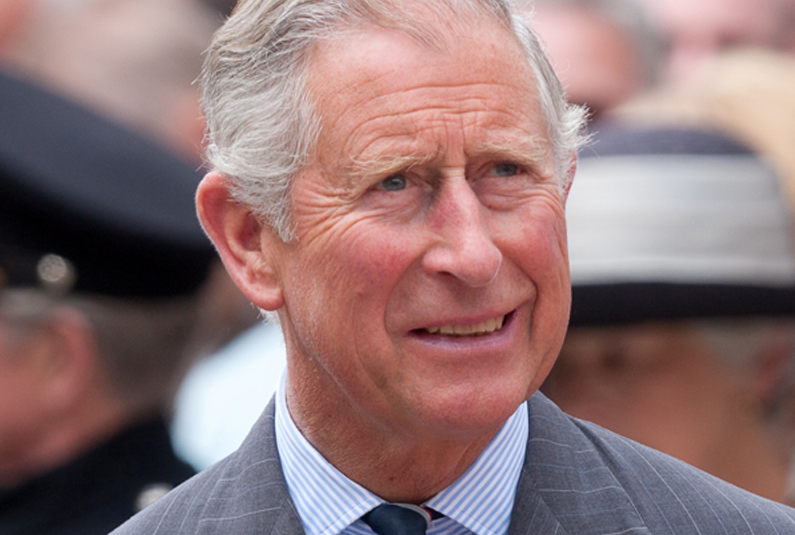
Jews and monarchs have an interesting history. The book of Samuel tells the story of the Israelites who saw their neighbours were all ruled by kings and, fed up with the unstable leadership of judges, sought a monarch of their own.
Samuel was reluctant to give the Israelites what they wanted because there was already a monarch who ruled over Israel – God.
Appointing an earthly king might have been viewed as a challenge to the eternal rule of God.
Despite reservations, there were generations of Kings of Judah and Israel that begun with the reign of King Saul and who enjoyed varying degrees of success and their fair share of royal scandal.
The last in the line of Kings was King Zedekiah, who ruled until the Babylonian exile of 586 BCE.

Then the Jewish people faced a question – what was to be their relationship to the king or ruler when living under the rule of a different people?
The Prophet Jeremiah quickly instituted a principle in exile that Jews should pray for the prosperity of their place of residence, and for its rulers.
This underpins the idea behind the Prayer for the Royal Family and government that Jews in Britain recite to this day.
Implicit in Jeremiah’s instruction is the idea that praying for the welfare of the monarchy or government in part about ensuring Jewish prosperity and safety.
Oliver Cromwell formally allowed Jews to resettle in Britain in 1656, after being expelled by King Edward in 1290.
The community argued that they would be faithful to the country and made reference to prayers for the monarch in their appeal to Cromwell, who was Lord Protector.
Today, the Jewish community enjoys healthy support from the Royal family.
Understanding the combined traditions of a healthy dose of cynicism about the nature of earthly kingship and its necessary limits, as well as the historic value of a positive relationship with the ruling monarchy can shape our approach today.
Support from the monarchy and Her Majesty’s government continues to act as a guarantee of Jewish security.
While appreciating this, we must also heed ancient concerns about monarchs and leaders who rise above their station
We must also recognise that although monarchs may have a functional role to play, they are limited, human, fallible, and no more holy than the rest of us.
Deborah Blausten is a third-year rabbinic student at Leo Baeck College
Listen to this week’s episode of the Jewish Views Podcast!

Keep community journalism free.
Jewish News is free for everyone. No paywall. No barriers. Just trusted journalism for anyone who wants to stay connected to Jewish life in Britain.
If you value that, please support us.
From as little as £5 a month, you can help keep our journalism free and accessible to all.
Every day, we report on the issues that matter to our community. We celebrate achievements, support charities, challenge antisemitism and ensure Jewish voices are heard more widely.
From as little as £5 a month, you can help us continue to:
- Report on the stories shaping Jewish life in the UK and beyond
- Bring our community together through shared stories, events and campaigns
- Celebrate the people, culture and moments that define our community
- Support organisations doing vital work across Jewish Britain
You can make a one-off donation or become a regular supporter. Every contribution helps keep our journalism free, independent and accessible to all.
If everyone who values Jewish News gave a small amount, it would make a real difference to our future.