
 Prefer Jewish News on Google
Report: Fast growth of Charedi population risks ‘polarisation’ with secular Jews
Study of how communal life has been affected by the pandemic identifies urgent challenges ahead
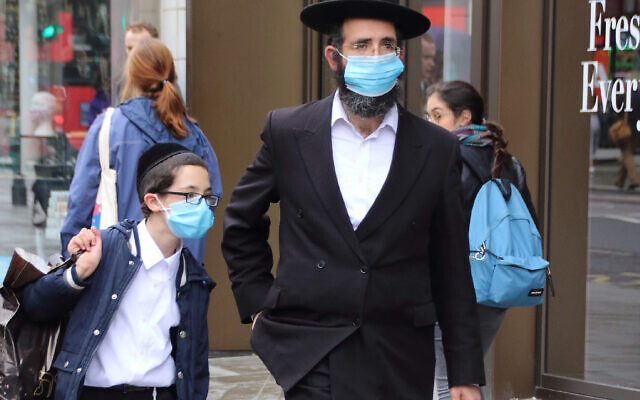
Rapid growth in Britain’s Charedi population could create tensions with other Jewish groups, a think-tank has warned in a study of how communal life has been affected by the pandemic.
Research by the Institute for Jewish Policy Research (JPR) within Jewish communities in Britain has found the impact of the virus has created several urgent challenges.
Growing Charedi communities, falling synagogue attendance and disruption to youth leadership programmes were among the issues identified in its report published this week.
It said estimates that half of all Jews born in Britain will be into strictly-Orthodox homes within this decade would widen the scope for “more acute tensions and polarisation” between different communities.
Pointing to instances of civil unrest with Charedi communities already seen in Israel, it continued: “we should not rule out the prospect of similar problems occurring in the UK.”



“Structures need to be established to look seriously at the issues, and to establish better means of cooperation between these parts of the Jewish community.”
JPR also warned the pandemic may have permanently altered the way many British Jews interact with their own communities, with the habit of regularly attending synagogue broken as a result of successive lockdowns.
It said the proportion of synagogue members paying full fees had declined in 2020 and called for more funding for communities experiencing financial difficulties.
“It cannot be assumed that attendance levels will simply bounce back to pre-pandemic levels once life returns to some semblance of normality,” the report said.
“Thus, the challenge of maintaining and enhancing synagogue life is far from straightforward, and a great deal of effort will be needed to ensure that these key institutions continue to thrive.
It is “very likely” that many synagogues will be trying to rebuild Jewish communal life with fewer financial resources, it added.
The pandemic has also affected informal education in the community, JPR said, especially in youth movements, where cancelled summer camps, fewer social activities and the absence of trips to Israel had reduced the number of youth leaders for the future.
“[By] missing out on the educational components of Israel summer tours,” the report said, “one of the most important opportunities young people have to engage seriously with the role of Israel in their Jewish identities has been missed, with all the knock-on implications that has for the future.”
It called for “immediate endeavours” to ensure summer activities can still take place this year and that groups that have suffered economically during the pandemic are provided with subsidies.

Keep community journalism free.
Jewish News is free for everyone. No paywall. No barriers. Just trusted journalism for anyone who wants to stay connected to Jewish life in Britain.
If you value that, please support us.
From as little as £5 a month, you can help keep our journalism free and accessible to all.
Every day, we report on the issues that matter to our community. We celebrate achievements, support charities, challenge antisemitism and ensure Jewish voices are heard more widely.
From as little as £5 a month, you can help us continue to:
- Report on the stories shaping Jewish life in the UK and beyond
- Bring our community together through shared stories, events and campaigns
- Celebrate the people, culture and moments that define our community
- Support organisations doing vital work across Jewish Britain
You can make a one-off donation or become a regular supporter. Every contribution helps keep our journalism free, independent and accessible to all.
If everyone who values Jewish News gave a small amount, it would make a real difference to our future.





















