Prefer Jewish News on Google
Rishi Sunak concerned about Gaza aid supplies after Israeli incursion into Rafah
Downing St says the UK government is 'encouraging' Israel and Hamas to reach a ceasefire deal, as Labour leader Keir Starmer says a new offensive in Rafah 'must not go ahead'
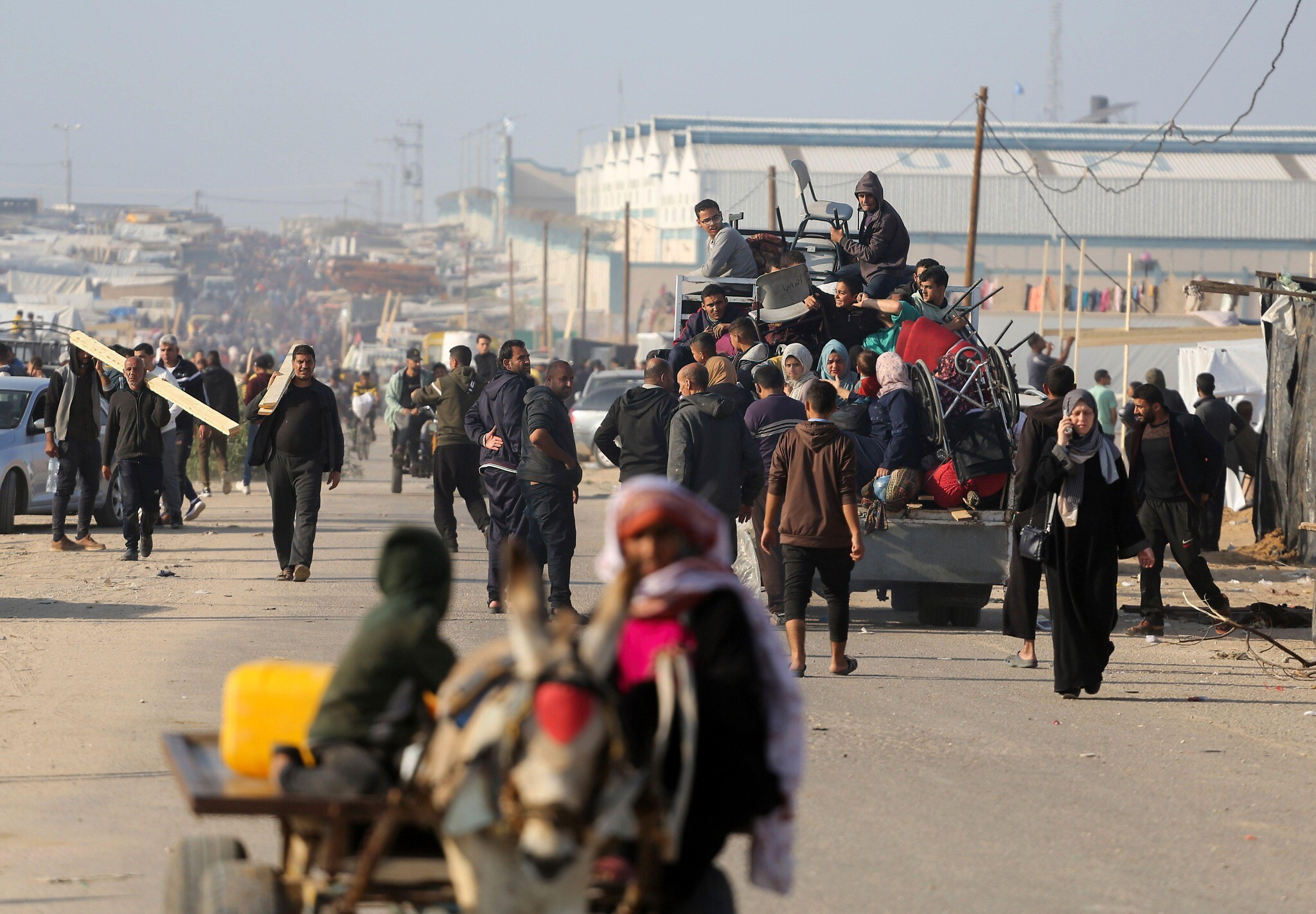
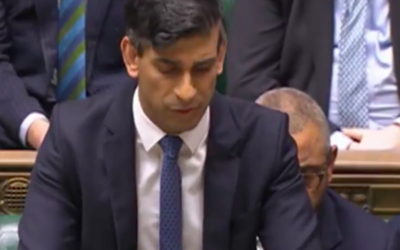
Rishi Sunak “remains concerned” about Israel’s military incursion into the city of Rafah in the south of Gaza, and its impact on humanitarian aid channels into the region.
A Downing Street spokesperson confirmed that the prime minister had “consistently” made it clear to Prime Minister Benjamin Netanyahu that Israel “as the occupying power has responsibility for ensuring the civilian population is safe and has access to food, water and medical care.”
Sunak’s spokesperson said this was why the PM had on Monday said he was “deeply concerned about the prospect of a military incursion into Rafah, given the number of civilians that are sheltering there and the importance of that crossing for aid.”
Downing Street also said the UK government would “encourage both Israel and Hamas to secure a deal that would ensure the release of hostages, and a pause in fighting.”
The Israeli military said on Tuesday it has taken “operational control” of the Gaza side of the Rafah crossing, and that it has killed 20 Hamas fighters in Rafah overnight.

A group of “mid-ranking” Israeli envoys will go to Cairo in the next few hours to see if Hamas can be persuaded to change its latest ceasefire offer, a senior Israeli official told the Reuters news agency.
On Monday, Israel directed about 100,000 people in the eastern part of Rafah to move to expanded “humanitarian areas” in Khan Younis and al-Mawasi ahead of its offensive.
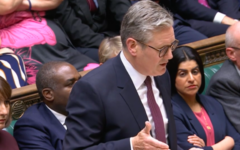
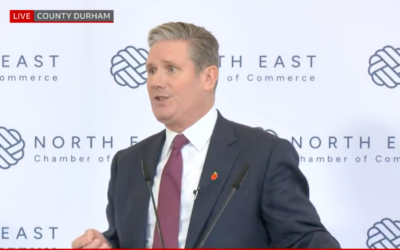
Meanwhile Labour leader Keir Starmer said a new Israeli offensive “must not go ahead”, while shadow foreign secretary David Lammy called for an “immediate ceasefire” and said an Israeli offensive in Rafah “would be catastrophe.”
Newly elected London mayor Sadiq Khan said:”The Government must publicly call for an urgent ceasefire & implore Israel to end this heart-rending attack on Rafah.
“A full-scale attack would be a tragedy, killing countless more innocent Palestinians, displacing families and making it harder than ever to provide lifesaving aid.”
Earlier he posted on X/Twitter:”There needs to be an urgent and significant step change in the Government’s approach to this horrendous conflict.
“The UK can no longer allow itself to remain complicit in the deaths of civilians. It must immediately end sales of arms to Israel.”
Israel says Rafah is the last significant Hamas stronghold but had previously paused plans to attack the city in southern Gaza so hostage release negotiations could take place.
Speaking on BBC 4’s Today programme Sharone Lifschitz, whose 83-year-old father Oded is still held captive in the Gaza Strip, said she’s not hopeful about truce talks continuing because “there are extremists on both sides that can derail it”.
Dennis Ross, a former US Middle East envoy, also told the Today programme that Israeli Prime Minister Benjamin Netanyahu is in a “difficult position” when it comes to agreeing any potential ceasefire deal.
Israel’s Finance Minister Bezalel Smotrich and National Security Minister Itamar Ben-Gvir have both said they would quit the government over the terms Israel was prepared to put on the table, Ross says, adding it is an “open question” as to whether they are bluffing.
But if the terms Hamas says it will accept are close to what Netanyahu has already agreed to present, Ross says it “won’t be so easy for him to turn it down”, adding that if Netanyahu was to do so, there is a “high risk” that other figures in the government could leave.

Keep community journalism free.
Jewish News is free for everyone. No paywall. No barriers. Just trusted journalism for anyone who wants to stay connected to Jewish life in Britain.
If you value that, please support us.
From as little as £5 a month, you can help keep our journalism free and accessible to all.
Every day, we report on the issues that matter to our community. We celebrate achievements, support charities, challenge antisemitism and ensure Jewish voices are heard more widely.
From as little as £5 a month, you can help us continue to:
- Report on the stories shaping Jewish life in the UK and beyond
- Bring our community together through shared stories, events and campaigns
- Celebrate the people, culture and moments that define our community
- Support organisations doing vital work across Jewish Britain
You can make a one-off donation or become a regular supporter. Every contribution helps keep our journalism free, independent and accessible to all.
If everyone who values Jewish News gave a small amount, it would make a real difference to our future.