Southampton conference: Academics lose legal challenge to reverse cancellation
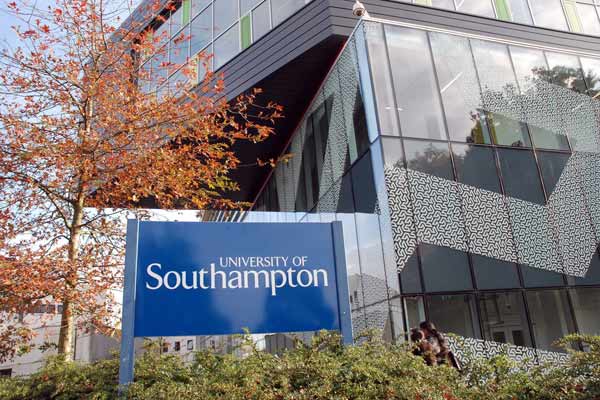
 Academics fighting to hold a conference questioning the right of the state of Israel to exist have had their case thrown out of the High Court.
The conference was due to go ahead at Southampton University this weekend until the plug was pulled by college bosses earlier this month.
The university had been advised of the risk of disorder or even a terrorist attack on the campus, the court heard.
Organisers today took the case to the High Court in London where they attempted to launch a judicial review challenge to the university’s decision.
But after a full-day hearing, Judge Alice Robinson ruled against the organisers and upheld the university’s decision.
Permission had been withdrawn because the university decided it was not possible to put in place measures to ensure staff and student safety, she said.
She continued: ‘This was obviously a very difficult decision for the university. Nobody could be in any doubt that there has been very careful scrutiny of all of the issues.
‘There is no evidence the decision was taken otherwise than in good faith with a conscientious application of the duty to protect free speech.
‘But a decision was reluctantly taken to withdraw permission for the conference. I am quite satisfied that there are no arguable grounds for challenging the decision.’
The organisers’ barrister, Mark McDonald, had argued that evidence used by the university to make its decision was not strong enough to justify it.
The risks were of the potential for clashes between right and left wing groups and of an actual terror attack, according to a pre-event assessment.
But Mr McDonald said the ‘severe’ terror risk applied no more to the event than to events at any other university building in the country.
He continued: ‘The evidence was limited of public disorder.
‘The evidence itself is based upon second or third hand hearsay. It doesn’t stand up for close analysis at all.
‘Even if it does, taken at its highest level, it is simply not sufficient to withdraw permission to have the conference.’
The evidence was of supposed links between a pro-Israeli group and the English Defence League (EDL), he said.
That was said to leave the possibility of EDL members turning up to demonstrate against the event, potentially attracting clashes with far-left groups.
The chance of a Paris-style anti-semitic terror attack at the event was ‘extremely remote’, he continued.
For the university, Edward Capewell said it had not ruled out holding such an event in the future.
It only wanted more time to commission an independent report to look into how it could be done safely, when faced with the chance of up to 1,000 protestors turning up.
Judge Robinson upheld the university’s decision.

Keep community journalism free.
Jewish News is free for everyone. No paywall. No barriers. Just trusted journalism for anyone who wants to stay connected to Jewish life in Britain.
If you value that, please support us.
From as little as £5 a month, you can help keep our journalism free and accessible to all.
Every day, we report on the issues that matter to our community. We celebrate achievements, support charities, challenge antisemitism and ensure Jewish voices are heard more widely.
From as little as £5 a month, you can help us continue to:
- Report on the stories shaping Jewish life in the UK and beyond
- Bring our community together through shared stories, events and campaigns
- Celebrate the people, culture and moments that define our community
- Support organisations doing vital work across Jewish Britain
You can make a one-off donation or become a regular supporter. Every contribution helps keep our journalism free, independent and accessible to all.
If everyone who values Jewish News gave a small amount, it would make a real difference to our future.