Prefer Jewish News on Google
‘Tension’ between Jewish students of different strands identified in report
184-page study by Theos which examines the 'division and cohesion' in faith societies, claims that there can be friction between Orthodox, Progressive and secular students
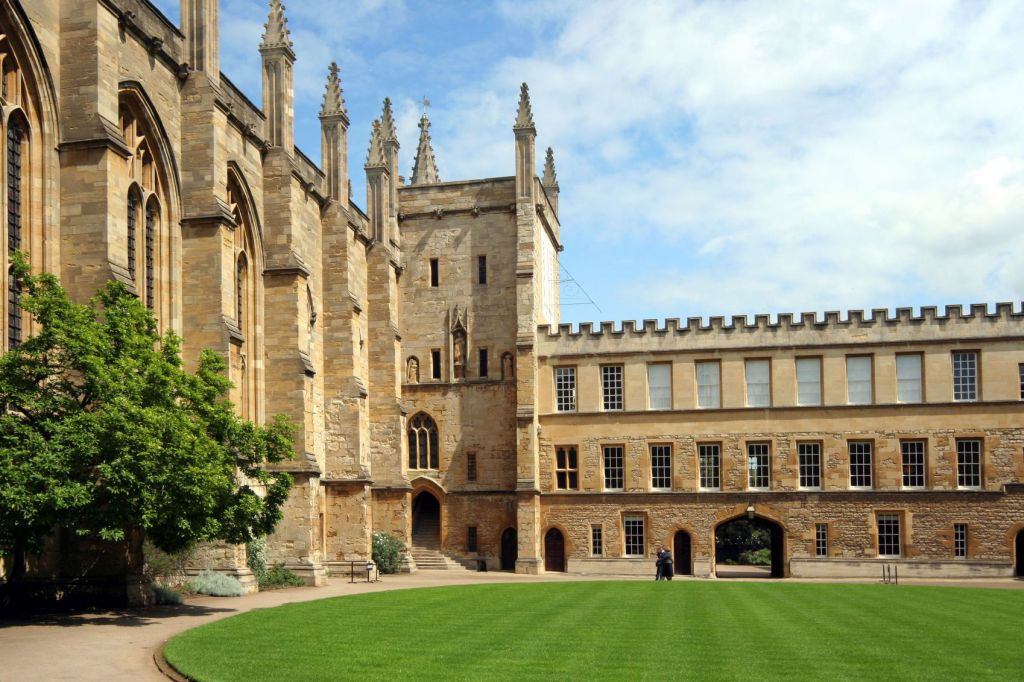
A major report on faith and belief societies at universities has identified “tension” on campuses between Jewish students from different denominations.
The finding is one of several contained in a 184-page report by Theos examining “division and cohesion” in faith societies in higher education, published this week.
“There can be tensions on campus between Orthodox students, on the one hand, and Reform or Masorti students, on the other,” the report said. “These tensions between different denominations can adversely affect Jewish Societies (JSocs).”
Authors of the report said a staff member from the Union of Jewish Students (UJS) said “some Jewish Societies are dominated by a particular strand of Judaism… Jewish students who do not affiliate with the dominant form of Judaism in a particular society may feel unrepresented or unable to participate in the activities”.
The UJS staffer added: “That’s where you see tensions arise – on some campuses you’ll have a traditional prayer service and an egalitarian progressive prayer service, and in other campuses it very much fluctuates depending on the leadership.
“So, you know, Orthodox students will be like, ‘I can’t eat this, it’s not strictly kosher’; and our Reform students say, ‘I’m not coming to a prayer service where men and women sit separately’.”
A 2016 report by the Institute of Jewish Policy Research (JPR) identified that at least one third of all Jewish students in the UK attend three universities – Leeds, Birmingham and Nottingham – with large numbers also studying at Warwick, Bristol, Manchester, Oxford, Cambridge and London, particularly UCL and KCL.
The Theos report, called ‘Faith and Belief on Campus,’ also outlined how Jewish student societies experience push-back for events involving Israel.
At an unnamed Scottish university, the Jewish society tried to book a Chaplaincy room for a talk about archaeology in Israel “but staff were hesitant to grant the request because they were concerned the speaker was controversial”.
One Jewish society member said: “I find it difficult when they tell you you’re not allowed to have speakers about Israel come to JSoc…Israel is a place of Jewish relevance to almost all Jews.”

Keep community journalism free.
Jewish News is free for everyone. No paywall. No barriers. Just trusted journalism for anyone who wants to stay connected to Jewish life in Britain.
If you value that, please support us.
From as little as £5 a month, you can help keep our journalism free and accessible to all.
Every day, we report on the issues that matter to our community. We celebrate achievements, support charities, challenge antisemitism and ensure Jewish voices are heard more widely.
From as little as £5 a month, you can help us continue to:
- Report on the stories shaping Jewish life in the UK and beyond
- Bring our community together through shared stories, events and campaigns
- Celebrate the people, culture and moments that define our community
- Support organisations doing vital work across Jewish Britain
You can make a one-off donation or become a regular supporter. Every contribution helps keep our journalism free, independent and accessible to all.
If everyone who values Jewish News gave a small amount, it would make a real difference to our future.