Prefer Jewish News on Google
The new football fever: When Tottenham played Haifa
Jack Mendel was one of around 62 socially-distanced spectators in a stadium built for 62,000, watching Tottenham trounce Haifa
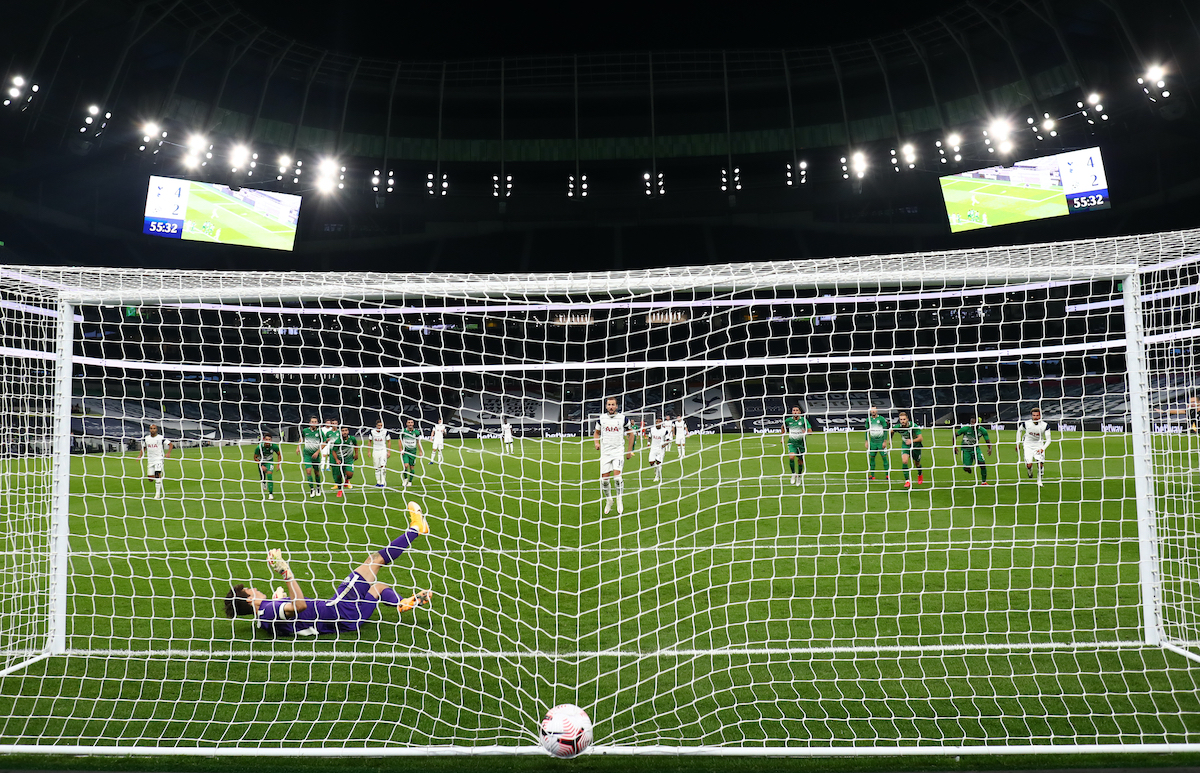
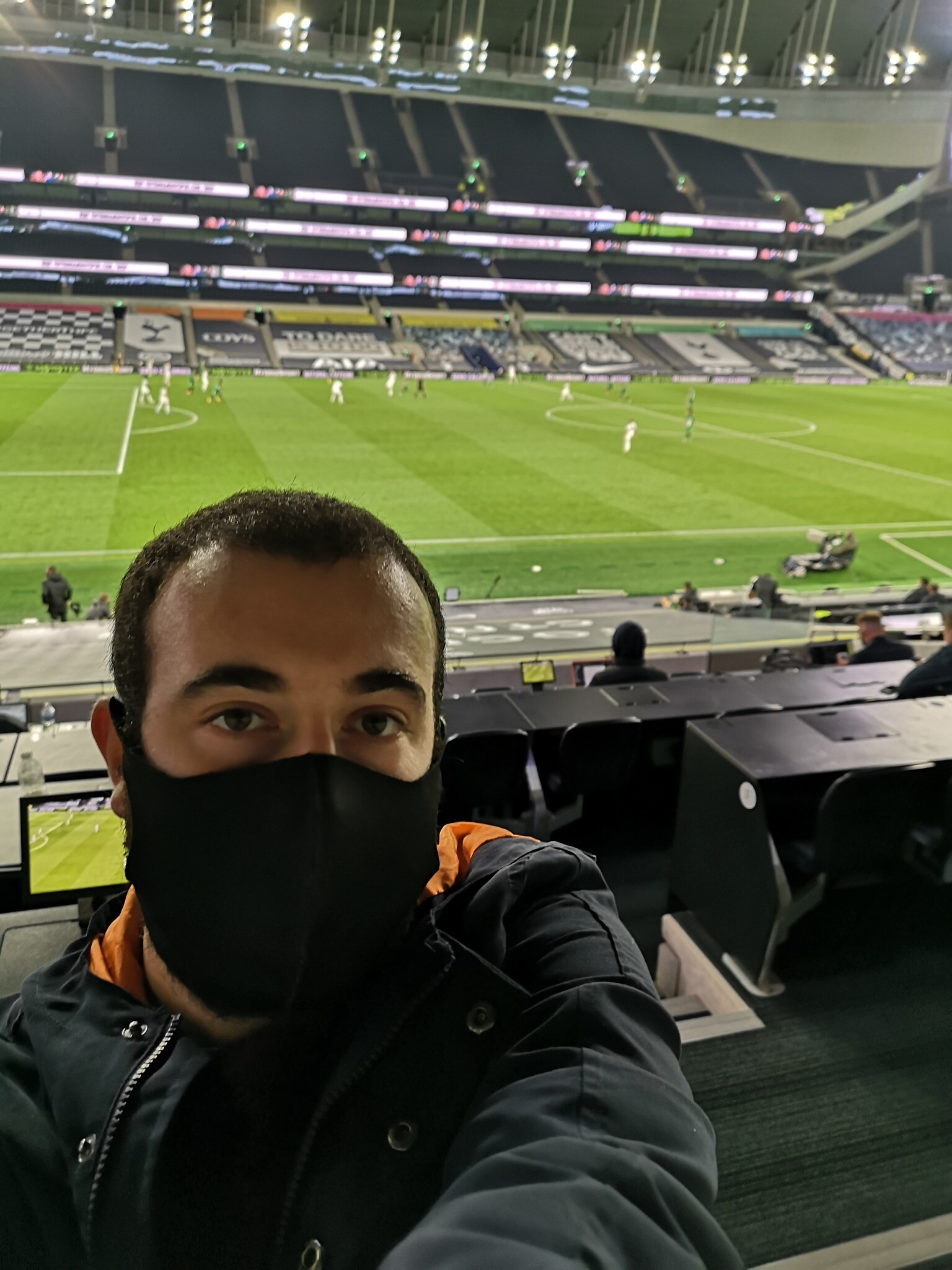
From the moment I stepped into Spurs’ shiny new stadium I felt the sensory overload of its vast 62,000 capacity – tempered by the fact that there were barely 62 people actually present to watch the home team play Maccabi Haifa. Extraordinary. But these are extraordinary times.
It’s a fixture that would ordinarily stir emotions. Spurs, a club with a rich history of Jewish support, against one of the top Israeli sides, battling it out for a place in the Europa League.
As I walked into the site, confronted by a masked steward who took my temperature, I looked into the vast empty concrete concourse that sits underneath a stand.
Half an hour before kick-off, it would usually be teeming with fans – drinking, chanting and geeing themselves up for a night of drama. But the bars were shut and it was silent.
Outside the ground there may have been activists from the boycott, divestment and sanctions (BDS) movement, proselyting against an Israeli side’s inclusion in the competition.



And inside, there would inevitably be chants of ‘Yiddos’, from the home side’s supporters, benevolently reclaiming and disarming a poisonous racial slur on behalf of Jews everywhere.

But in these Covid times, there were just journalists in the ground – many from Israel. There were no demonstrators outside, for they’d have nobody to preach to. And there were no ‘Yiddo’ yells.
Indeed, the only controversy surrounding the fixture was Haifa having to apologise to Spurs star Harry Kane, over vulgar comments about his nether regions made by defender Mohammad Abu Fani.
There may have been no fans inside, but it wasn’t silent.
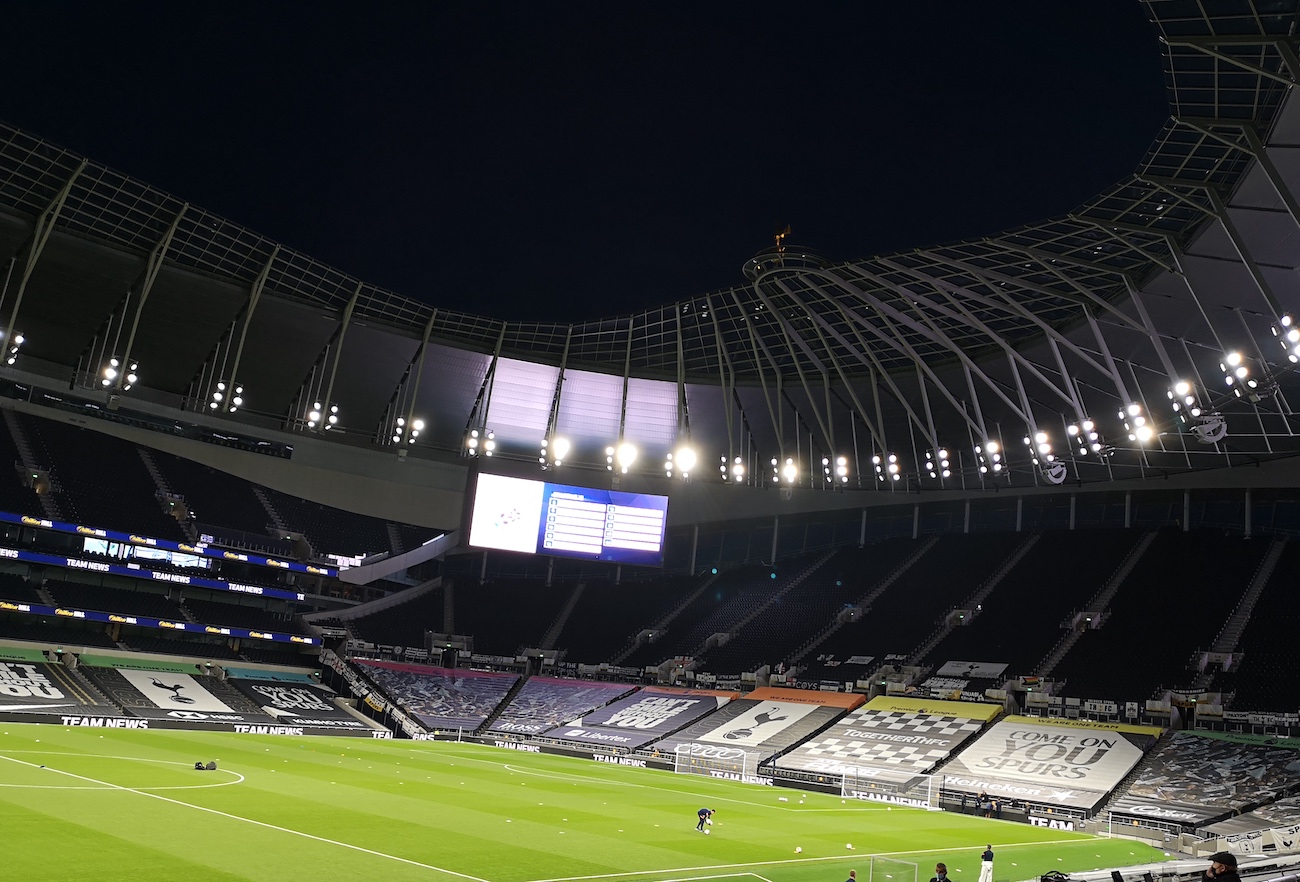
Before the game, as players warmed up, a cacophony of music blasted from speakers, as blinding lights skirted the roof of the ground and adverts popped up in every blank space. Flags were draped around the ground, as if supporters were there, and vast sheets with club slogans covered unused seats.
Over the PA system, team sheets were read out while videos showcasing Spurs’ history were shown on big screens.
As both managers barked at their players with commands, an Israeli reporter in front of me was trying to get the attention of his colleague pitch-side, yelling into his phone, competing with the speakers.
As the referee’s whistle blew at kick-off, the music ceased, and there was a moment of silence, before Haifa players shouted: “Yalla, yalla, let’s go,” as they surged forward.
From the word go, Israeli journalists were encouraging and criticising the players with every kick.
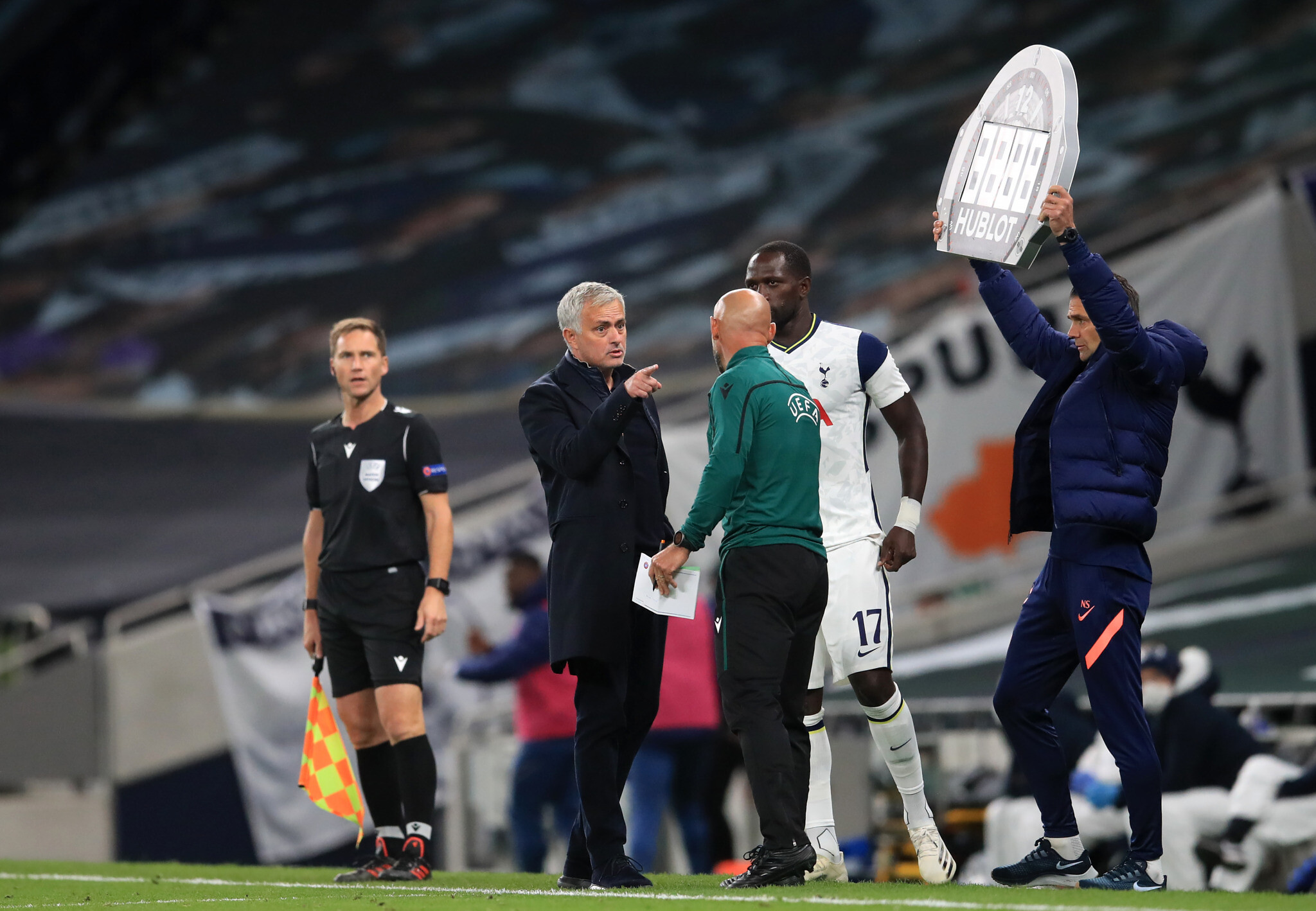
“We need to get f****** into them”, shouted Spurs’ former England goalkeeper Joe Hart, while Spurs’ manager José Mourinho went ballistic on the touchline at a player for losing the ball. You could hear everything.
During the pandemic, we have all become used to watching sport with canned fan noise on the TV – and it rapidly became clear why it’s more of a necessity than a cosmetic feature.
It’s no filter, and it’s highly emotional, as players strained every sinew on the pitch, swearing, screaming and getting reprisals from their peers.
The Israeli reporter in front of me jumped out of his seat to celebrate both Haifa goals but left before the final whistle as Spurs won 7-2.
Supporters are an intrinsic part of the atmosphere for a top-level football match.
Removing them, though necessary in these dark times, has stripped it down to the bare bones.


Keep community journalism free.
Jewish News is free for everyone. No paywall. No barriers. Just trusted journalism for anyone who wants to stay connected to Jewish life in Britain.
If you value that, please support us.
From as little as £5 a month, you can help keep our journalism free and accessible to all.
Every day, we report on the issues that matter to our community. We celebrate achievements, support charities, challenge antisemitism and ensure Jewish voices are heard more widely.
From as little as £5 a month, you can help us continue to:
- Report on the stories shaping Jewish life in the UK and beyond
- Bring our community together through shared stories, events and campaigns
- Celebrate the people, culture and moments that define our community
- Support organisations doing vital work across Jewish Britain
You can make a one-off donation or become a regular supporter. Every contribution helps keep our journalism free, independent and accessible to all.
If everyone who values Jewish News gave a small amount, it would make a real difference to our future.