
The race to adopt AI is no longer a choice says industry chief
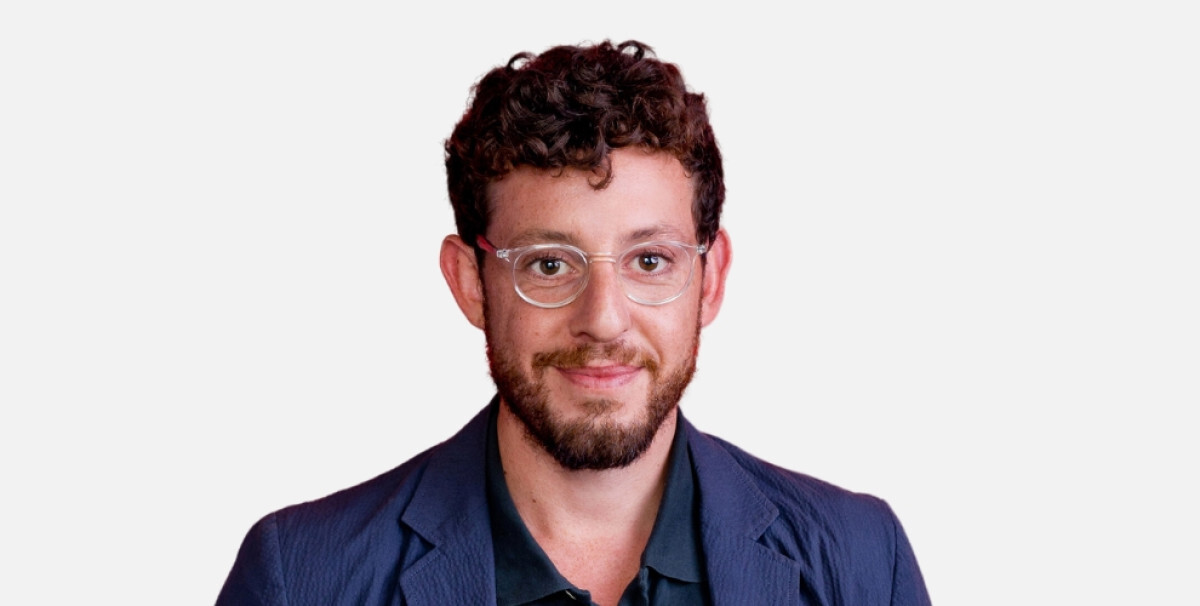
David Benigson, the founder of Signal AI and one of the sector's earliest movers, explains why businesses can't afford afford to delay its integration
When David Benigson founded his AI company over a decade ago, many had barely heard of artificial intelligence. Some investors even told him to remove a pitch slide – it felt too much like science fiction.
Today, AI is reshaping corporate decision-making and businesses that fail to adopt it, Benigson warns, will quickly fall behind.
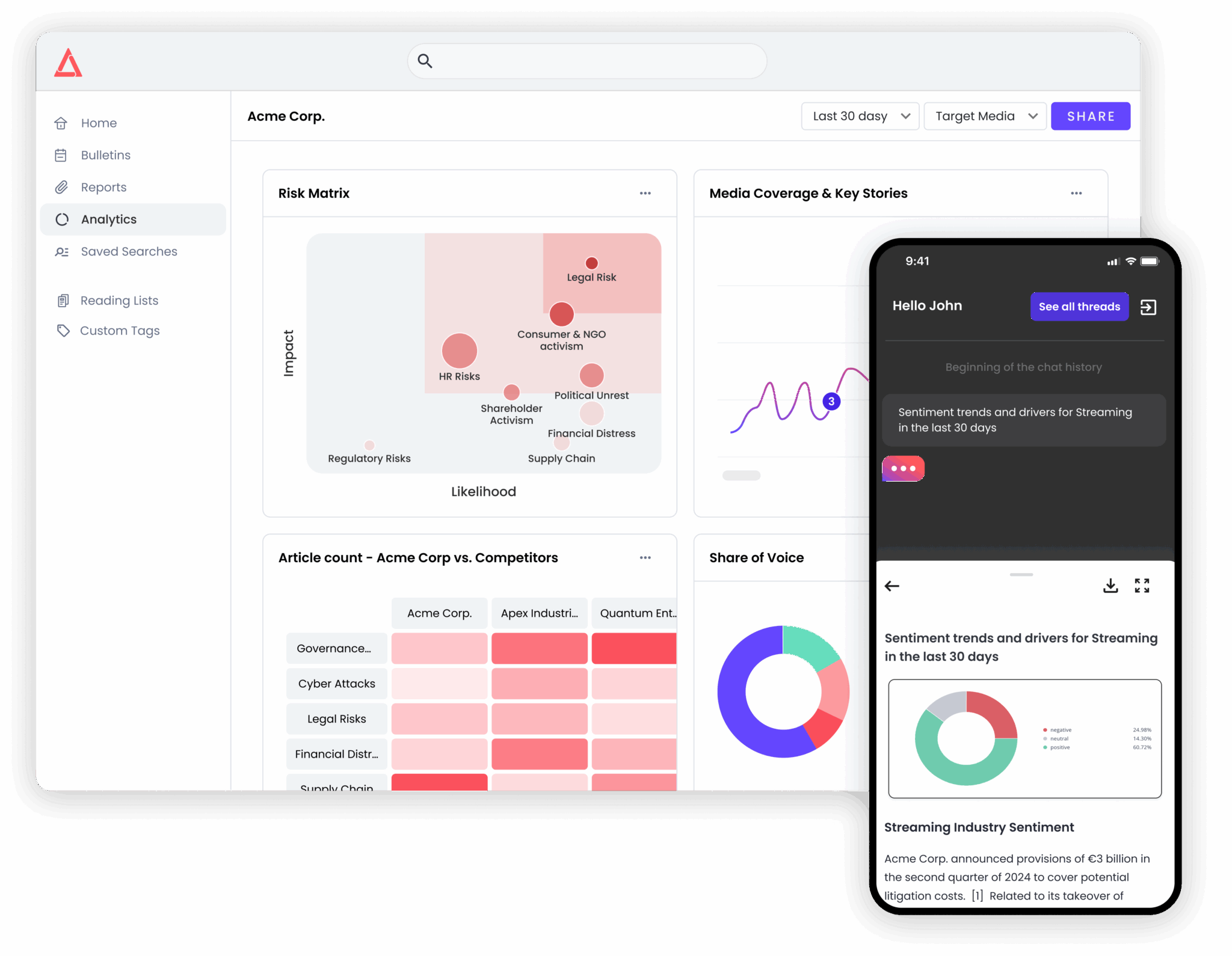
Signal AI uses artificial intelligence to scan vast amounts of global information – from news and social media to regulatory data – to flag emerging risks before they become a crisis and help senior leaders see what’s coming next.
Benigson says the need for this kind of intelligence has grown dramatically. “No one could have predicted how many micro and macro issues businesses would be dealing with,” he explains. “From geopolitics and regulation to cyberattacks and supply-chain shocks, the level of complexity is increasing at an exponential pace.” With information moving faster than ever, traditional methods simply can’t keep up.
Before the company was launched, Benigson and his co-founder interviewed clients across the country about their intelligence needs.
“What we found was pretty old school,” he recalls. “People were clipping newspapers and there were virtually no daily newsletters. Social media was exploding, the volume and velocity of information was increasing rapidly, and the world was becoming more interconnected. Those old methods just weren’t going to work anymore.”
The pair saw an opportunity to build technology capable of analysing vast swathes of external information and turning it into something leaders could act on.
The company’s journey famously began in Benigson’s parents’ garage in north London. “Back then, AI lived largely inside university research labs,” he says. “We saw a huge opportunity to bring that into the real world.”
Fast forward and earlier this year, the team found themselves on the floor of the London Stock Exchange announcing a $165 million funding round from Battery Ventures .
Signal AI serves more than 700 clients, including Uber, HSBC, Diageo and Deloitte, across 200 markets in 75 languages.
“Five or six years ago, we had to persuade people they needed an AI strategy,” says Benigson. “Today, AI dominates boardrooms – and homes.
In one of Signal’s early fundraising decks, Benigson included a slide showing a CEO in the back of a taxi asking an AI assistant to summarise emerging risks in real time. “An investor told me to remove it because it didn’t feel realistic,” he laughs. “Back then, it probably wasn’t. But now? Completely realistic.”
The company has since launched a product allowing clients to do exactly that – converse with an AI system in natural language and receive insights as if speaking to a risk analyst or corporate communications adviser.
Those capabilities are the result of combining different strands of AI.
Signal originally specialised in discriminative AI, trained to extract precise signals from data, then combined it with generative AI to summarise insights instantly. It is now investing in causal AI – tech that predicts how one event may trigger another. “It’s about seeing what’s coming, not just understanding what happened.”
AI is advancing quickly and Benigson believes it won’t be long before the label of an “AI company” will disappear entirely. “We might even have to remove it from our name,” he says. “In the same way that we don’t refer to ‘internet companies anymore…
“AI will be embedded in everything. And if it’s not, those organisations will be at a real competitive disadvantage.”
A member of South Hampstead Synagogue and the West London Synagogue, Bengison is involved in the Portland Trust, a non-profit ‘action tank’ focused on promoting peace and stability between Israelis and Palestinians through economic development initiatives. Benigson was listed on Forbes’ 30 Under 30 list in the European Media category and recently featured in the Jewish News’ top Tech & Digital 50 under 40, celebrating emerging leaders in the sector.
The $165 million funding round will fuel Signal’s next leap – expanding in the US and developing predictive, agentic AI that can autonomously flag risks before they are even asked for.
“It’s about scale and sophistication,” he says. “We’re working with the world’s largest companies, but the opportunity ahead is enormous. The US remains our biggest growth market, and this investment gives us the springboard to accelerate as the need is greater than ever.”
This balance between opportunity and risk is something Benigson is acutely aware of. “AI is both the weapon and the shield,” he says. “It can amplify misinformation, but it can also be the most powerful tool we have to fight it. The challenge for all of us is to ensure it’s used responsibly, to create more value than harm.”
Having recently become a father, he admits it has shifted his perspective. “You start thinking about the kind of world your child is going to grow up in,” he says. “AI will shape that world; the challenge is how we prepare the next generation to thrive alongside it. Creativity, critical thinking and empathy will matter more than ever.”
As AI continues to blur the line between science fiction and reality, Signal AI’s mission remains crystal clear; to help organisations make better decisions in a fast-changing technological world.
“We’ve always believed that intelligence, used well, is the antidote to uncertainty,” he says. “That’s what still drives us today.”
comments